

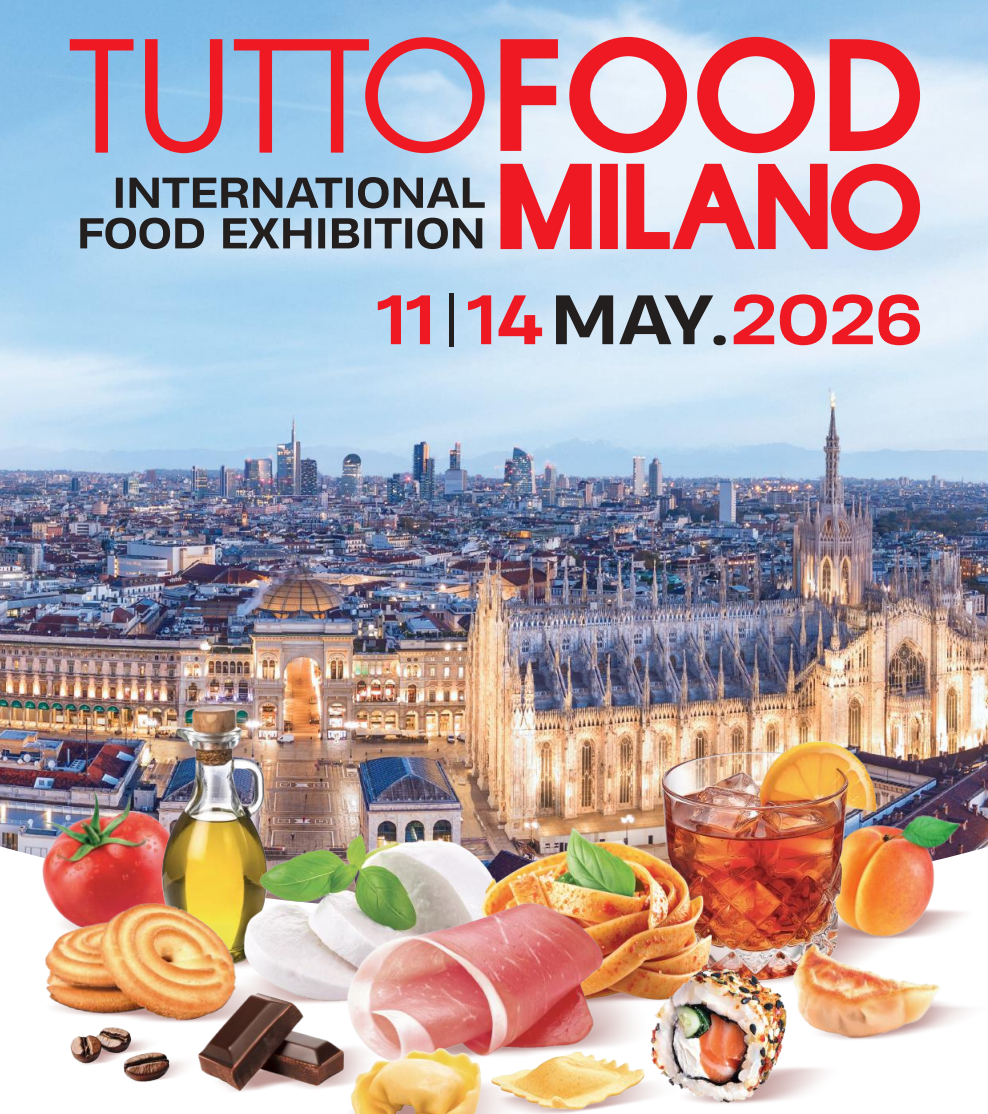
In 2007, when Fiera Milano decided to establish an event entirely dedicated to the agri-food sector with a professional and international focus, many wondered whether that gamble could stand the test of time. Traditional trade fairs were going through difficult years, corporate budgets were tightening, and the idea of building a specialised B2B event from scratch in a market dominated by giants like SIAL and Anuga might have seemed, at least on the surface, somewhat imprudent. Yet TuttoFood, right from its first edition, proved to have a formula capable of intercepting something that the other events did not offer with the same precision: direct contact between Italian and international producers and buyers with real purchasing power, in a context designed not as a generic showcase but as an operational platform for concrete commercial exchanges. In the two years following its launch, while its main competitors recorded modest growth or even contraction, TuttoFood posted a 28% increase, a figure that clearly reflected the quality of a formula that would continue to evolve in subsequent editions.
The biennial frequency, the explicitly pursued international vocation from the outset, and the attention to the supply chain as a whole, from production to distribution, helped to build a precise and recognisable identity. The percentage of foreign visitors, which stood at 25% in 2009, rose to 30% in 2011 and reached 40% in 2013, while the total number of visitors grew by 132% over the six years since its foundation. These were numbers that spoke for themselves, and that made TuttoFood not only the most important Italian event in the sector but one of the benchmark appointments for the entire European agri-food industry.
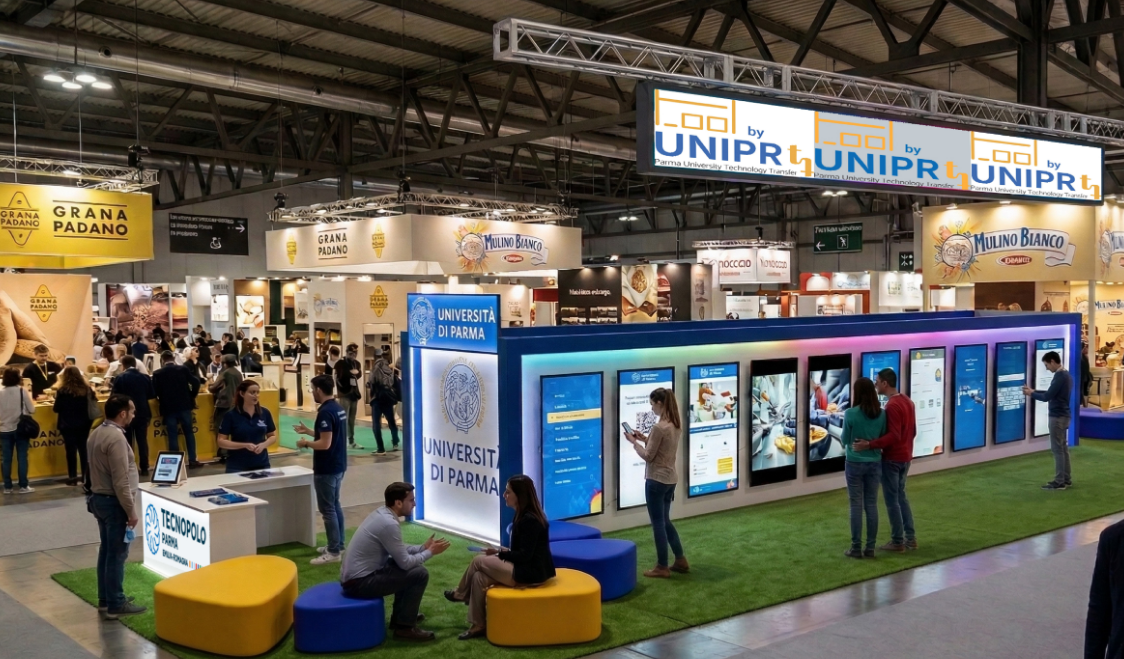
2025 and the turning point of Fiere di Parma
The transition that reshaped TuttoFood into the form we know today dates back to 2025, when Fiere di Parma took over the leadership of the event, transforming what was already a solid and respected trade fair into something more ambitious: a global hub for the entire international food community. It was not simply a change of management, but a profound strategic reformulation, accompanied by two top-level partnerships. The first, with ICE-Agenzia, strengthened the ability to attract qualified buyers from all over the world, bringing the incoming programmes to a level of efficiency and pervasiveness that is difficult to replicate. The second, with Koelnmesse, organiser of Anuga, opened up an unprecedented scenario: the two events will alternate on an annual basis, creating a system of two complementary European hubs for global food & beverage, with Cologne and Milan equally sharing the international operators’ calendar.
The results of the 2025 edition, the first under the Fiere di Parma banner, confirmed that the gamble was well-founded. Ninety-five thousand professional visitors from over 100 countries, 3,000 top international buyers, 4,200 exhibiting companies from around 70 countries, almost double the number compared to previous editions managed by Fiera Milano. A clear leap, which repositioned TuttoFood among the top trade fair events in the sector worldwide and laid the foundations for the 2026 edition, expected as a confirmation and a further step up in quality.
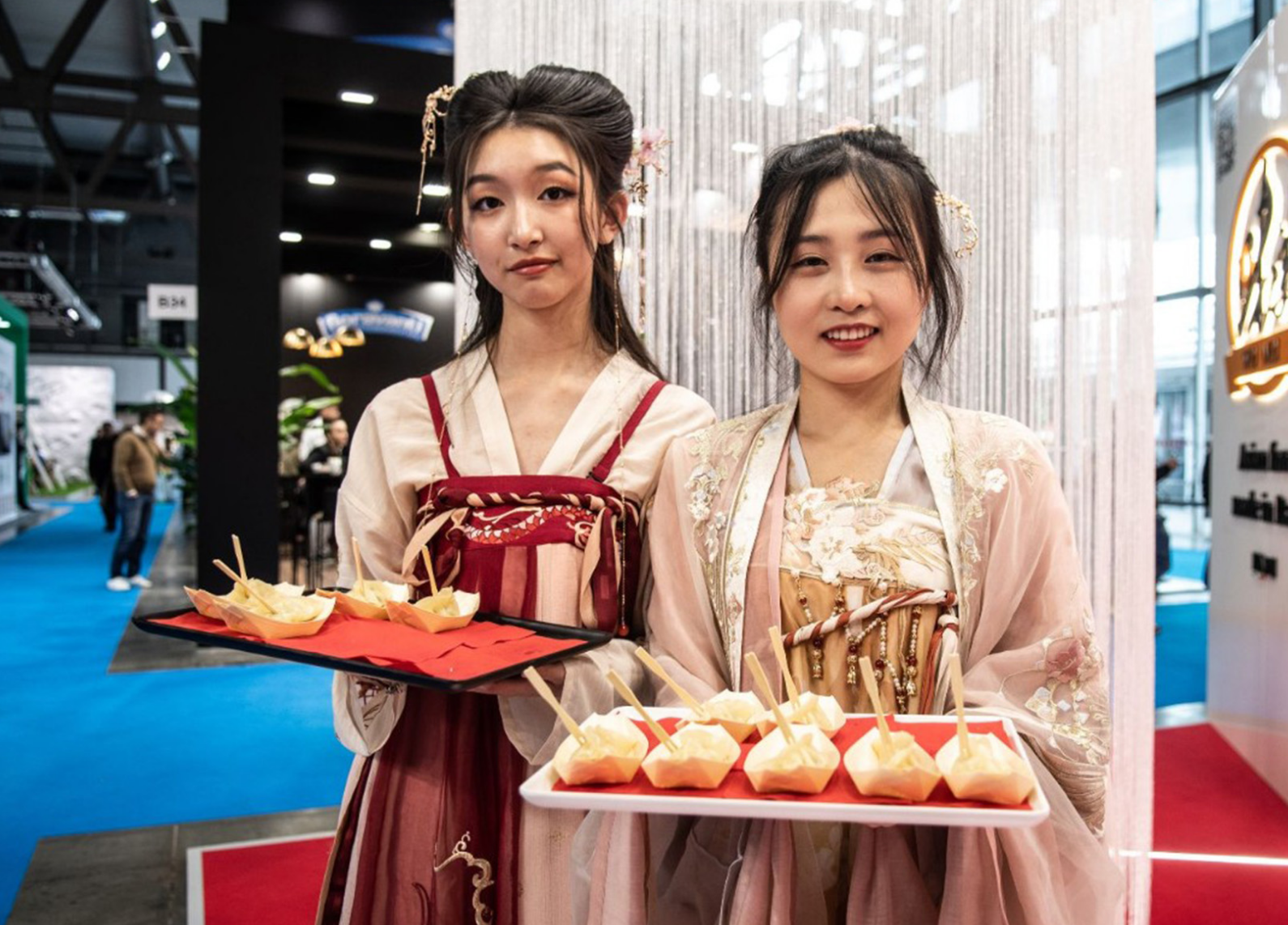
From 11 to 14 May: the numbers of a record-breaking edition
TuttoFood 2026 takes place from 11 to 14 May at the Rho Fiera Milano exhibition centre, spread over 10 halls for 85,000 net square metres, completely sold out. The figures declared by the organisers describe an edition that surpasses all previous ones: around 5,000 exhibitors, 4,000 confirmed top buyers and over 100,000 professional visitors expected from 80 countries. Compared to the 2025 edition, the net exhibition area grows by 15%, exhibitors increase by 20% and buyers by 33%, a progression that measures not only the commercial success of the fair but its growing centrality on the agenda of international operators. The European continent accounts for 42% of the overall presence, while the remaining 58% is distributed among North America, Far East and ASEAN, Latin America, the Middle East and the rest of the world, with the MENA region seeing the participation of Egypt and Saudi Arabia for the first time.
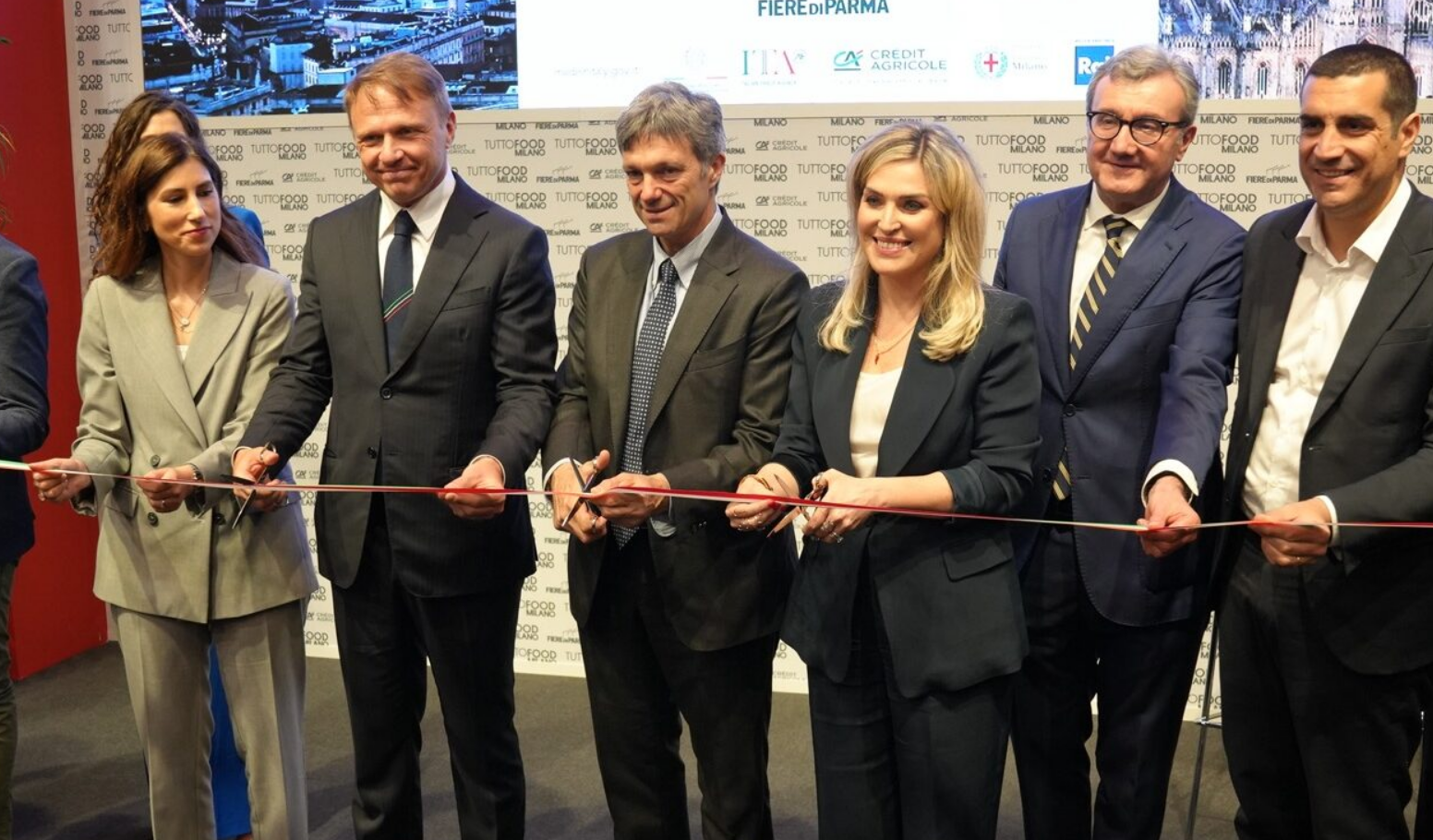
Four days built around roughly 250 thematic events and the presentation of 1,500 products, with a programme that addresses the major issues of the sector at a pace designed for maximum operational usefulness. The inauguration on 11 May sees the presence of the Minister of Agriculture Francesco Lollobrigida, the presidents of Fiera Milano and Fiere di Parma, the governors of Lombardy and Emilia-Romagna, the director general of FoodDrinkEurope and the president of ICE-Agenzia, an institutional line-up that signals how much the event is now considered a systemic occasion and not simply a sectoral trade fair.
Sustainability, innovation and the new frontiers of food
The content programme of TuttoFood 2026 reflects the tensions and transformations gripping the global food industry in this decade, and does so with a daily structure that gives each theme the time and space it deserves. The second day is dedicated to sustainability, food waste, organic, plant-based products and Retail Media Economy; 13 May brings to the fore international cold chain logistics, ESG criteria, sustainable packaging and alternative proteins; the fourth and final day closes with transparent supply chains, technological innovation in livestock farming and data-driven marketing. These are not topics arranged to respond to a passing fad, but structural knots that the agri-food sector is called upon to address with increasing urgency, at the production level as much as the commercial and regulatory ones.
Among the most significant novelties of the edition, TuttoBio by Natexpo, a new special area entirely dedicated to certified European and international organic, responds to a rapidly expanding segment that had found limited space within the fair in previous editions. Alongside it, the renewed Tutto Fruit & Veg area and the fifth edition of Mixology Experience, dedicated to beverages in the out-of-home sector with in-depth explorations of aperitifs, wine, beer, coffee, no- and low-alcohol products and new forms of pairing. The Japanese presence, with 90 buyers representing the country’s leading companies, and the Spanish one, with over 27 exhibitors and four trade promotion bodies, reflects the weight that international markets now recognise TuttoFood as an unavoidable meeting point for anyone wanting to do business in food on a global scale.
The Food Manifesto: when a trade fair becomes a proposal to the world
Among all the novelties characterising the 2026 edition, the Food Manifesto is probably the one that best recounts the ambition with which Fiere di Parma intends to position TuttoFood on the international stage. Previewed at the Ministry of Agriculture and inspired by the Italian agri-food model, the Manifesto presents itself as a charter of values for the food of the future: a guidance document for the global food community, aimed at steering global supply chains towards a more sustainable, inclusive, safe and transparent system. Food, according to the vision that animates it, is not mere merchandise, but a primary good for individual and social well-being, a cultural tool of universal dialogue, a language capable of fostering mixing and inclusion among different peoples and traditions. Created with the support of the Future Food Institute and the main international organisations in the sector, the Manifesto will be proposed for signature by exhibitors, buyers, institutions and operators present at the fair, in the conviction that an event of the scale of TuttoFood is the natural place from which to launch a message of this nature.
The initiative is part of a context in which the recent UNESCO recognition of Italian cuisine has given the country’s gastronomic heritage an unprecedented resonance and symbolic legitimacy, strengthening Italy’s position as a cultural and productive reference point in global food. Italian agri-food exports reached 72.5 billion euros in 2025, with a growth of 5% compared to the previous year, with the most dynamic growth trajectories in emerging Asian markets such as South Korea, Vietnam and India. In this scenario, TuttoFood does not merely photograph the state of the industry, but actively contributes to building the commercial and cultural networks through which Italian food excellence will continue to expand in the coming decade.
An appointment worth a year’s work
There are trade fairs that document a sector and trade fairs that build it. TuttoFood 2026 belongs with increasing clarity to the second category: in just two editions under the leadership of Fiere di Parma, the Milanese event has doubled its dimensions, tripled the number of foreign exhibitors and transformed what was an important national appointment into one of the world’s most significant agri-food trade fair events. This is not a chance result, but the fruit of a precise strategy that has been able to capitalise on Milan’s position as an international business capital, the strength of the Italian agri-food model as a global benchmark, and the quality of the partnerships built with ICE-Agenzia and Koelnmesse as levers of genuine internationalisation. Added to all this, in this edition, is the awareness that food is today a geopolitical theme, as demonstrated by the task force created to guarantee the presence of buyers coming from conflict zones, and that sectoral trade fairs are, to all intents and purposes, places where the commercial diplomacy of the present is also constructed.
TuttoFood 2026 is not only the largest agri-food fair in Southern Europe: it is the place where Italian food meets the world, and where the world returns every year to understand where food is heading.
Rho Fiera Milano, from 11 to 14 May 2026: four days in which the future of what we eat takes shape, and in which Italy still has much to say.
Credits photos: tuttofood.it