
Autore: Michele Spinelli • 17/04/2026 16:06
You don't need a monument, nor a typical dish, nor a dialect word to evoke an entire island: sometimes a simple cap is enough. The Sicilian coppola, with its flat shape and discreet peak, is one of those objects that seem to have been born from the very soil of Sicily, as if they had always existed, unchanged over time. Yet its history is made of journeys, encounters and transformations that tell much more than a simple accessory: they speak of identity, work, pride and even of prejudices overcome.
Arriving in Sicily between the 19th and 20th centuries, brought by English families who had inherited it from the flat cap tradition, the coppola became so deeply rooted in the island's culture that it became a universal symbol. Born as a practical head covering for peasants, who wore it to protect themselves from the sun during long days in the fields, it crossed social barriers to conquer international fashion runways. Today, wearing a coppola means carrying with you centuries of history, a piece of Sicily that resists time and fashions, and that continues to tell, without need for words, the soul of a people.
In its current form, the coppola seems to have originated in the Anglo-Saxon lands, where the tradition of civilian caps has been documented at least since the late 16th century, during the reign of the Tudors. In England, noble males were obliged to wear caps of English production by a law written to support local wool production: from this regulation the flat cap was born, which can be considered in every respect an ancestor of the coppola. In subsequent centuries, the cap descended in rank and reached the popular classes, becoming a universal head covering for work and leisure.
The landing in Sicily took place via an unexpected route. Between the late 19th and early 20th centuries, several English families migrated to Sicily in search of opportunities and good business. Thus it was that the flat cap, already very fashionable across the Channel in both England and Ireland, spread especially in Sicily and southern Italy, taking the name coppola, deriving from "cup", which in English means cup, precisely because of the shape reminiscent of that object. The term, however, also has another plausible root: according to some interpretations, "coppola" derives from the Latin "coppula", meaning covering. Whatever the exact etymology, the result was the same: a foreign cap became within a few decades one of the most recognisable symbols of the island's identity.
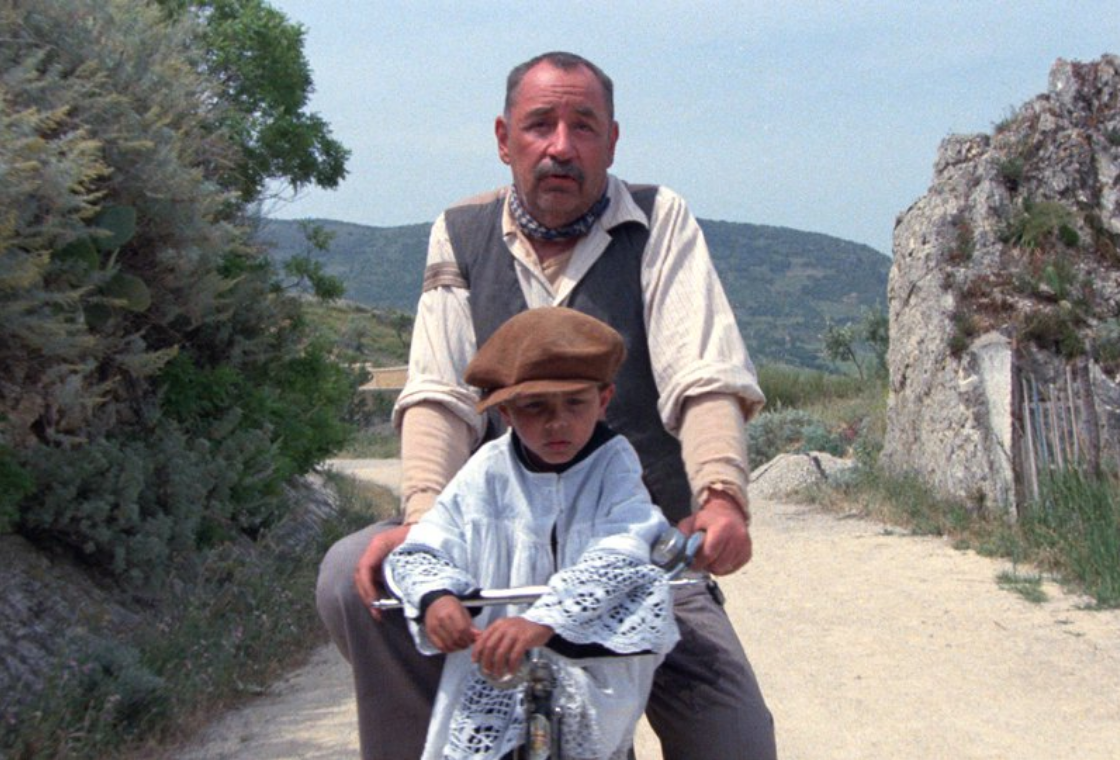
Originally worn by peasants and workers, the coppola had a strong link with Sicilian rural life and was essential for protecting against the sun while working in the fields. It was a practical object before being an identity marker, devoid of aesthetic pretensions, produced in heavy wool to resist the cold of the winter months and worn without ceremony by those who spent their days outdoors.
The class leap occurred gradually, following the same path taken by the flat cap in England. Born as a head covering for the use and consumption of the proletarian classes, over time it transformed into an object also appreciated by the wealthy classes, particularly by hunting and golf enthusiasts. In Sicily, this transformation intertwined with the presence of English entrepreneurs who had helped spread it, creating a curious overlap between the accessory of the labourer and that of the gentleman. The coppola thus became a transversal object, capable of crossing social classes without losing its character.
Over time, that character became charged with further meanings. The coppola entered the collective imagination as an identity marker: wearing it was a way of asserting one's belonging to a land, to a history, to a way of being in the world. For many Sicilians, the coppola represents an indissoluble bond with their land, with the history and traditions of their people.
Not all the fame built up over the decades was favourable. At a certain point in recent history, the coppola began to be associated with an image that Sicilians had not chosen and did not claim. The equivocal fame of the coppola was, however, broken, at least in part, over the last few decades, when a growing number of fashion houses decided to give their own personal interpretation of the traditional Sicilian head covering.
That association, however distorted, was not without a narrative logic. The coppola was everywhere: in street photographs, in films, in television series set in the South. Its unmistakable shape, the short peak, the flat dome, made it an immediate visual sign, useful for defining the context of a scene in a single gesture. American cinema, from *The Godfather* onwards, used it as a visual shorthand to evoke Sicily. Films like *The Leopard* show how the coppola can convey a sense of belonging and distinction, parallel to evolving social dynamics. It was therefore a powerful symbol, even when it was exploited.

Beyond its symbolic value, the coppola is an artisanal object with a precise structure and a workmanship that requires skill. The coppola is born as a men's hat made of wool, very often with tweed fabrics of English inspiration, resistant and warm. The crown is made of a single lined piece, designed to rest on the rigid brim of the peak. In the segmented versions, the dome is formed by triangles of fabric assembled at the centre and fixed with a button.
Traditional Sicilian models are distinguished into two main types: the classic coppola, with a smooth crown, and the segmented one, more structured and with a more pronounced peak. The materials vary with the seasons: wool and tweed for winter, linen and cotton for the warm months. Craftsmanship is not only a production technique but a true cultural value that distinguishes Sicilian coppole from mass-produced accessories: each model is designed to guarantee comfort, fit and durability, respecting the original spirit of the cap. In the street markets of Palermo it is still possible to find handcrafted pieces made according to traditional methods, where the cutting follows the paper pattern and ironing into shape is the last act before delivery.
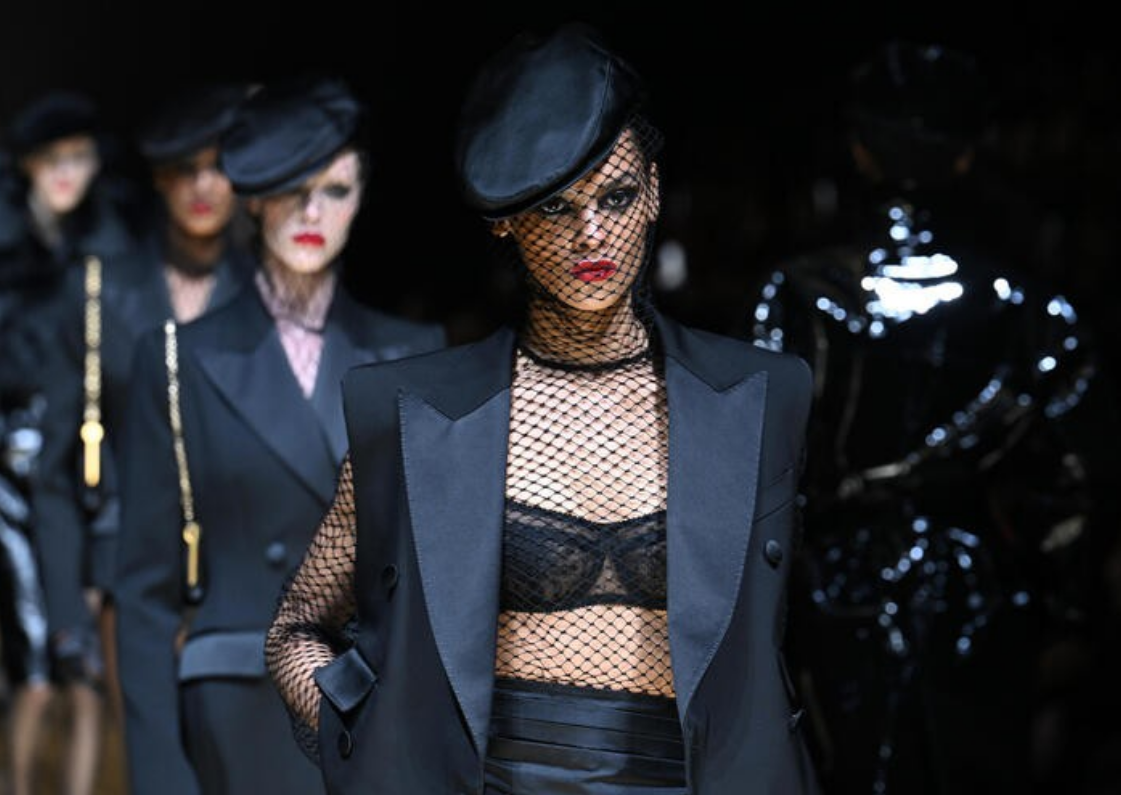
From the 1990s onwards, the coppola undertook a path of revaluation that took it far beyond the island's borders. Some of the most influential names in the fashion world decided to re-propose the coppola, with designers such as Dolce & Gabbana and Moschino creating exclusive versions of this iconic accessory, bringing it to the international stage. It was not folklore nor nostalgic quotation, but a recognition of the formal and cultural value of an object that had withstood the centuries without losing its identity.
Contemporary fashion has brought it back into vogue in a fresh and new way, celebrated by the most famous international designers and worn as a fashion accessory presented on catwalks around the world, no longer exclusively as a men's head covering but also as a women's one. This opening to a female audience is one of the most significant elements of the recent transformation: an object born in the male rural world of the 19th century has become a unisex accessory, transversal in age and context.
The Sicilian coppola is today one of the few objects of Italian artisanal tradition capable of moving with ease between the local and global markets, between the stall at Ballarò and the shop windows of Berlin or Tokyo. It carries with it the history of an island that has known how to absorb external influences, transform them and return them to the world with a new and unrepeatable identity. Whoever wears it, wherever they are, carries on themselves something that has crossed the centuries without asking permission from anyone.
Credit photos: coppolaspa.it, corbula.it

There is a sound that never fades. Not the kind that dissolves into the air, but that of bronze bell...

In small, middle-class Milan, near the Villaggio dei Giornalisti, temporary housing units were built...

We are in the early 1960s. On one side there is Enzo Ferrari, the "Drake", absolute monarch of the a...

From April 13 to 16, 2026, the Bologna Children’s Book Fair returns for its 63rd edition. Once again...

In 1291, Doge Pietro Gradenigo signed a decree that would forever change the history of European cra...

Tornano sabato 21 e domenica 22 marzo le Giornate FAI di Primavera, il più grande evento di pia...
Rivista online registrata al Tribunale di Napoli n. 43 del 23/03/2022
Direttore: Lorenzo Crea
Editore: Visio Adv di Alessandro Scarfiglieri
Insight italia srl (concessionario esclusivo)
Rivista online registrata al Tribunale di Napoli n. 43 del 23/03/2022
Direttore: Lorenzo Crea
Editore: Visio Adv di Alessandro Scarfiglieri
Insight italia srl (concessionario esclusivo)
