
Autore: Michele Spinelli • 20/03/2026 16:49
In 1291, Doge Pietro Gradenigo signed a decree that would forever change the history of European craftsmanship. All the furnaces of Venice were to be moved to the island of Murano: the city's buildings were still made of wood, the risk of fire was real and concrete, and the fire of the glassworks burned ceaselessly. But behind the official motivation—safety—lay a subtler and more powerful reason. By concentrating all the master glassmakers in an isolated, controlled location, the Serenissima Republic built an impregnable barrier around the secrets of glassmaking. Anyone who tried to take that knowledge off the island without permission risked, in the most severe versions of the law, their very life.
Venetian glass art has roots that go even further back. The first written evidence dates to 982 AD, when a notarial deed mentions a fiolario the glassmaker specialised in producing flasks. But it was in the 13th century that the glassmakers' guild formally took shape, and with it was born the productive ecosystem that would give Murano its definitive identity. The Rio dei Vetrai, the canal that crosses the heart of the island, became the physical centre of this universe: along its banks, the most important furnaces and workshops were concentrated, many still active today, their chimneys marking the landscape like ancient sentinels of stone and fire.
The master glassmakers were not ordinary artisans. The Republic of Venice treated them as a strategic asset to be protected and rewarded: they enjoyed high social status, could carry swords, were listed in the Libro d'Oro (Golden Book) of patrician families, and their daughters were permitted to marry into the Venetian nobility. They were, for all intents and purposes, the guardians of a state secret. A secret made of sand, silicon, metal oxides, and something more difficult to codify: the ability of hands to translate fire into form.
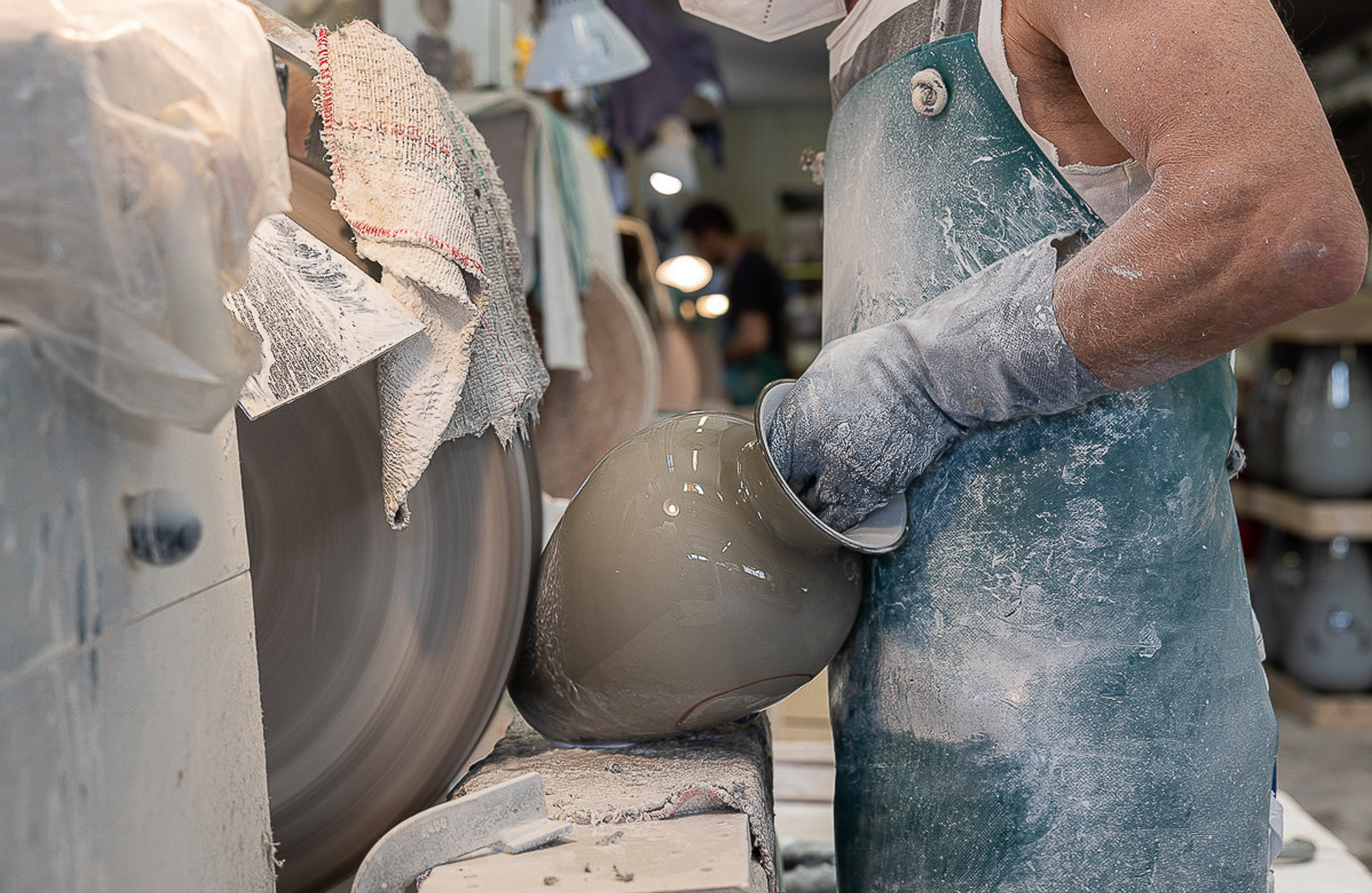
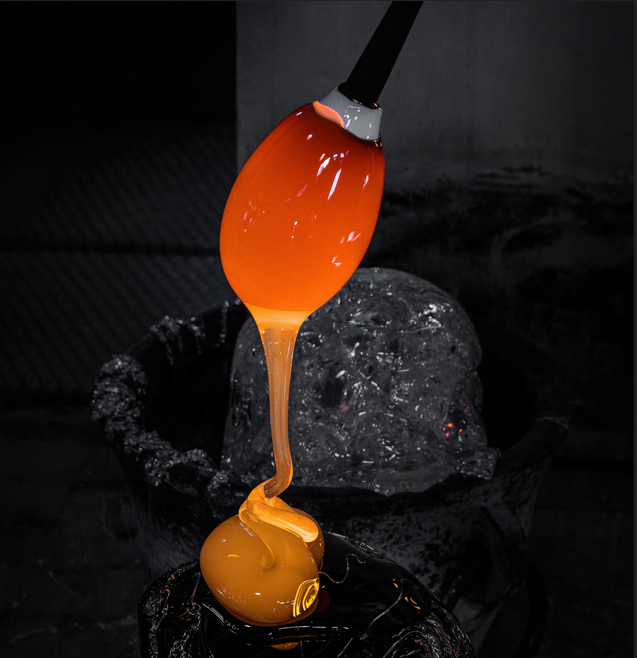
An old Murano proverb says: "good tools are useful, but good hands are better." This maxim summarises with absolute precision the philosophy that has governed glassmaking on the island for seven centuries: technique is essential, but it is the human gesture—the sensitivity of the blower, the shaper, the one who intuits—that makes the difference between an object and a work of art. The tools of glassblowing have remained substantially unchanged over the centuries: the blowpipe, pincers, pontelli (punty rods), wooden or cast iron moulds. What changes, radically, is the hand that wields them and the knowledge accumulated over generations that guides that hand.
Between the 15th and 16th centuries, the Murano masters reached unprecedented technical heights. In 1450, Angelo Barovier—whose name is linked to one of the oldest glassworks still active in the world—perfected cristallo, an almost transparent glass of such purity it was considered almost magical at the time, ideal for fine blown work and openwork. The Coppa Barovier (Barovier Cup), still preserved today at the Murano Glass Museum and dated to 1460-1470, remains one of the oldest examples of glass painted with polychrome enamels and gold: on its walls, allegorical scenes tell a new language in which colour, light and craftsmanship are fused indissolubly. At the same time, lattimo was born—opaque white glass that imitated porcelain, highly sought after by European Baroque courts.
The glassmaking techniques that Murano developed and guarded over time form an artisanal lexicon of extraordinary richness. Blown glass, where the master shapes the incandescent mass by blowing air into the blowpipe, is the most iconic technique. Filigrana, or reticello, requires the incorporation of rods with thin white or coloured threads which, once fused, create net or spiral patterns of geometric precision. Murrina—the oldest—involves cutting cross-sections of polychrome glass canes which, placed together and fused, generate floral or geometric designs. Each technique requires years of apprenticeship: becoming a master in Murano takes between ten and fifteen years of training, a path that is not learned from books but lived alongside the fire, observing and making mistakes.
The history of Murano glass is not a linear story of uninterrupted glory. With the fall of the Republic of Venice in 1797, the island entered a phase of deep crisis: the system protecting craft secrets crumbled, markets opened up to competition from cheaper industrial production, and many furnaces closed. It was only in the second half of the 19th century that Murano found direction again. In 1861, Mayor Antonio Colleoni and Abbot Vincenzo Zanetti founded the Glass Museum—born as an archive, later transformed into a cultural institution—with the aim of collecting, studying and transmitting the technical and artistic memory of centuries. The following year, an affiliated school was opened, attended by glassmakers on holidays, where they studied the designs and models of the past.
The 20th century brought a radical turning point. 1921 was the year in which the first furnace entirely dedicated to the production of glass with modern designs opened in Murano: Venini was born. That intuition combining the artisanal knowledge of Murano masters with the design vision of great names in design and architecture transformed the way glass was conceived and produced. In the following decades, many other historic glassworks followed the same direction: collaboration between masters and designers became the production model that allowed Murano to remain relevant in a rapidly evolving international market. Glass ceased to be merely craft and became contemporary artistic language.
Today, the furnaces of Murano are also facing unprecedented challenges. The threat of industrial counterfeiting—products that imitate the forms of Murano glass at very low costs—has pushed the sector to equip itself with protection tools: the Vetro Artistico® Murano mark certifies the authenticity and provenance of every piece made on the island. On the sustainability front, some glassworks have started experiments with recycled materials and projects in collaboration with Ca' Foscari University of Venice for the development of a circular economy that transforms production waste into new raw materials. The fire has not gone out: it continues to burn, but it is also learning to burn differently.
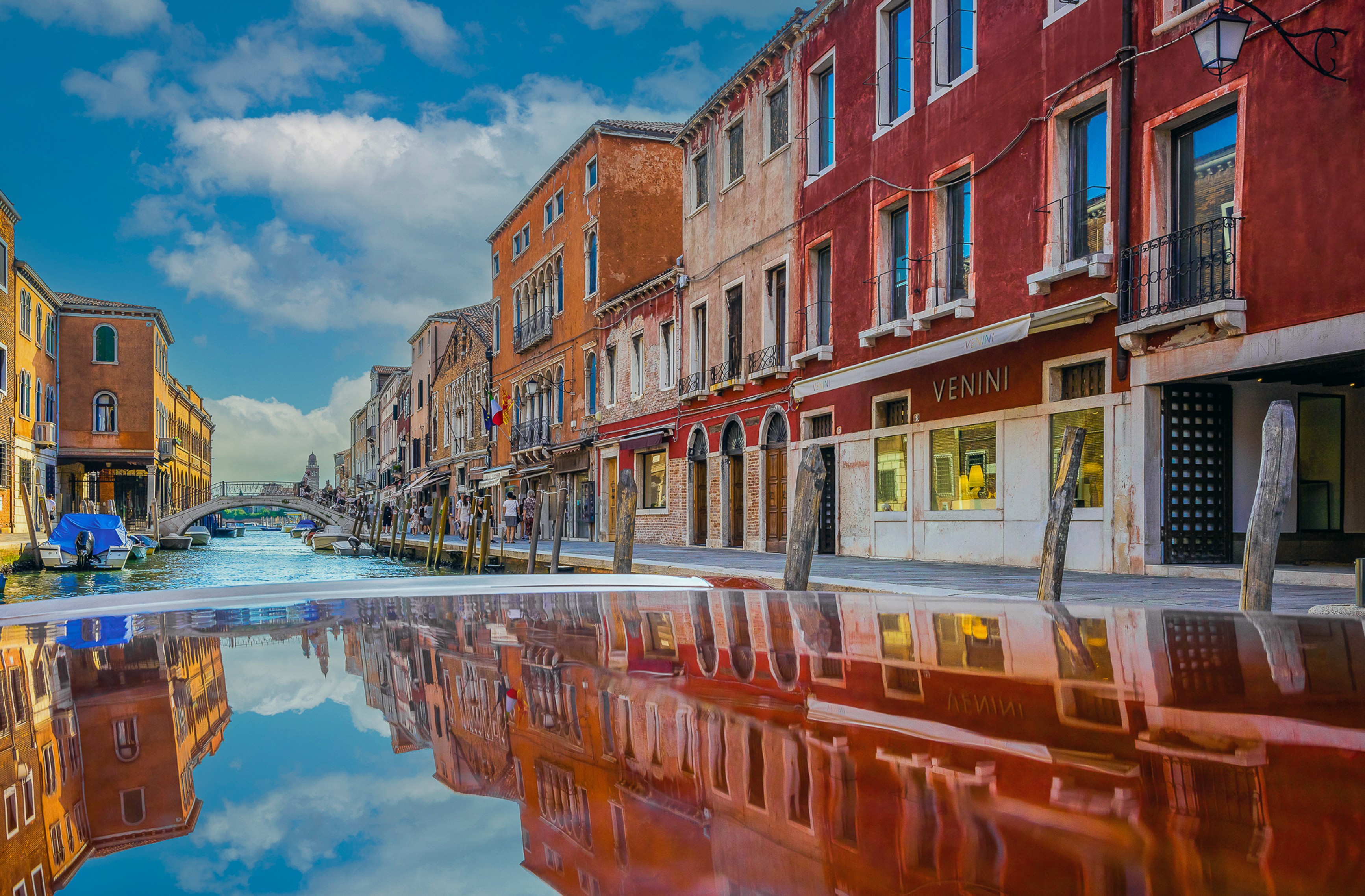
Among the realities that wrote the history of Murano glass in the 20th century, Venini holds a unique position. Founded on 2 October 1921 by the Milanese lawyer Paolo Venini and the Venetian antiquarian Giacomo Cappellin—originally as Cappellin, Venini & C.—the maison was born with a precise vocation: to make Murano glass a partner in international design, without renouncing the depth of the artisanal tradition upon which it is founded. In just over a century, that intuition has translated into a catalogue that today forms part of the permanent collections of the Metropolitan Museum and MoMA in New York, the Fondation Cartier in Paris, the Victoria and Albert Museum in London, and the Gallerie dell'Accademia in Venice.
The collaborations that Venini has built over time tell its identity better than anything else. Carlo Scarpa, Napoleone Martinuzzi and Fulvio Bianconi in the early decades; after the war, Gio Ponti, Lella and Massimo Vignelli, Ettore Sottsass, Alessandro Mendini, Gae Aulenti and Tapio Wirkkala. More recently, Tadao Ando, Peter Marino, Ron Arad, Rodolfo Dordoni, Doriana and Massimiliano Fuksas, and artists such as Mimmo Paladino, Sandro Chia, Giulio Paolini and Arnaldo Pomodoro. Each collaboration has left a visible trace in the catalogue and has contributed to forming that layering of languages that makes Venini pieces instantly recognisable. The furnace is the only one in the world capable of producing 125 glass colours, the result of decades of chemical and artisanal research, with fourteen furnaces operating simultaneously. The auction record, La Sentinella di Venezia by Thomas Stearns from 1962, sold for $737,000—is concrete proof of how much this work is recognised in the international market.
Preserving the memory of this journey is the Venini Museum: 45,000 drawings, 10,000 period photographs and 4,000 works of art representing the most precious historical archive of modern and contemporary artistic glassmaking. Today, the company is controlled by the Damiani family, already at the helm of the eponymous international high jewellery brand, with the aim of giving new impetus to one of the most authentic expressions of Made in Italy.
How is glassmaking knowledge passed down today, and what role does tradition play in contemporary production?
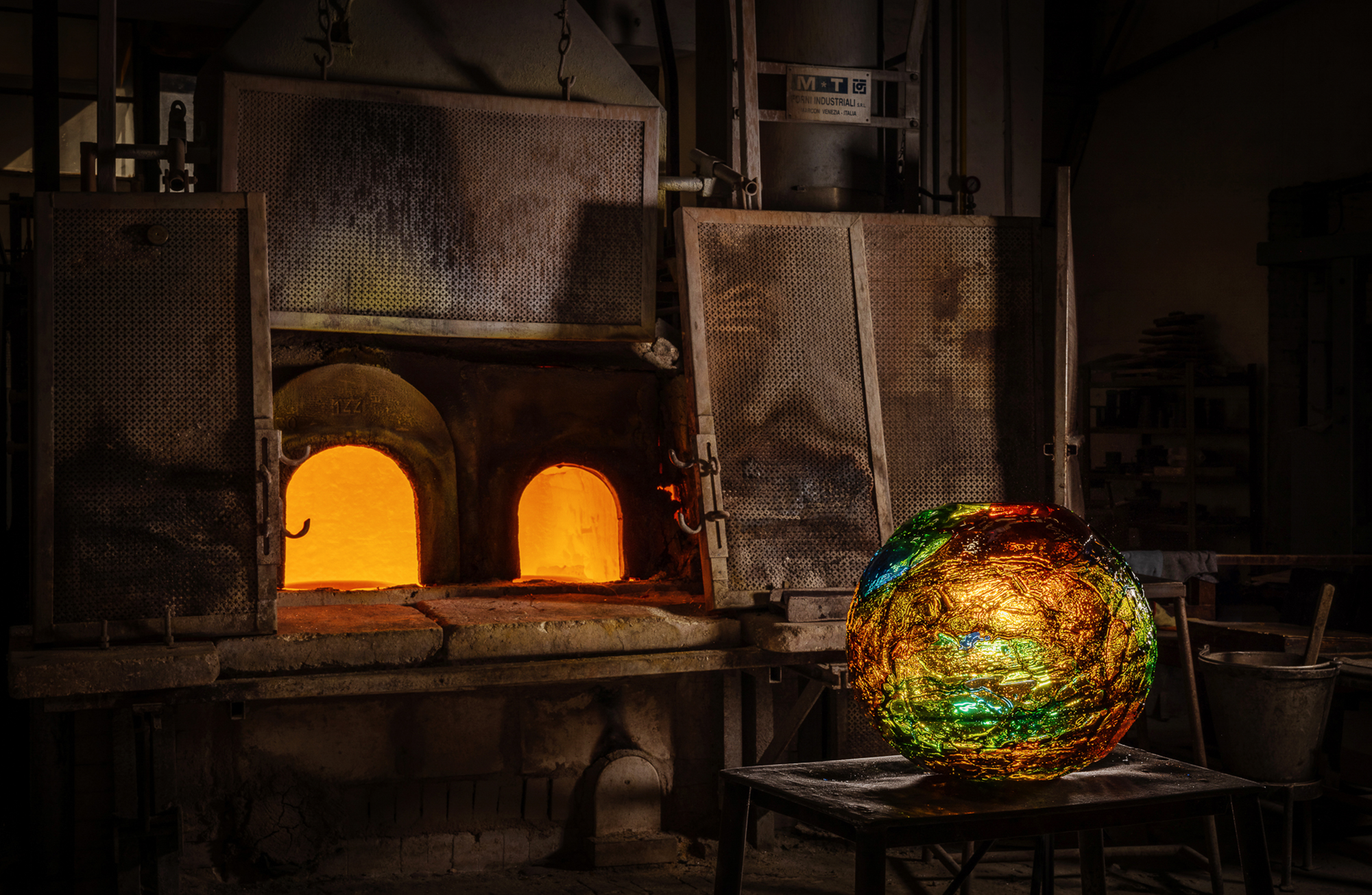
For Venini, the Furnace of Murano is the place where time follows a different rhythm: that of direct transmission, of the gesture observed and repeated, of the silent correction of a master towards their apprentice. It is through this physical and human proximity—not through manuals or codified processes—that the knowledge of glassmaking continues to be passed down from generation to generation. Tradition, in this view, is not experienced as a static heritage to be preserved, but as a living and constantly evolving language: a mastery of technique so profound that it allows artisans to venture into new territories without ever losing the thread of their identity. Each piece carries within it this double memory—that of the hands that created it and that of all those who, over time, have contributed to perfecting that art.
In which direction is the company moving today, and what wish does it make for its future?
Venini was born from dialogue, and that vocation for engagement with artists and designers of international vision has never ceased to guide its choices. The company continues to seek interlocutors capable of questioning its tools and listening to glass—a material that does not passively obey, but responds and suggests. The direction taken is that of meaningful luxury: objects designed to last, capable of inhabiting both the history of design and the daily lives of those who choose them. Venini's wish for itself is to preserve intact that capacity for experimentation and innovation that was characteristic of its founder: the same creative restlessness, the same courage to look forward without renouncing its roots. It is along this path that Venini has built its identity, and it is along this path that it intends to continue writing its future.
Venini SpA, Murano 2026
Murano is not only Venini. The island today hosts a complex production system, in which large international brands, family-run furnaces, and individual artist workshops coexist. Some of these realities bear surnames that appear in medieval guild registers: the Barovier family has been active in glassmaking since the 13th century, and Barovier & Toso—formed in its current guise from the 1942 merger—is considered the sixth oldest family business in the world still in operation. NasonMoretti, founded in 1923 by Ugo Nason and Francesco Moretti, is the first Murano glassworks to reach the milestone of a century of continuous family-run activity, now led by cousins Marco, Piero and Giorgio Nason. In 1955, it won the Compasso d'Oro at the Milan Triennale, the first recognition of Italian design awarded to a Murano glassworks.
What unites these different realities—in size, history, business model—is the same awareness: Murano glass is not industrially replicable, not because a protection mark forbids it, but because its value lies in something that the machine cannot do. Becoming a master requires between ten and fifteen years of apprenticeship. Each creation carries within it an irreducible human variable, a degree of controlled imperfection that is the authentic signature of the one who produced it. This imperfection is the most precious mark, and the international design and collecting market knows it well.
There exists in Murano a continuity that is not measured in years, but in gestures. The gesture of bringing the blowpipe to the fire, of blowing with calibrated precision, of silently correcting the apprentice who makes the wrong curve—these acts are repeated today with the same logic with which they were repeated in the 14th, 15th, and 20th centuries. Not because nothing has changed: much has changed, in materials, colours, formal languages, in collaborations with international design. But the deep structure of that transmission has remained the same. The knowledge of glass is not inherited by birthright. It is earned, slowly, next to the fire.
The Murano Glass Museum, founded in 1861 with 45,000 drawings, photographic archives and thousands of works covering two thousand years of history, is not a celebration of the past: it is proof that each generation has felt the duty to pass on to the next something more than an object. It has passed on a method, a vision, a language. That language today is spoken in a hundred different furnaces, with different accents, with different grammars. But the fire at the centre is the same.
Credit photos: Venini SpA

Tornano sabato 21 e domenica 22 marzo le Giornate FAI di Primavera, il più grande evento di pia...

2026 is approaching, and with the date set for Sunday, April 5th, the first real long weekend of spr...

Nestled between the mountains of Morrone and Majella, in the Peligna Valley in the province of L'Aqu...

Ever since 1946—the year of its birth—Vespa has always been synonymous with two concepts: revolution...

Squares have always been places where communities meet and recognise each other. Just think of the f...

Napoli, con la firma ufficiale della Targa d’Argento e la consegna delle bandiere, entra concre...
Rivista online registrata al Tribunale di Napoli n. 43 del 23/03/2022
Direttore: Lorenzo Crea
Editore: Visio Adv di Alessandro Scarfiglieri
Insight italia srl (concessionario esclusivo)
Rivista online registrata al Tribunale di Napoli n. 43 del 23/03/2022
Direttore: Lorenzo Crea
Editore: Visio Adv di Alessandro Scarfiglieri
Insight italia srl (concessionario esclusivo)
