
Autore: Redazione • 07/03/2026 13:53
Squares have always been places where communities meet and recognise each other. Just think of the famous St. Peter's Square, designed to accommodate thousands and thousands of worshippers. But squares are much more than just meeting places. In the Middle Ages, as in the Renaissance, they were spaces dedicated to political life, the exchange of ideas and the organisation of major events. What often escapes tourists, as well as local citizens, however, is that behind the splendour, statues and great monuments – as well as the subjects of their photographs – there is not only the testimony of years and years of history, as is easy to guess. Each square, in fact, holds a more intimate and unknown narrative: its own identity. It is no coincidence that a respectable square thrives on those details, curiosities and mysteries that invite those who look and listen to pass on a story that, in this way, continues to breathe through the very words of those who tell it.
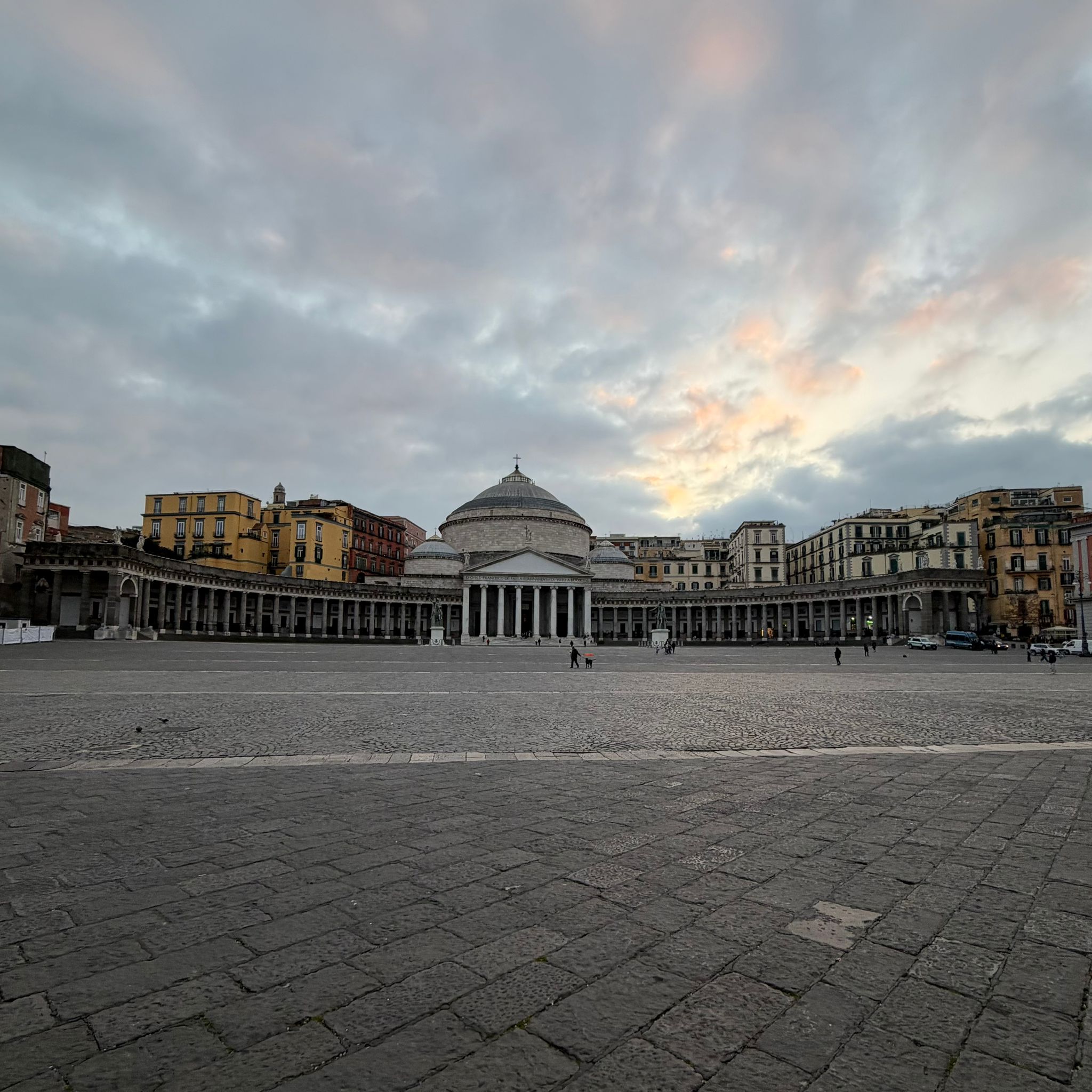
Piazza del Plebiscito, covering 25,000 square metres, is the largest square in Naples. It is often known for the majesty of the Royal Palace of Naples and for the legend linked to the curse of Queen Margherita of Savoy. Yet not everyone is aware of the extraordinary intertwining of history and legend behind the Basilica of San Francesco di Paola.
In 1806, when the Kingdom of Naples was conquered by Napoleon Bonaparte's troops, King Ferdinand I was forced to flee to Sicily. Legend has it that, while sailing towards the island, observing the Calabrian coast, the sovereign remembered a saint from that land who had lived for a long time in the Neapolitan city, where, among other things, he had performed several miracles. That saint was Francis of Paola. Ferdinand then turned to him with a prayer, promising to build a large church dedicated to him right in front of the Royal Palace if he were allowed to return to Naples and regain his throne. Only ten years later, in 1815, was the Congress of Vienna held. Napoleon was definitively defeated and exiled, and Ferdinand, like many other European sovereigns, was able to return to his throne. However, the King of Naples did not forget the promise he had made to Francis of Paola, and in 1816 the church dedicated to him was consecrated, which is still one of the most recognisable symbols of the city today.
When walking through St. Mark's Square in Venice, many people are advised not to walk between the two columns dedicated to St. Mark the Evangelist and St. Theodore, so as to avoid bad luck. But what lies behind what is often considered pure superstition?
Looking at the Doge's Palace from the façade overlooking the square, you can see that two columns are slightly different in colour from the others. It was there, in fact, that the Doge read the death sentences to the people. According to some historical reconstructions, the sentences were carried out in the space between the two columns, accompanied by the famous phrase in Venetian pronounced by the executioner, “Te fasso veder mi, che ora che xe”, meaning “I'll show you what time it is”. Tradition has it that during the execution, the condemned man faced the famous Clock Tower, as the last thing he should have seen before leaving this life was the hour of his death.
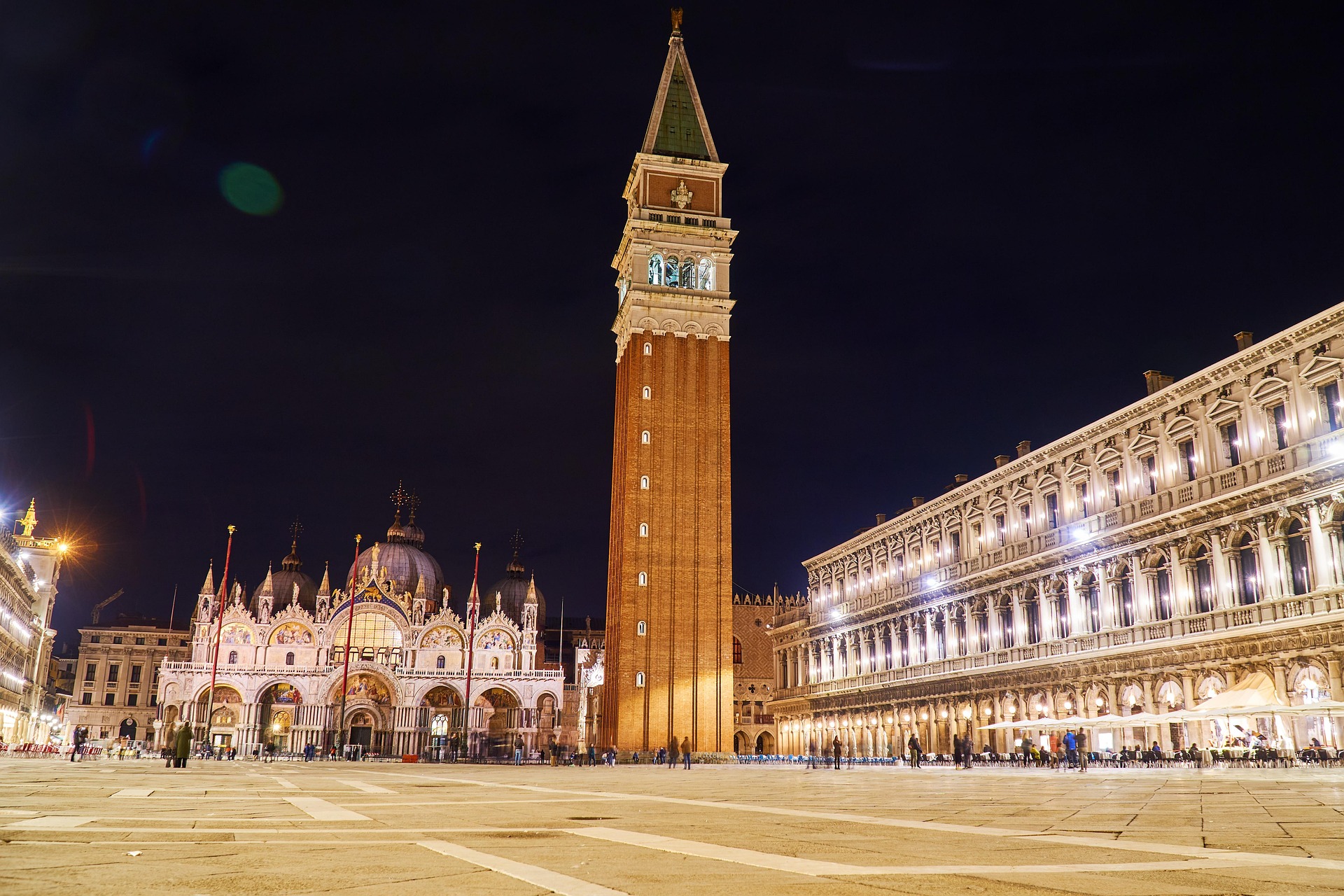
Legend also has it that sentences of quartering had to be carried out in the square. The condemned person was dragged to St Mark's Square with their arms and legs tied to four horses, which were then set off in four opposite directions, causing the body to be torn apart into four pieces. The head was then displayed in the square, impaled on a pike. It is precisely from these stories, suspended between history and legend, that the popular belief arose that passing between the columns of St. Mark and St. Todaro brings great misfortune.
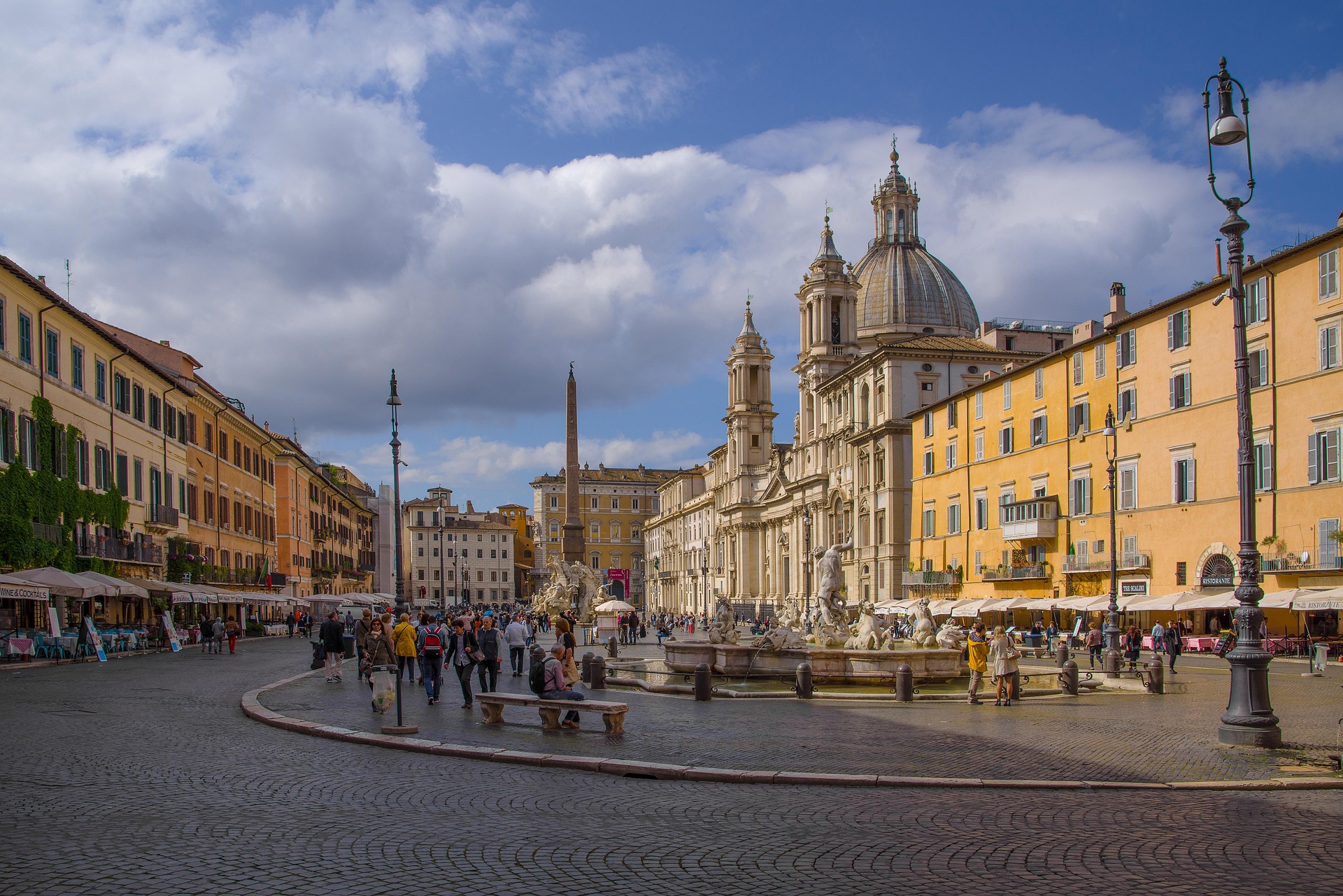
Piazza Navona and its renowned artistic heritage are often at the centre of stories about the famous rivalry between Gian Lorenzo Bernini and Francesco Borromini. A popular legend has it that, in the Fountain of the Four Rivers, the statue of the Rio de la Plata raises its arm to protect itself from the possible collapse of the nearby Church of Sant'Agnese in Agone, while the Nile covers its face so as not to have to look at the building designed by Bernini's rival. The fact that this is only a popular tale and not a historical event is confirmed by the fact that the fountain was completed between 1648 and 1651, while construction of the church only began in 1652.
Each statue in the fountain has a specific meaning: the four figures represent the main rivers of the continents known at the time: the Danube for Europe, the Ganges for Asia, the Nile for Africa and the Rio de la Plata for the Americas. In the specific case of the figures involved in the legend of the rivalry between the two artists, the Nile has its face covered because, at the time, its sources were still unknown. The Rio de la Plata, on the other hand, is depicted next to a sack of coins, symbolising the riches of the New World; according to some, its raised arm could express the amazement of an indigenous person at the grandeur of the scene.
Distinguishing between history and legend, therefore, undoubtedly remains one of the main tasks, not only for professionals and art lovers, but also for tourists and enthusiasts of Italian artistic heritage. However, the careful discovery of hidden details and curiosities allows us to go beyond simply taking photographs: it allows us to experience the squares, to interact with these spaces and to return to the source from which so much wonder was born.
written by Clara Gifuni

In 1291, Doge Pietro Gradenigo signed a decree that would forever change the history of European cra...

Tornano sabato 21 e domenica 22 marzo le Giornate FAI di Primavera, il più grande evento di pia...

2026 is approaching, and with the date set for Sunday, April 5th, the first real long weekend of spr...

Nestled between the mountains of Morrone and Majella, in the Peligna Valley in the province of L'Aqu...

Ever since 1946—the year of its birth—Vespa has always been synonymous with two concepts: revolution...

Napoli, con la firma ufficiale della Targa d’Argento e la consegna delle bandiere, entra concre...
Rivista online registrata al Tribunale di Napoli n. 43 del 23/03/2022
Direttore: Lorenzo Crea
Editore: Visio Adv di Alessandro Scarfiglieri
Insight italia srl (concessionario esclusivo)
Rivista online registrata al Tribunale di Napoli n. 43 del 23/03/2022
Direttore: Lorenzo Crea
Editore: Visio Adv di Alessandro Scarfiglieri
Insight italia srl (concessionario esclusivo)
