
Autore: Redazione • 11/03/2026 16:50
Ever since 1946—the year of its birth—Vespa has always been synonymous with two concepts: revolution and innovation. Over the years, in fact, it has stood out for its excellent ability to interpret the historical and social context from which it emerged, often even ahead of its time. On the other hand, right from the moment it was designed, this scooter managed to encapsulate all those elements that undoubtedly made it a style icon built to last. Born from the reconstruction climate of the post-WWII era, Vespa was immediately seen as a symbol of redemption and freedom. The genius of its creator, Corradino d'Ascanio, was his ability to combine creativity and mechanical engineering, bringing to life a vehicle that was functional, aerodynamic, and easy to use.
According to an accurate historical reconstruction, its shape originates from the MP6 prototype, a detail that immediately struck Enrico Piaggio. It seems that, precisely upon hearing the buzzing of the 98cc engine, he exclaimed: "It looks like a wasp!" ("Pare una vespa!"). A moment that marks not only the birth of a brand still celebrated worldwide today, but also the beginning of a true revolution in communication language. As early as the 1950s, the slogan "Vespizzatevi!" (Vespa-ize yourselves!) turned the vehicle's name into a verb, inviting people to see this project as a real alternative for urban mobility.
An innovation that, however, did not stop as the decades passed. Vespa, in fact, has known how to adapt well to market changes. In the 1980s, for example, with the rise of international competition, the brand managed to meet new demands by introducing innovative models and increasingly advanced technical solutions, right up to the most contemporary versions with electric motors. Even today, therefore, Vespa proves its ability to flawlessly blend tradition with the new challenges of modernity.
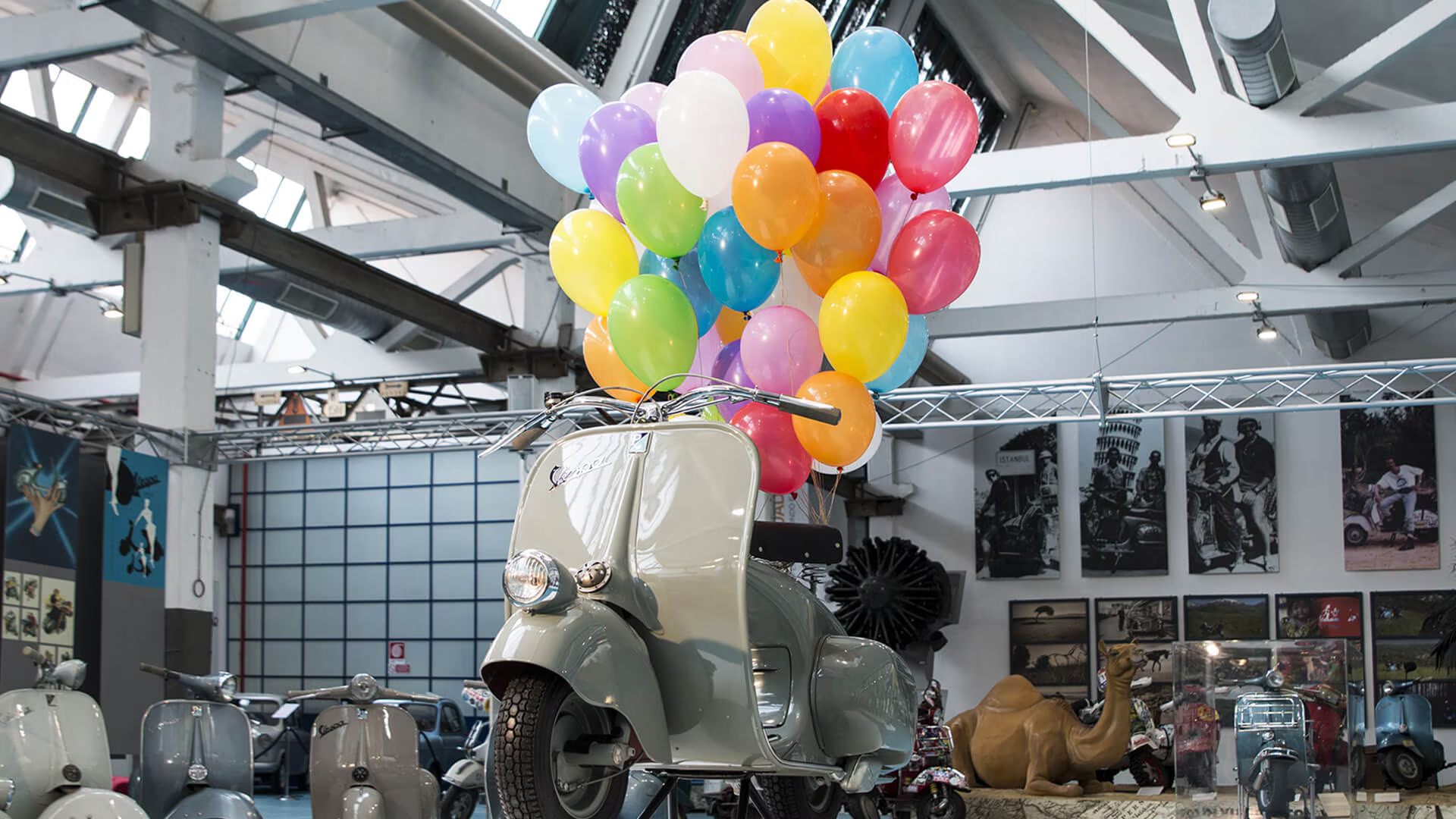
foto credits vespa.com
Entering the Piaggio Museum means diving into a fascinating tale of all-Italian ingenuity, passion, and creativity. Inaugurated in March 2000 in the old tool department of the historic Pontedera factory, the museum was born from the desire to preserve not just exhibition pieces, but above all the stories of people, dreams, and innovations that made Piaggio a national symbol. Today, with its 5,000 square meters and over 350 vehicles on display, this place is not only the largest Italian museum dedicated to two wheels, but also an unmissable stop for anyone who wants to rediscover an important piece of our history. Since its renovation in 2018, the museum has welcomed nearly 950,000 visitors, becoming a living space animated by temporary exhibitions and works by great artists such as Dalí, Picasso, Burri, Modigliani, and Carrà. Beyond the history of the Piaggio Group, here you can breathe the industrial and social evolution of Italy, among ships, trains, airplanes, cars, scooters, and motorcycles, passing through iconic models like the Ape and the Porter, and also bearing witness to the sporting epic of Aprilia, Gilera, and Moto Guzzi.
The main attraction of the museum is undoubtedly the Vespa Collection, one of a kind and capable of drawing enthusiasts from all over the world. Here, the extremely rare prototypes from the 1940s are preserved, such as the MP5—also nicknamed Paperino (Donald Duck)—and the famous MP6 designed by Corradino d’Ascanio in 1945. Alongside these, one can admire numerous historical models, true fragments of the evolution of a scooter that, over time, despite the most varied modifications, has managed to preserve its iconic status.
Photo credits: museopiaggio
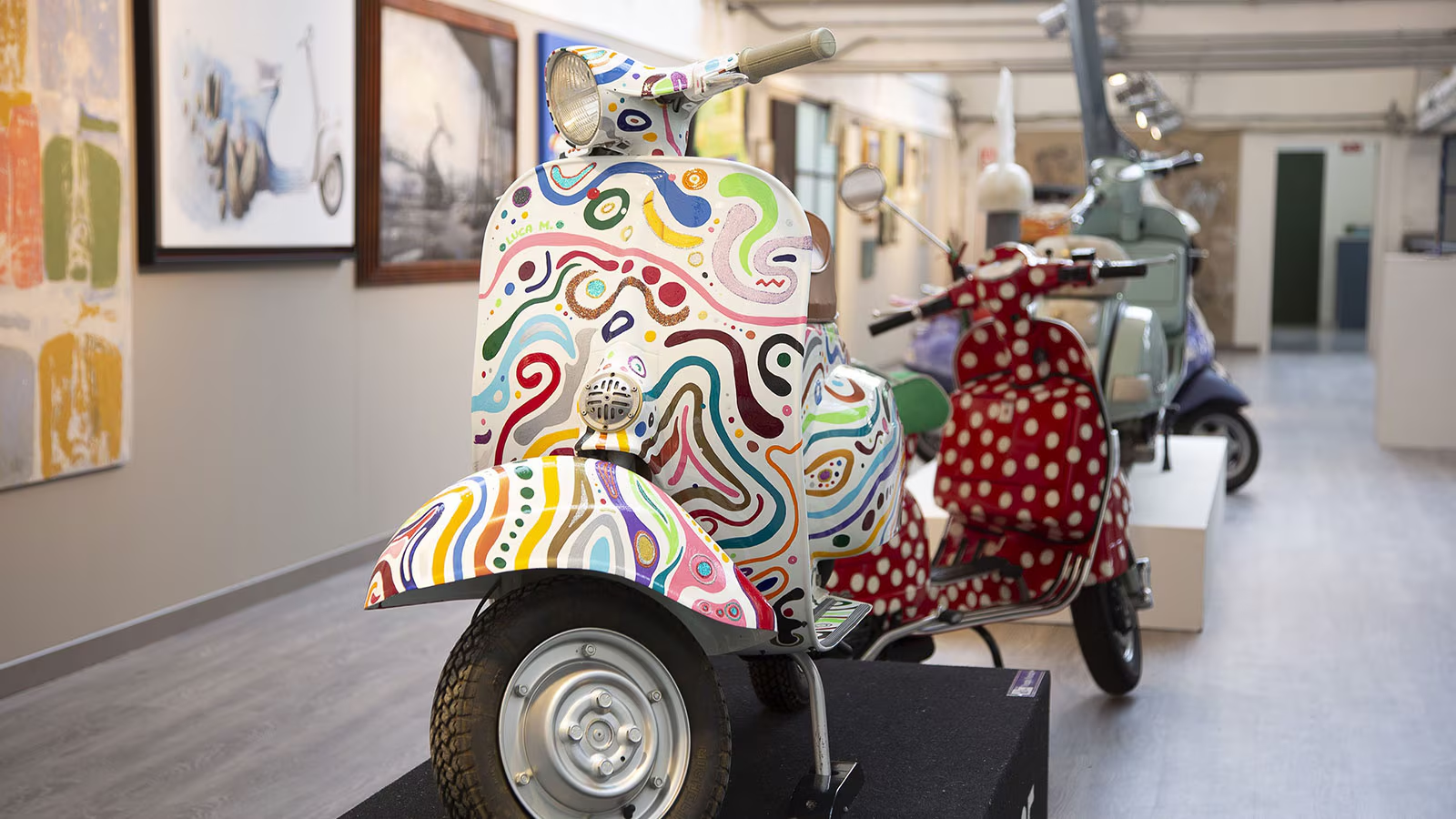
Among the most important we find:
Among the curiosities displayed in the museum, a giant four-meter-tall fiberglass Vespa PX 125 also stands out. Over time, Vespa has also entered the most important design museums in the world, including the Triennale Design Museum, confirming its value not only as an industrial product but also as a cultural and artistic one.
In 2026, Vespa celebrates its 80th anniversary and, for the occasion, the Piaggio Group is organizing an extraordinary event: the Vespa World Days, which will transform Rome into a colorful festival from June 25 to 28. Thousands of enthusiasts will gather at the Foro Italico to share emotions, stories, and their passion for a scooter that continues to unite generations. Rallies, parades, and exhibitions will retrace over eight decades of history, culminating in the presentation of celebratory models like the Primavera and the GTS, which blend the timeless design of yesterday with the most modern technologies of today. An exclusive rendezvous, reserved for Vespa Club members and owners of original Vespas, to experience firsthand the anniversary of one of the most famous symbols of Italianness.
Cover photo: www.theclassictimes.com
Edited by Clara Gifuni

In 1291, Doge Pietro Gradenigo signed a decree that would forever change the history of European cra...

Tornano sabato 21 e domenica 22 marzo le Giornate FAI di Primavera, il più grande evento di pia...

2026 is approaching, and with the date set for Sunday, April 5th, the first real long weekend of spr...

Nestled between the mountains of Morrone and Majella, in the Peligna Valley in the province of L'Aqu...

Squares have always been places where communities meet and recognise each other. Just think of the f...

Napoli, con la firma ufficiale della Targa d’Argento e la consegna delle bandiere, entra concre...
Rivista online registrata al Tribunale di Napoli n. 43 del 23/03/2022
Direttore: Lorenzo Crea
Editore: Visio Adv di Alessandro Scarfiglieri
Insight italia srl (concessionario esclusivo)
Rivista online registrata al Tribunale di Napoli n. 43 del 23/03/2022
Direttore: Lorenzo Crea
Editore: Visio Adv di Alessandro Scarfiglieri
Insight italia srl (concessionario esclusivo)
