
Autore: Giansalvo Pio Fortunato • 14/04/2026 13:29
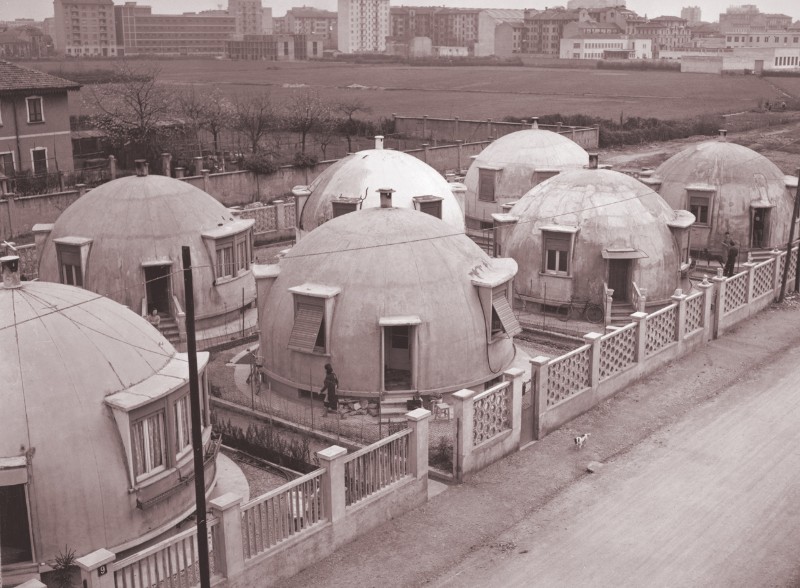
In small, middle-class Milan, near the Villaggio dei Giornalisti, temporary housing units were built to accommodate citizens who had lost their homes during the bombings of the Second World War. The Milan that welcomed these dwellings was a dynamic city that had driven out Nazis and Fascists. It was a courageous Milan, which had by then become a symbol of the Resistance. In 1946, Mario Cavallè designed 12 housing units that became a symbol of Milan’s architectural modernity. We are talking about the igloo houses.
In the heart of the Maggiolina district, among garden homes belonging to Milanese office workers and small entrepreneurs, Mario Cavallè—an architect who would contribute greatly to Milan’s urban planning—designed twelve public housing units inspired by an avant-garde American model.
Thus, the igloo houses were born, also known as “pumpkin houses.” These dwellings were intended to be purely temporary, designed to accommodate small families who had lost their homes during the Resistance. However, the remarkable uniqueness of these constructions has made them a symbol of a Milan that is rebuilding, as well as a Milan that represents an alternative, international outlook.
The igloo houses are, in fact, homes of about 45 square meters with a circular floor plan. They consist of a kitchenette, a bathroom, a bedroom, a “semi-basement,” and a small garden. A small architectural gem, therefore, which later became a true urban symbol of Milan.
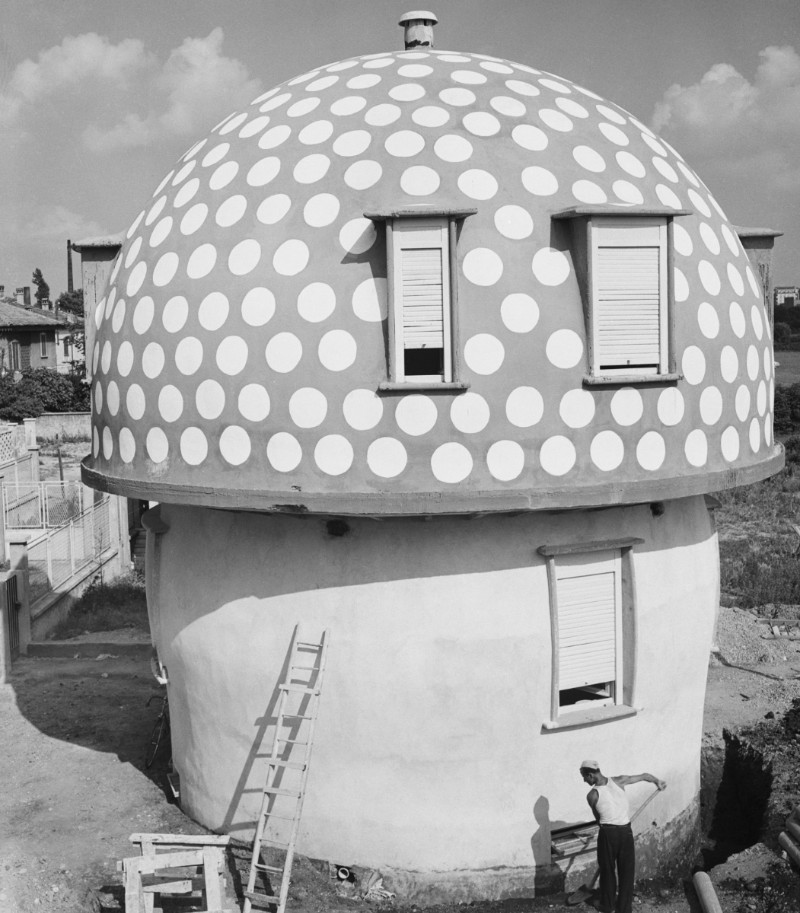
Currently, the igloo houses are still private residences. However, only eight of them remain functional and inhabited. Although Cavallè’s project may seem quite ambitious and rather unconventional, at the time these dwellings managed to combine architectural stability with functional balance. Thanks to a certain dynamism in their structural design, they provided all the utilities necessary for the temporary life of small families, occupying only the essential space while also adding a touch of greenery—an important element in the ecological renewal of post-war Milan.
In the 1960s, there were several favorable opinions regarding their demolition. However, a strong civic movement, also led by architects of the time, mobilized to prevent it. This initiative eventually succeeded.
Today, in fact, only two houses have retained their original structure. Nevertheless, their iconic shape and architectural concept have remained virtually unchanged.
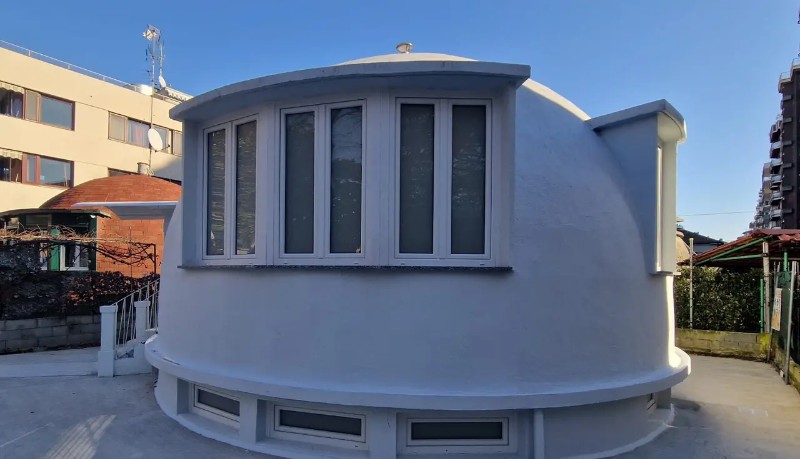
The most famous renovation was carried out on behalf of brothers Michele and Alberto Scala, both dentists from Melegnano. Fascinated by these unusual structures, they purchased an igloo house that had been on the market for quite some time, restoring it to its former glory. The renovation, which also involved professors from the Polytechnic, emphasized “Arctic” features inside, with the addition of small ice blocks and stalactites.
Naturally, the project did not escape criticism: some people criticized the bright white color, considering it tacky; others were particularly displeased with the replacement of the garden with a concrete surface.
An important factor is also the real estate market surrounding the igloo houses. In 2024, the sale of some homes for an amount exceeding 400,000 euros was reported, showing how the trend—more historical-architectural than anything else—and the reputation for uniqueness of these homes strongly influences the market, generating interest that is largely driven by fame rather than by a genuinely architectural appreciation, which is almost entirely absent.
Mario Cavallè is best known for his experiments in the field of alternative and sustainable architecture, such as the famous igloo houses, but his design activity was far broader and more complex.
In addition to these iconic structures, Cavallè devoted himself to designing modular and prefabricated housing, intended to be affordable, easy to transport, and adaptable to different environmental contexts. These projects stemmed from the idea of making architecture accessible to a wider audience, also responding to emergency needs, such as temporary housing in the event of natural disasters or rapid settlements in developing areas.
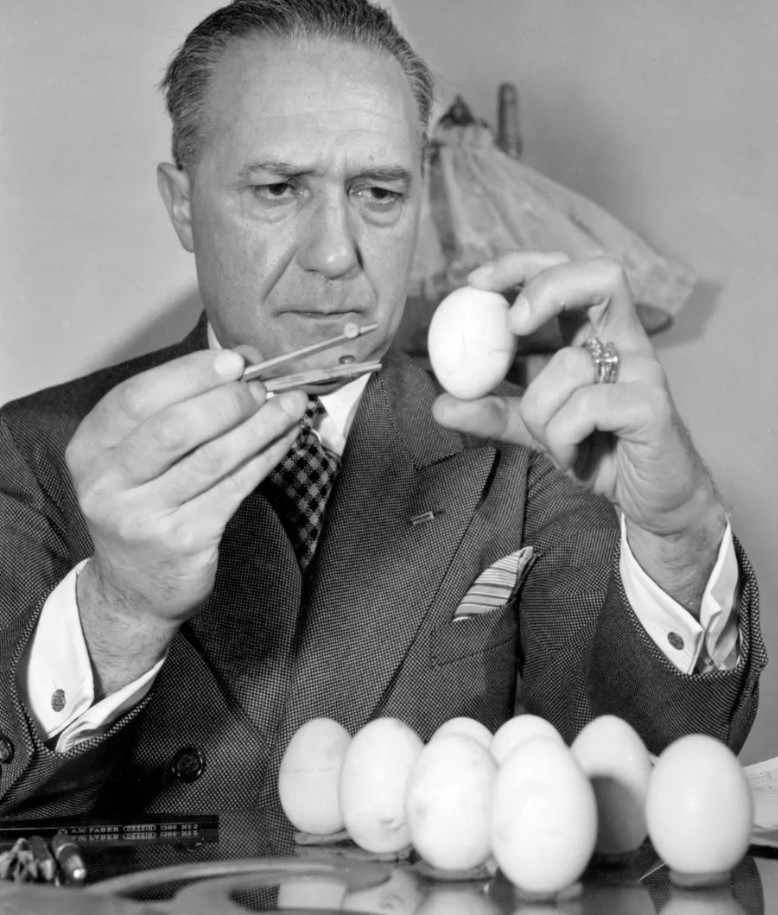
Another important area of his work concerns industrial design. Cavallè designed furniture elements and functional objects characterized by clean lines and an innovative use of plastic and composite materials, which were very popular during the years of the economic boom. His approach combined aesthetics and functionality, always seeking lightweight, durable solutions that were easy to mass-produce.
He was also interested in designing urban spaces and collective structures, such as exhibition pavilions and temporary installations. In these projects, his focus on spatial flexibility and on the interaction between architecture and the surrounding environment clearly emerged. His structures were often conceived to be assembled and dismantled quickly, anticipating concepts that are now widespread in contemporary architecture.
Cavallè also explored the theme of ecological architecture, experimenting with solutions aimed at reducing the environmental impact of buildings. The use of efficient geometric forms, such as the dome, was not only an aesthetic choice but also a functional one, as it allowed for better distribution of forces and improved energy efficiency.

There is a sound that never fades. Not the kind that dissolves into the air, but that of bronze bell...

We are in the early 1960s. On one side there is Enzo Ferrari, the "Drake", absolute monarch of the a...

From April 13 to 16, 2026, the Bologna Children’s Book Fair returns for its 63rd edition. Once again...

In 1291, Doge Pietro Gradenigo signed a decree that would forever change the history of European cra...

Tornano sabato 21 e domenica 22 marzo le Giornate FAI di Primavera, il più grande evento di pia...

2026 is approaching, and with the date set for Sunday, April 5th, the first real long weekend of spr...
Rivista online registrata al Tribunale di Napoli n. 43 del 23/03/2022
Direttore: Lorenzo Crea
Editore: Visio Adv di Alessandro Scarfiglieri
Insight italia srl (concessionario esclusivo)
Rivista online registrata al Tribunale di Napoli n. 43 del 23/03/2022
Direttore: Lorenzo Crea
Editore: Visio Adv di Alessandro Scarfiglieri
Insight italia srl (concessionario esclusivo)
