
Autore: Michele Spinelli • 07/05/2026 09:12
On 13th May 1909, in Milan, shortly before three in the morning, almost one hundred and thirty men mounted their bicycles and set off into the unknown of a road 2,448 kilometres long, divided into eight stages. It was the first Giro d’Italia in history, born from an idea by the journalist Tullio Morgagni and backed by *La Gazzetta dello Sport*, the very newspaper that, still today, with its pink-coloured paper, has given its name to the most coveted jersey in world cycling. The one who crossed the final finish line of that inaugural edition was Luigi Ganna, a workman and cyclist, whose victory marked the beginning of a tradition that would never be interrupted again, save for the two world wars. Since then, the Corsa Rosa has narrated Italy every spring, stage after stage, along country roads and Alpine passes, across the plains of the Po and over the Dolomites, becoming far more than a sports competition: a collective rite, a mirror of the country.
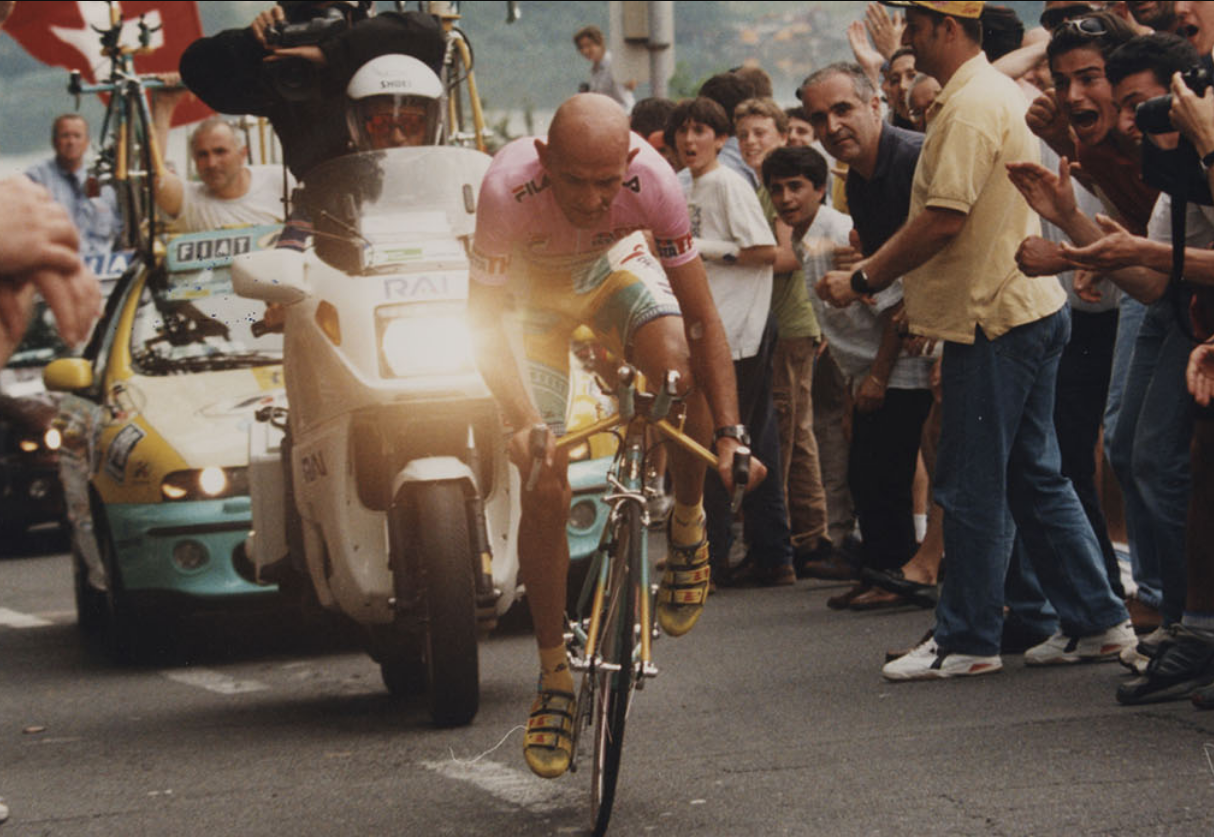
The history of the Giro d’Italia is, first and foremost, the story of the men who have ridden it. The absolute record of victories is shared by three champions belonging to different but equally brilliant eras: the Italian Alfredo Binda, winner five times between 1925 and 1933; the *campionissimo* Fausto Coppi, also capable of triumphing five times between 1940 and 1953; and the Belgian Eddy Merckx, nicknamed the Cannibal, who imposed himself just as many times between 1968 and 1974, demonstrating a superiority that still astounds. The rivalry between Coppi and Gino Bartali, who won in 1936, 1937 and 1946, went far beyond cycling, dividing post-war Italy into two passionate sets of supporters. Then came the years of Felice Gimondi, Francesco Moser, Bernard Hinault, and finally the lightning accelerations of Marco Pantani, the Pirate, the only Italian to achieve the Giro–Tour double in 1998. In more recent years, Vincenzo Nibali won in 2013 and 2016, while in 2024 Tadej Pogačar dominated the whole race with a superiority comparable to that of the greats of the past. Every name is a chapter, every pink jersey a story.
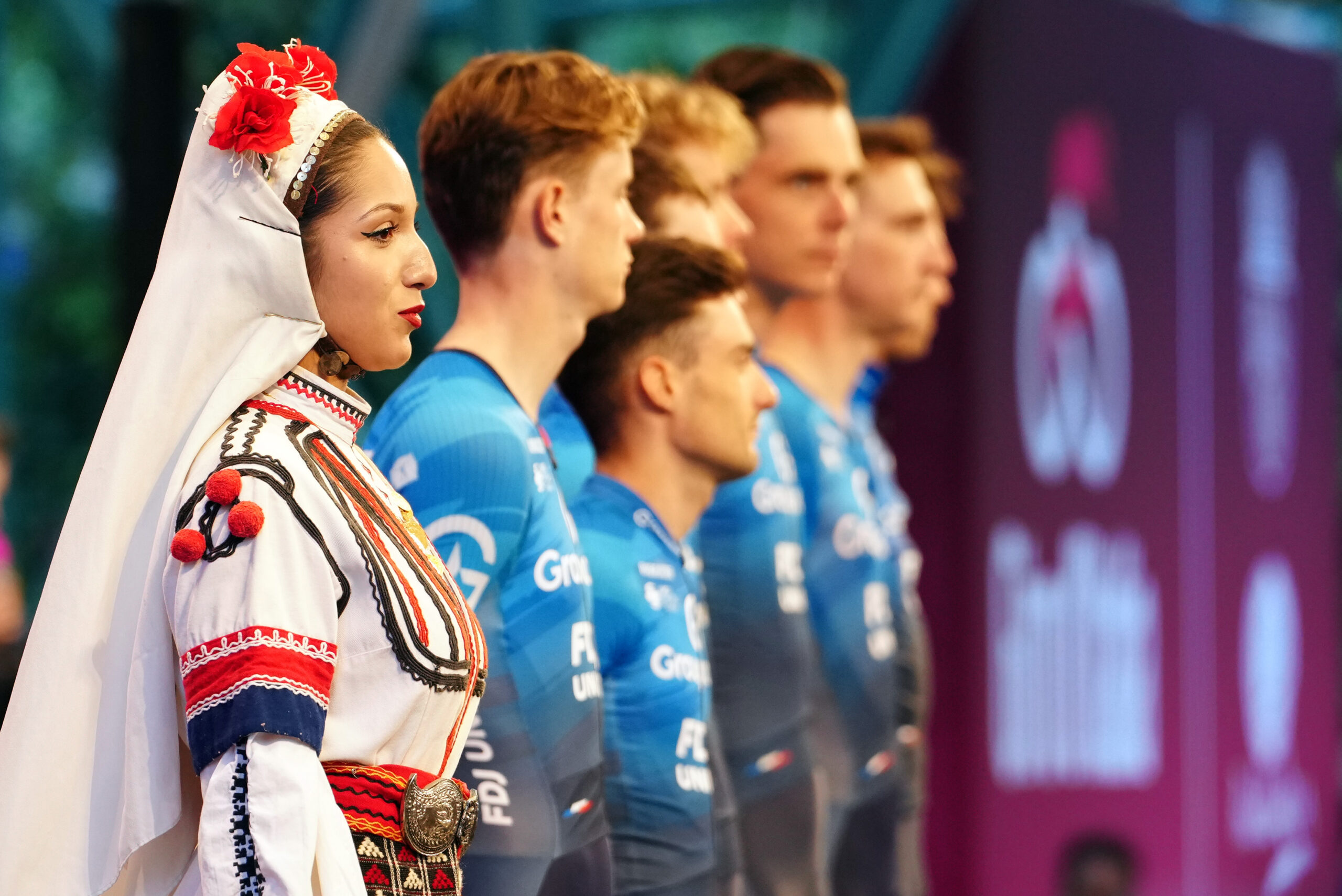
The 111th edition of the Corsa Rosa sets off on 8th May 2026 from Nessebar, Bulgaria, marking a historic first: for the first time in its long life, the Giro d’Italia starts outside Italian borders, departing from the Balkans. The first three stages will take place on Bulgarian soil, between the Black Sea and the inland valleys, before the race returns to Italy in Catanzaro and resumes its traditional ascent along the peninsula. The overall route comprises 21 stages and 3,469 kilometres, with nearly 49,000 metres of total elevation gain spread across plains, hills, summit finishes and a single individual time trial of 42 kilometres in Tuscany. Three rest days are scheduled, one more than usual, to allow the transfer from Bulgaria to Italy. The race will touch Naples, Milan and will finish for the fourth consecutive year in Rome, crossing a vast swathe of the national territory, with a passage also into Switzerland on the stage from Bellinzona towards the Alps.
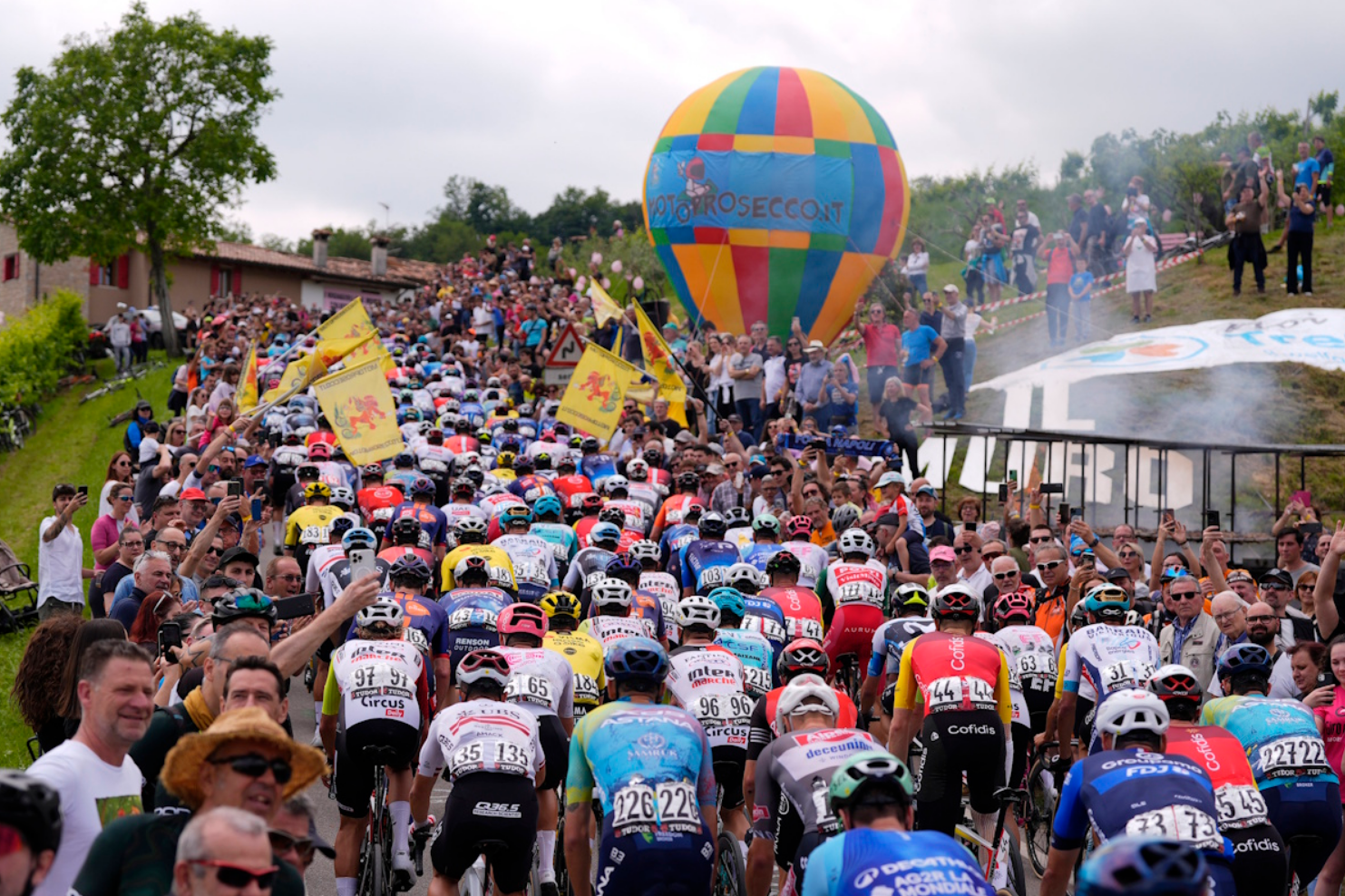
The 2026 route is designed to leave the major decisions to the final two weeks, according to a logic that the race organisers have refined over time. The first true battle on the climbs is expected as early as the seventh stage, Formia–Blockhaus, with its 246 kilometres – the longest leg of the entire edition – which will culminate on the Abruzzo massif with a first-category finish. The second week reserves the Tuscan time trial along the coast around Viareggio, followed by mixed stages through the Cinque Terre, the Ligurian Riviera and Piedmont, before the adrenaline-fuelled Aosta–Pila in the Aosta Valley, with over 4,000 metres of climbing and passes that lay bare the muscular and mental resilience of the climbers. The queen stage of the third week, featuring the Passo Giau as the *Cima Coppi* at 2,233 metres of altitude, includes more than 5,000 metres of elevation gain and represents the moment when the race is truly decided. The Alpine route is almost devoid of flat sections – an uninterrupted sequence of ascents and descents that demands physical preparation pushed to the limits of possibility and tactical clarity at every bend.
A Grand Tour like the Giro d’Italia requires months of progressive build-up, with altitude training blocks, reconnaissance of the key climbs and very precise management of the physical load in the weeks preceding the start. The riders aiming for the general classification must be complete on all terrains: capable of losing as little time as possible in time trials, of managing the flat stages without wasted energy and of expressing themselves to the full on the summit finishes, often with many hours of racing already in their legs. The third week, historically the hardest of the Giro, is the one in which the quality of the work done in the preceding months is revealed, because accumulated fatigue exposes any gaps in preparation. The pure climbers, favoured by the elevation profile of 2026, must nevertheless demonstrate solidity also on the windy days of the Tuscan coast during the time trial, where specialists of the race against the clock can gain precious minutes. The race is, in the end, a delicate balance between strength, endurance, choosing the right moment to attack and, not least, the ability to withstand the psychological pressure of racing with the pink jersey on one’s shoulders.
The great favourite for the final victory is the Dane Jonas Vingegaard, twice champion of the Tour de France in 2022 and 2023 and winner of the Vuelta a España 2025, making his absolute debut in the Corsa Rosa in the colours of Team Visma | Lease a Bike. His absence from previous editions makes this Giro particularly awaited by the fans, who are eager to see the Northern European test himself against the Italian climbs. Opposing him above all will be Giulio Pellizzari, the young rider from the Marche region of Red Bull-Bora-hansgrohe, already sixth in 2024 and winner of the Tour of the Alps 2026, flanked by the Australian Jai Hindley, champion of the Corsa Rosa in 2022 and a guarantee of experience. Among the other names to watch are Egan Bernal of Ineos Grenadiers, the Colombian who won this Giro in 2021 and continues to build his competitive rebirth, and Enric Mas of Movistar, a Spanish climber of recognised quality. In the sprints, on the other hand, the Italian benchmark is Jonathan Milan of Lidl-Trek, winner of the green jersey at the Tour de France 2025 and already twice champion of the points classification at the Giro, capable of making the difference every time the road flattens out towards the finish. On the climbs, Lorenzo Fortunato of XDS Astana will defend the azure colours in the race for the blue jersey, having already won the mountains classification in the previous edition.
Rome, on 31st May, will have the final say on a race that crosses the whole of Italy before consigning the pink jersey to history. Whoever climbs onto the podium of the Urbe will have won a race, but will also bear the weight and the honour of a story that has lasted for over one hundred and eleven years, made of tarmac, toil, and of a country that, every May, lines the roadsides to applaud.
Credit photos: giroditalia.it

“8 hours of work, 8 of leisure, 8 for sleep”—a slogan that today is certainly an invitation to remem...

You don't need a monument, nor a typical dish, nor a dialect word to evoke an entire island: sometim...

There is a sound that never fades. Not the kind that dissolves into the air, but that of bronze bell...

In small, middle-class Milan, near the Villaggio dei Giornalisti, temporary housing units were built...

We are in the early 1960s. On one side there is Enzo Ferrari, the "Drake", absolute monarch of the a...

From April 13 to 16, 2026, the Bologna Children’s Book Fair returns for its 63rd edition. Once again...
Rivista online registrata al Tribunale di Napoli n. 43 del 23/03/2022
Direttore: Lorenzo Crea
Editore: Visio Adv di Alessandro Scarfiglieri
Insight italia srl (concessionario esclusivo)
Rivista online registrata al Tribunale di Napoli n. 43 del 23/03/2022
Direttore: Lorenzo Crea
Editore: Visio Adv di Alessandro Scarfiglieri
Insight italia srl (concessionario esclusivo)
