
Rivista online registrata al Tribunale di Napoli n. 43 del 23/03/2022
Direttore: Lorenzo Crea
Editore: Visio Adv di Alessandro Scarfiglieri
Insight italia srl (concessionario esclusivo)
Rivista online registrata al Tribunale di Napoli n. 43 del 23/03/2022
Direttore: Lorenzo Crea
Editore: Visio Adv di Alessandro Scarfiglieri
Insight italia srl (concessionario esclusivo)
On January 29th, Perugia celebrates San Costanzo, its first bishop and one of the city’s three patron saints, alongside San Lorenzo and Sant’Ercolano. Religious and civic festiviti…
By Redazione · September 28, 2025 · ≈ 2 min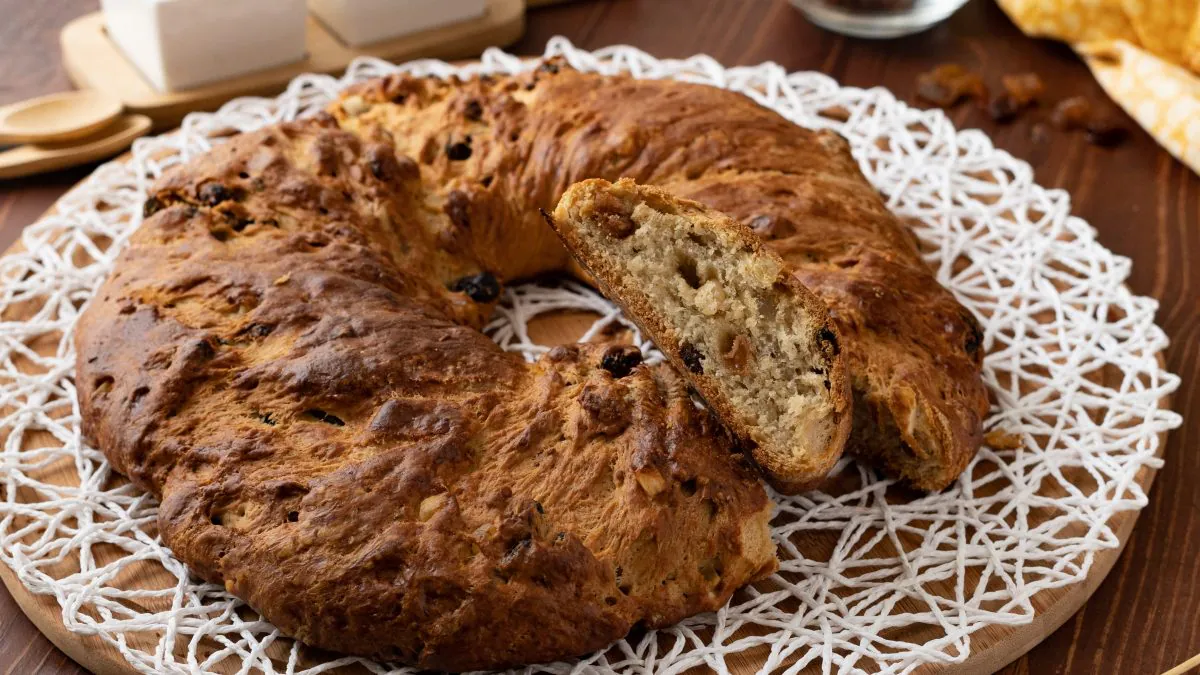
By Redazione · September 28, 2025 · ≈ 2 min
On January 29th, Perugia celebrates San Costanzo, its first bishop and one of the city’s three patron saints, alongside San Lorenzo and Sant’Ercolano. Religious and civic festivities intertwine with popular traditions, especially the Fiera Grandein Borgo XX Giugno, featuring artisan stalls and tables filled with the day’s signature treat: the Torcolo di San Costanzo.
According to tradition, Costanzo was martyred in the 2nd century during Emperor Marcus Aurelius’s persecutions. Miraculously surviving both the calidarium and burning coals, he was ultimately beheaded in Foligno around 178 CE. His remains were later brought to Perugia, where they still rest in the church dedicated to him. His widespread veneration throughout the region inspired the creation of the sweet that Perugians have baked for centuries in his honor.
The torcolo is a ring-shaped leavened cake enriched with anise, candied fruit, pine nuts, and raisins, originally made from bread dough. Its shape and details carry deep symbolic meaning: the central hole is said to represent the saint’s severed neck, or perhaps a jeweled crown (the candied fruit); others interpret it as the floral wreath laid on Costanzo’s body after his martyrdom. The five diagonal cuts on the surface symbolize the five gates and five districts of Perugia’s historic center.
In the 16th century, religious congregations commissioned large batches of torcolo to distribute to the poor, while Perugian bakers competed to create the best version to offer to the townspeople. Today, the tradition lives on not only in homes and pastry shops but also in popular rituals—like the “wink of San Costanzo”. According to custom, unmarried women visit the saint’s statue, and if a play of light makes it appear that he winks, it means a wedding will happen within the year.
If you’re in town on January 29th, don’t miss the chance to try torcolo. In addition to being handed out during the Fiera Grande, it’s available in several historic pastry shops: from the Antica Latteria, which preserves a century of tradition, to B&B Caffè in Elce, and the renowned Pasticceria Sandri, active since 1860. In every variation, torcolo maintains its deep connection to the city and its faith, becoming not just a dessert, but a story of Perugian history, culture, and identity.
