
Autore: Serena Trivelloni • 24/04/2026 09:06
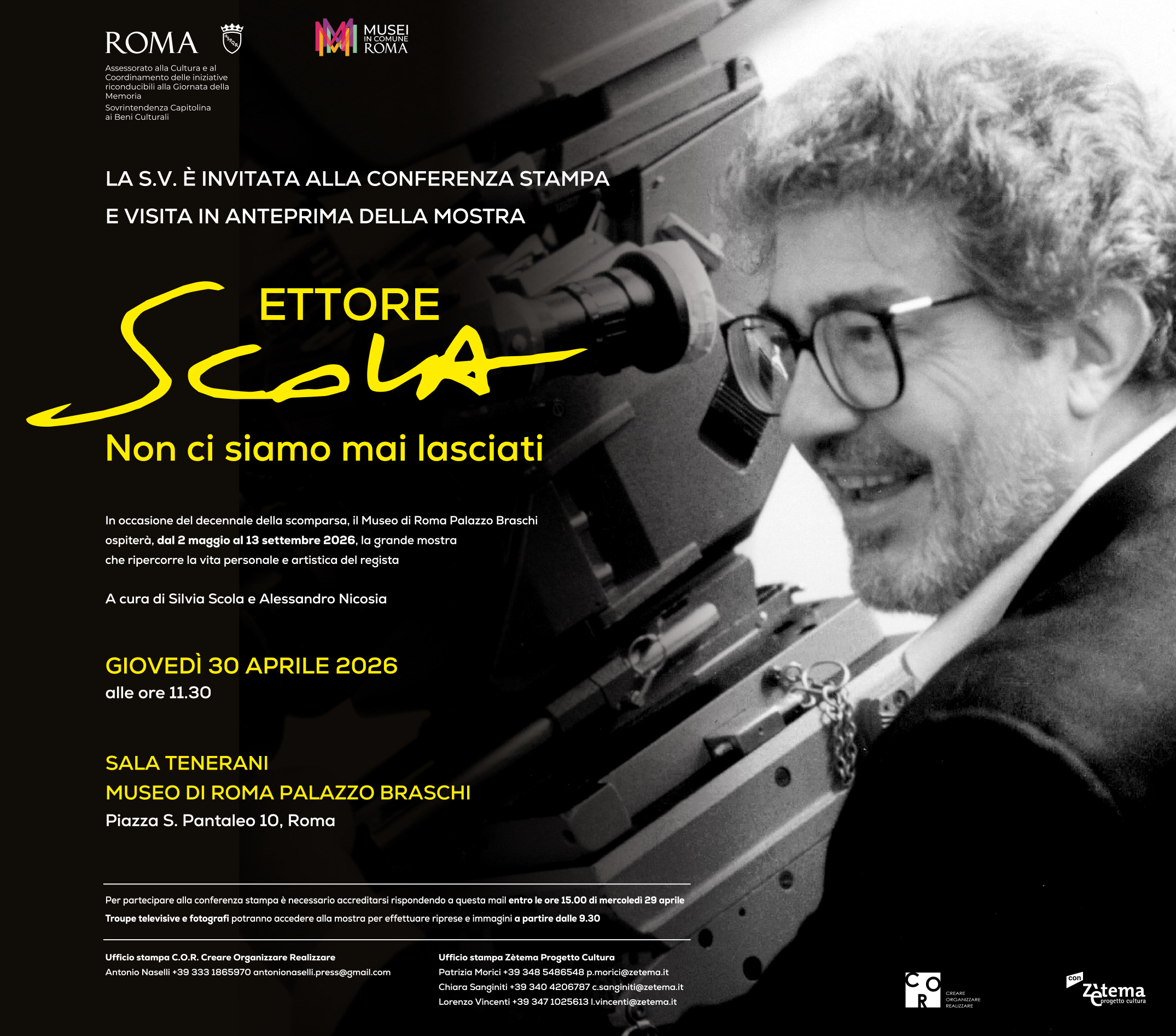
Ten years after his death, Ettore Scola returns to the spotlight at the Museum of Rome at Palazzo Braschi with a major exhibition of images, artifacts and collective memory. Press preview and conference on Thursday, April 30.
Dear Ettore, we never really parted.
More than a commemorative gesture, that sentiment anchors “Non ci siamo mai lasciati,” the exhibition opening in Rome to mark the tenth anniversary of Ettore Scola’s death. This is not an exercise in nostalgia so much as an act of necessity, because Scola’s cinema still speaks, still questions, still holds up a mirror to an Italy in flux, and often in doubt.
Director, screenwriter, public intellectual, Scola moved through more than half a century of Italian cultural life. From C’eravamo tanto amati to Brutti, sporchi e cattivi, from Una giornata particolare to La famiglia, his work fused irony with melancholy, social critique with emotional precision.
In his films, private lives unfold against the sweep of history, politics intersects with intimacy, and clarity never yields to rhetoric. La terrazza, for instance, offers a coolly disenchanted portrait of Rome’s intellectual bourgeoisie, suspended between ideals and compromise. And Che ora è, starring the beloved Massimo Troisi, remains a quietly devastating study of time and intimacy, a father and son circling one another through distance, silence and all that goes unsaid, held in a delicate balance between restraint and truth.
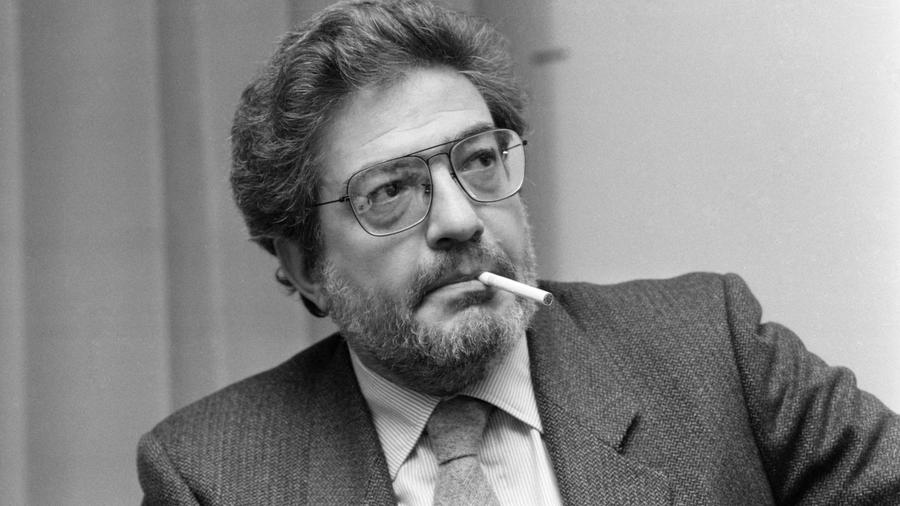
It is fitting that Rome should be the city to honor him. More than a backdrop, it was a central character in Scola’s imagination. From its popular vitality to its corridors of cultural power, he rendered the capital as both a lived in place and a national metaphor.
The exhibition at the Museo di Roma Palazzo Braschi unfolds within this ongoing dialogue between artist and city. Archival materials, photographs and documents trace not only the filmmaker’s career but the contours of a life, and of an era.
Promoted by Rome’s cultural institutions with the support of Massimiliano Smeriglio, the project fulfills a promise, that Scola’s legacy should not remain the preserve of memory alone.
His films also recall enduring collaborations with actors who shaped the language of Italian cinema, among them Sophia Loren, Marcello Mastroianni, Vittorio Gassman and Ugo Tognazzi, faces that helped define a still potent collective imagination.
Scola was never only a filmmaker. He was also a participant in Italy’s cultural and political discourse, attentive to the shifting terrain of ideology, to the contradictions of the left, and to the relationship between culture and power.
His cinema did not judge so much as observe, and in observing, it revealed. That is why it still feels immediate.
“Non ci siamo mai lasciati” is less a retrospective than an immersion in memory. It invites viewers to rediscover not just a filmmaker, but a chapter of Italian cinema that spoke, and still speaks, to the world.
Like Scola’s films, the exhibition lingers. It leaves behind questions, reflections, and a deep sense of longing.
• Exhibition: Ettore Scola. Non ci siamo mai lasciati
• Venue: Museo di Roma Palazzo Braschi, Piazza San Pantaleo 10
• Dates: May 2 to September 13, 2026
• Press preview and conference: Thursday, April 30, 2026, 11:30 a.m.
• Location: Sala Tenerani
• Press accreditation: by 3:00 p.m., April 29
• Photo and TV access: from 9:30 a.m.

5 Seconds of Summer (5SOS) are finally back with their new world tour, Everyone’s a Star!, and will ...

There is a place in Italy where spring explodes, and that place is Merano.From April 23 to 26, 2026,...

Now in its 64th edition, the Salone del Mobile returns to the Rho Fiera exhibition centre in Milan. ...

“The Age of Cathedrals” Never Really Ended: Inside the Living Legacy of Notre Dame de ParisA Show Th...

From 27 February to 28 June 2026, the elegant rooms of Palazzo Roverella in Rovigo will host the exh...

From 12 February to 14 June 2026, the splendid rooms of Palazzo Barberini in Rome will host the exhi...
Rivista online registrata al Tribunale di Napoli n. 43 del 23/03/2022
Direttore: Lorenzo Crea
Editore: Visio Adv di Alessandro Scarfiglieri
Insight italia srl (concessionario esclusivo)
Rivista online registrata al Tribunale di Napoli n. 43 del 23/03/2022
Direttore: Lorenzo Crea
Editore: Visio Adv di Alessandro Scarfiglieri
Insight italia srl (concessionario esclusivo)
