
Autore: Serena Trivelloni • 20/02/2026 15:05
When the curtain rises on Macbeth, audiences aren’t simply watching an opera, they’re entering a psychological descent into ambition, guilt and moral collapse. With this brooding, electrifying score, Giuseppe Verdi transformed William Shakespeare’s tragedy into one of the most dramatically potent works in the operatic repertoire. Now on stage at Teatro Regio di Torino until March 7 2026, the production reaffirms the opera’s enduring grip on contemporary audiences.
Premiering in 1847 and later revised by Verdi, Macbeth marked a turning point in the composer’s career. The music abandons decorative elegance in favor of raw theatrical force. The witches’ choruses pulse with menace, Lady Macbeth’s vocal lines cut with razor-sharp intensity, and the orchestration mirrors the unraveling psyche of its protagonists. It is opera stripped to its emotional core, visceral, unsettling and strikingly modern.
The story begins with prophecy. Returning from battle, the Scottish general Macbeth encounters three witches who predict he will become king. The suggestion ignites a dangerous spark, but it is Lady Macbeth who fans it into flame. Driven by ambition and ruthless clarity, she urges her husband to murder King Duncan and seize the throne.
The crime sets off a chain reaction that neither can control. Power brings not security but suspicion. Macbeth becomes increasingly isolated, haunted by visions and consumed by fear of betrayal. Each new threat demands another act of violence, deepening the moral void. Meanwhile, Lady Macbeth, once steely and resolute, begins to fracture under the weight of guilt. Her sleepwalking scene remains one of opera’s most haunting portrayals of psychological disintegration, as she attempts in vain to wash imagined blood from her hands.
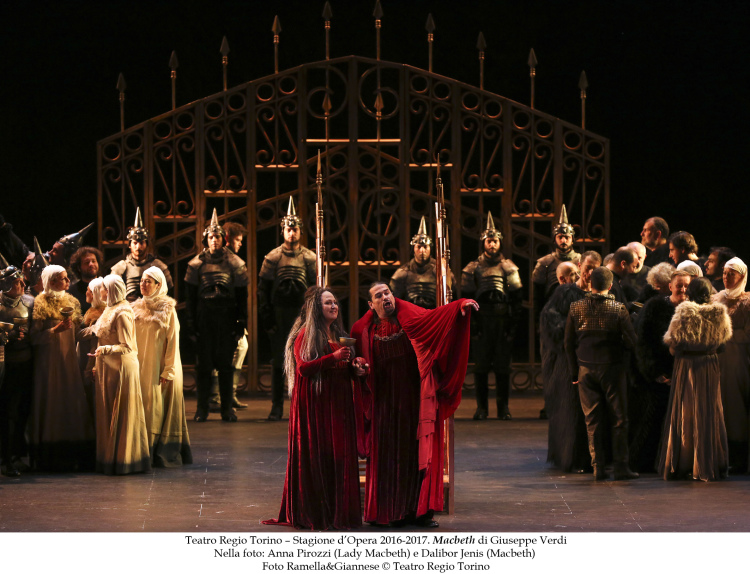
In the opera’s final act, Macbeth clings to the witches’ words as armor against defeat. They have told him that no man “born of woman” can harm him and that he will remain safe until Birnam Wood marches against his castle. Interpreting the prophecy literally, Macbeth believes himself invincible.
But Shakespeare’s cruel irony, sharpened by Verdi’s dramatic scoring, soon takes hold. The advancing army disguises itself with branches cut from Birnam Wood, creating the illusion of a moving forest. And when Macduff confronts Macbeth in the climactic duel, he reveals he was delivered by cesarean birth, not “born of woman” in the conventional sense. The prophecy fulfills itself through ambiguity. Macbeth’s confidence shatters, and he falls in battle. His death marks the end of tyranny, and the final chorus restores moral order, though the emotional aftershock lingers.

There is a sound that never fades. Not the kind that dissolves into the air, but that of bronze bell...

In small, middle-class Milan, near the Villaggio dei Giornalisti, temporary housing units were built...

We are in the early 1960s. On one side there is Enzo Ferrari, the "Drake", absolute monarch of the a...

From April 13 to 16, 2026, the Bologna Children’s Book Fair returns for its 63rd edition. Once again...

In 1291, Doge Pietro Gradenigo signed a decree that would forever change the history of European cra...

Tornano sabato 21 e domenica 22 marzo le Giornate FAI di Primavera, il più grande evento di pia...
Rivista online registrata al Tribunale di Napoli n. 43 del 23/03/2022
Direttore: Lorenzo Crea
Editore: Visio Adv di Alessandro Scarfiglieri
Insight italia srl (concessionario esclusivo)
Rivista online registrata al Tribunale di Napoli n. 43 del 23/03/2022
Direttore: Lorenzo Crea
Editore: Visio Adv di Alessandro Scarfiglieri
Insight italia srl (concessionario esclusivo)
