
Autore: Luigi Graziano Di Matteo • 07/03/2026 19:22
Today, March 8, the world celebrates International Women’s Day.
Although it is commonly referred to as “Women’s Day,” today is not simply a celebration. It is a day of reflection — a moment to acknowledge the importance of women in everyday life, in every aspect of society, and to honor those who made history by fighting for rights that once seemed unimaginable. It is also a day to reflect on what still needs to be improved.
The progress made over the last century is immeasurable, but the present must not be seen as a final destination. It should instead be a starting point — a call to do more, to achieve true gender equality.
To explore the deeper meaning of this day, we chose to speak with Viola Ardone. One of the most beloved contemporary Italian authors, Ardone has given voice — in novels such as Il treno dei bambini and Oliva Denaro — to the struggle, courage, and emancipation of women in Italy. In this interview, she guides us through a journey between past and present, reminding us why awareness of our history is essential to defend tomorrow’s freedom.
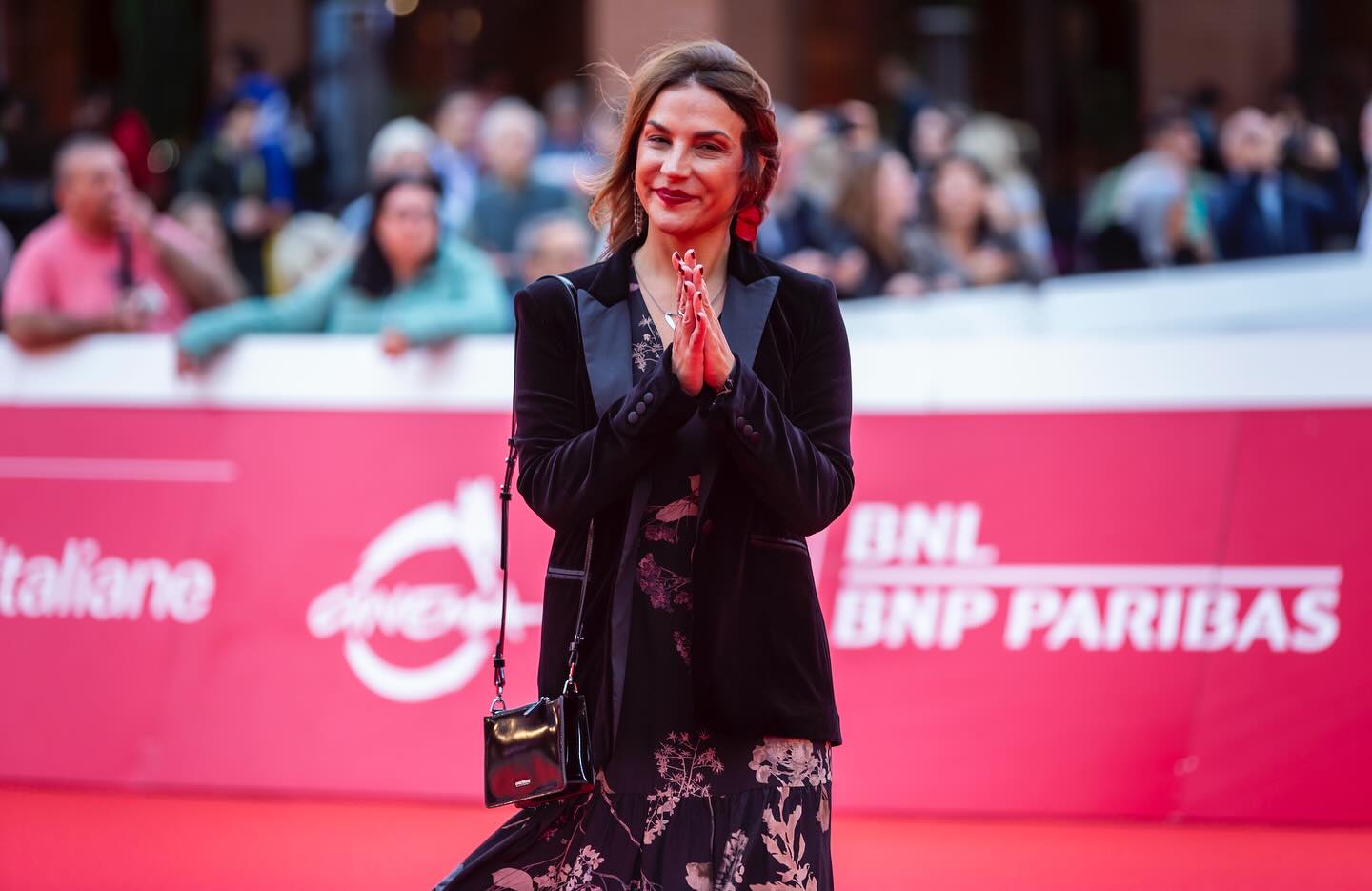
The idea of International Women’s Day originated in the early 20th century, when the first movements for labor equality began to emerge. The first “Women’s Day” was celebrated in the United States on February 23, 1909, conceived by the American Socialist Party as a demonstration in favor of women’s suffrage, to be held on the last Sunday of February.
The date of March 8 is traditionally linked to 1917: on that day — corresponding to February 23 in the Julian calendar then used in the Soviet Union — the women of Saint Petersburg, especially textile workers, organized a massive protest calling for an end to World War I. That demonstration sparked the February Russian Revolution.
In 1921, during the Second International Conference of Communist Women in Moscow, it was decided to fix March 8 as International Working Women’s Day.
In Italy, the first celebration took place on March 12, 1917, promoted by the Italian Communist Party. In 1945, the Union of Italian Women celebrated the day on March 8 in liberated Italy. After the war, in 1946, it was celebrated nationwide — and the mimosa, with its rapid bloom, became the symbol of hope and strength. In several socialist and communist countries, March 8 became a national holiday.
While universal suffrage began spreading across Europe after World War I, Italian women gained the right to vote in 1946, during the first postwar administrative elections.
In 1977, thanks to a UN resolution, March 8 became a globally recognized day.
The 1970s marked major progress for women’s rights in Italy:
– 1970: introduction of divorce
– 1975: full legal equality between husband and wife, abolishing “marital authority”
– 1977: law guaranteeing equal treatment in the workplace
– 1978: law 194 on abortion
The first proposals for a law against sexual violence were presented in 1979, but it was only in 1996 that Italy introduced a law significantly increasing penalties for sexual assault.
The UN aims for full gender equality by 2030 — the fifth Sustainable Development Goal of the 2030 Agenda.
Today, Italy continues to progress, with a female employment rate of 52.5% in 2025 — still below the EU average. According to CNEL, women remain underrepresented in leadership roles, at just 21.8%.
Dear Viola, welcome to InItaly. It is a pleasure to have you with us.
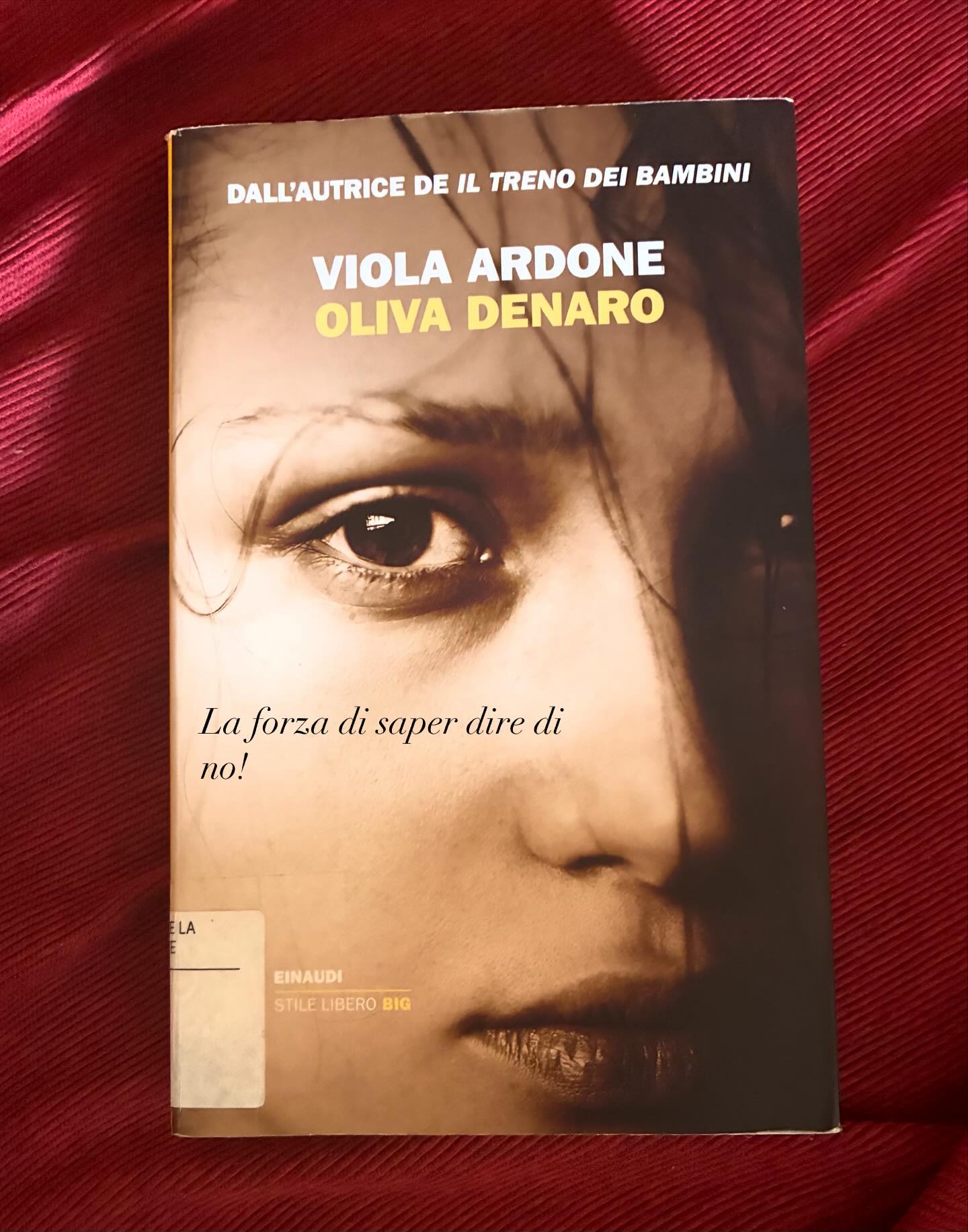
In your novel Oliva Denaro, inspired by the true story of Franca Viola, you portray the explosive strength of a girl who says “no” to a forced marriage in 1960s Sicily. Today, looking at contemporary society, what is the new “no” that women must find the courage to say to defend their freedom and their rights?
Oliva Denaro says “no” to a forced marriage in a time when such refusal was almost an act of civil disobedience. That “no” was not only personal: it challenged a custom, a mindset, an unwritten law. Today, the new “no” may not have a single form — it has many. It is a no to violence, of course, but also a no to the silent expectations that still weigh on women: the idea that they must always be accommodating, always available, always one step behind. It is a no to the guilt that is too often placed on women when they claim space, time, ambition.
I believe the hardest “no” today is the one spoken within everyday life: in work choices, in relationships, in the way a woman decides to exist in the world. Because freedom is never won once and for all — it must be exercised every day, even in the small decisions that seem private but always have a collective dimension.
The protagonists of your novels show us how difficult the road to women’s emancipation has been in Italy. In your opinion, are young women today aware of the battles fought by their mothers and grandmothers? What “historical legacy” do you fear might be lost or taken for granted?
The protagonists of my novels often stand on a threshold: between what has been and what could be. Their stories remind us that rights do not appear spontaneously — they are the result of conflict, of courageous choices, of women who paid a very high personal price.
Girls today live in a world that, thanks to those battles, offers possibilities once unimaginable. This is a great achievement, but it also carries a risk: believing that what we have is natural, almost inevitable — when it is not. Rights are always the product of historical evolution, and for this reason, they are fragile.
Beyond being a writer, you are also a teacher and experience the world of young people every day. School is the first true laboratory of equality. Looking at your students, what challenges or stereotypes do girls still face today? Do you believe culture and reading remain the most powerful tools for emancipation?
At school I meet girls who are intelligent, curious, full of potential. Yet stereotypes have not disappeared — they have simply become more subtle. No one openly tells a girl what she can or cannot do; the messages are more implicit, coming from social models, language, even family expectations.
For example, I notice how difficult it still is for many girls to feel entitled to ambition. Sometimes they fear appearing “too much,” taking up too much space. It is a form of self‑censorship with very deep roots.
This is why I believe culture and reading remain powerful tools of emancipation. Reading means encountering lives different from our own, imagining new possibilities. Above all, it means finding words to name what once seemed unspeakable. When a girl discovers that someone before her felt the same unease and found a way through it, something important happens: loneliness breaks.
Often, March 8 risks losing its political meaning and becoming a mere commercial occasion. As a writer and a woman who works with the power of words, what word or message would you dedicate to your readers to restore the authentic meaning of this day?
It’s true: sometimes March 8 risks becoming a distracted ritual, made of mimosa flowers and slogans. But the strength of this day lies in reminding us that women’s history is not a footnote to general history — it is an essential part of it.
If I had to choose one word to dedicate to my readers, I would choose awareness. Not as a theoretical exercise, but as a clear gaze on who we are and who we can still become.
Awareness reminds us that every right has a history, every freedom has a face, every step forward was taken by someone before us. And perhaps March 8 serves precisely this purpose: to recognize that invisible chain of women who came before us and who, in some way, continue to walk beside us.
Thank you very much for being with us.
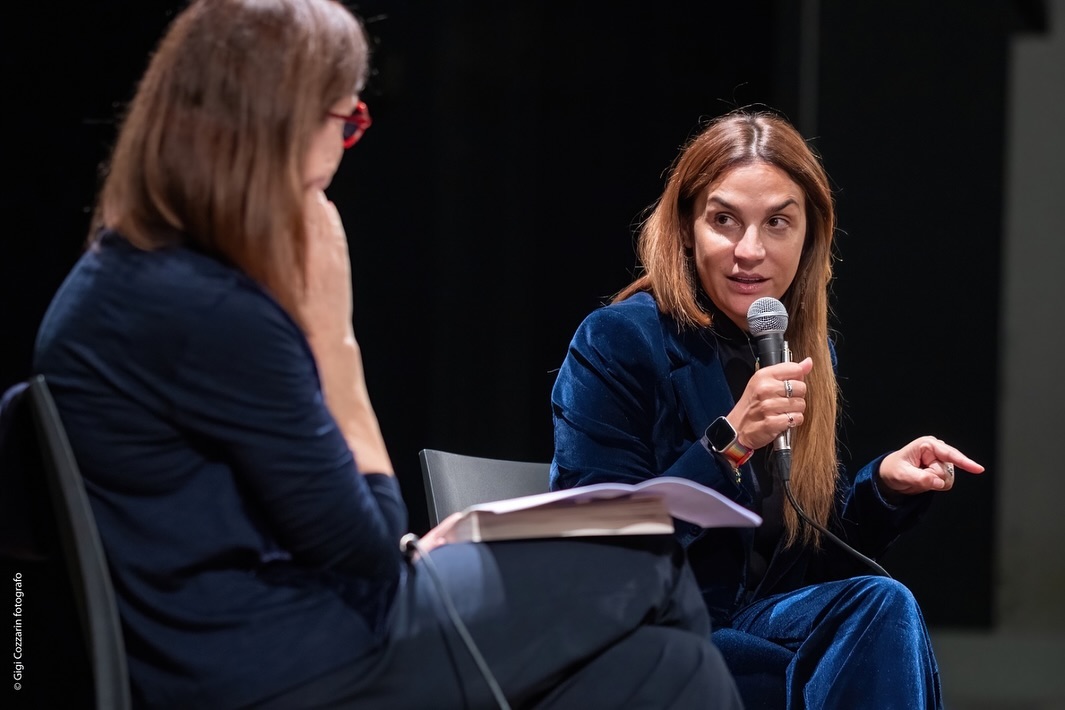
Photo credits: Viola Ardone (Instagram @violaardone)

Con l’arrivo della Pasqua torna protagonista uno dei simboli più amati di questa festività: il ciocc...

In 2023, within the Ferrovie dello Stato Italiane Group, a new company was born with the aim of revo...

The Salento region is an area that stands out not only for the beauty of its sea, which attracts cou...

Alessandro Ristori has brought back the energy of rock’n’roll and the elegance of Italy’s “Dolce Vit...

Il 21 marzo è visto da tutti come un giorno felice, come un giorno in cui i cappotti si chiudono nel...

Fresh from his twentieth Sanremo Festival, Maestro Enzo Campagnoli confirms himself as one of the mo...
Rivista online registrata al Tribunale di Napoli n. 43 del 23/03/2022
Direttore: Lorenzo Crea
Editore: Visio Adv di Alessandro Scarfiglieri
Insight italia srl (concessionario esclusivo)
Rivista online registrata al Tribunale di Napoli n. 43 del 23/03/2022
Direttore: Lorenzo Crea
Editore: Visio Adv di Alessandro Scarfiglieri
Insight italia srl (concessionario esclusivo)
