
Autore: Luigi Graziano Di Matteo • 26/03/2026 14:43
The Salento region is an area that stands out not only for the beauty of its sea, which attracts countless tourists, but also for its cultural and historical heritage, which sets it apart from the rest of Apulia.
An important component of this heritage is Lecce stone — leccisu in the Salento dialect — also known as “the poor man’s marble.” It is a unique type of limestone extracted from open‑air quarries throughout Salento, especially in Lecce, but also in towns such as Corigliano, Cursi, Maglie, and Melpignano.
Let’s discover the history of the limestone soul of Salento.
.jpeg)
Lecce stone dates back millions of years: it formed during the Miocene through the gradual accumulation of marine sediments. At that time, the sea covered what is now Salento, then slowly receded, leaving behind a thick layer of calcareous rock.
This stone is therefore composed mainly of calcium carbonate, and within it one can find various types of minerals and marine fossils.
Its uniqueness lies above all in its physical characteristics. Lecce stone ranges in color from pale yellow to white, with possible shades of grey or beige.
Freshly extracted from the quarries, it is soft, light, malleable, and luminous — qualities that make it extremely workable. Once exposed to air and weather, however, it becomes hard and resistant.
Thanks to this exceptional workability, Lecce stone attracted the interest of many Salento sculptors and architects in the 16th century, who used it for artworks, decorations, monuments, and historic buildings. This gave rise to a new artistic movement: Salento Baroque. Among its most iconic works in Lecce are the Basilica of Santa Croce, as well as 17th‑century masterpieces such as the Government Palace, the Cathedral, and the Seminary.
It was also widely used in traditional Salento homes: Lecce stone was employed to build the typical vaulted ceilings — including star and edge vaults — designed to retain heat, keeping houses warmer in winter and cooler in summer.
The potential of Lecce stone is therefore vast. To explore the secrets of its craftsmanship, we met Renzo Buttazzo, sculptor and designer, who shared how he has breathed new life into this ancient material.
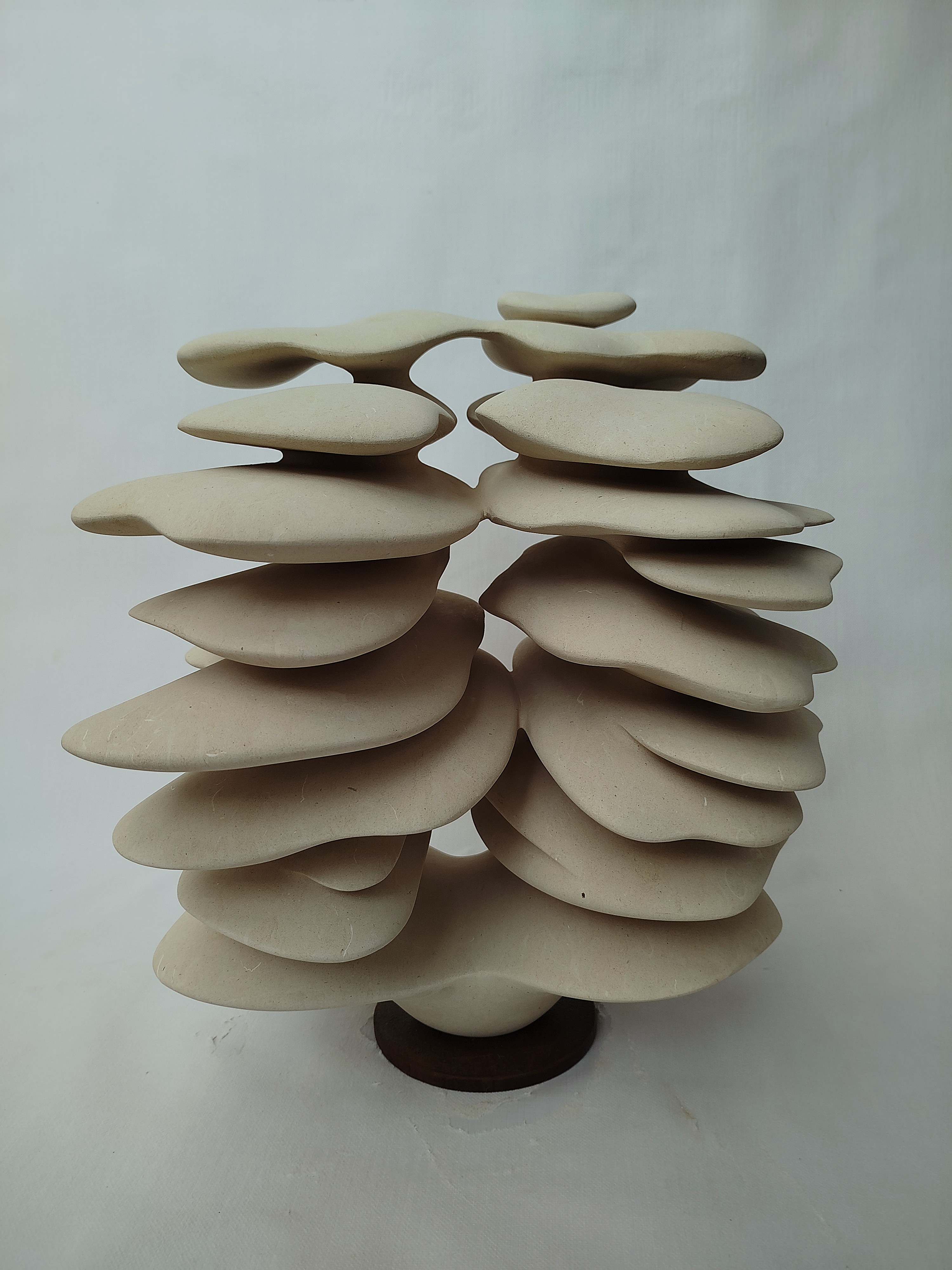
Maestro, Lecce stone is indissolubly linked to classical architecture and the ornate decorations of Salento Baroque. You, instead, have stripped it of its rigidity, transforming it into sculptures and design pieces with fluid, light, organic lines. How was this need born — the need to “challenge” such an imposing tradition and bring stone into the contemporary world?
I began working with stone in 1986, and since then I’ve spent my life experimenting, studying the results the stone produced depending on the geometries I used. I moved from various geometric shapes to hexagonal forms, and eventually arrived at the soft, fluid shapes that define the contemporary language of my work. These forms are the culmination of decades of study.
In recent years, I’ve become deeply connected to nature. I live in symbiosis with it, in a state of profound devotion to what it shows me. My eyes capture details that enrich my creativity.
To do this work, you must have a great ability to perceive nature as it is. That doesn’t mean reproducing nature — that’s impossible — but interpreting what it creates.
Dedicating yourself to this means living in constant change, in continuous growth, until you reach a state of “illumination,” which I hope arrives as late as possible, so I can keep working for the rest of my life. Creativity is nourishment — and when you feed on something that does you good, you rarely abandon it.
Working with this stone means literally immersing yourself in its fine, pale dust. What is your physical and tactile relationship with the raw block during the roughing and smoothing phases? Is there a precise moment when you feel the rigid material begin to “breathe” under your hands?
This is a beautiful question — an introspection into the soul of the workshop. When you enter the workshop, you step into a bubble of air where everything feels muffled. Inside, nothing else exists: only the stone.
By philosophy, I work exclusively with hand tools, so I must always touch the stone. And I love touching it — I need to feel it. My relationship with stone is truly incredible: it’s as if I were holding a child in my hands, shaping it. When I use the rasp, when I smooth the stone, when I shape it, I feel a sublime sense of pleasure.
My ultimate goal is to create the final texture, so I can run my hands over its soft, smooth form — it gives extraordinary sensations. Working nourishes me.
Stone perceives your slightest movement: when you pass sandpaper over it, you’re caressing it. I use eight different types of sandpaper. So eight times, after striking it with hammer and chisel, after using the rasp, comes the “caress” of the sandpaper.
The final phase is sublime because that’s when the work reaches its final state — where its visual function meets its tactile one, which I work on intensely.
I always invite my clients to touch the pieces. In galleries you’re not allowed to, but I tell everyone: wash your hands and touch them, caress them, because within that surface is my hand, working for days.
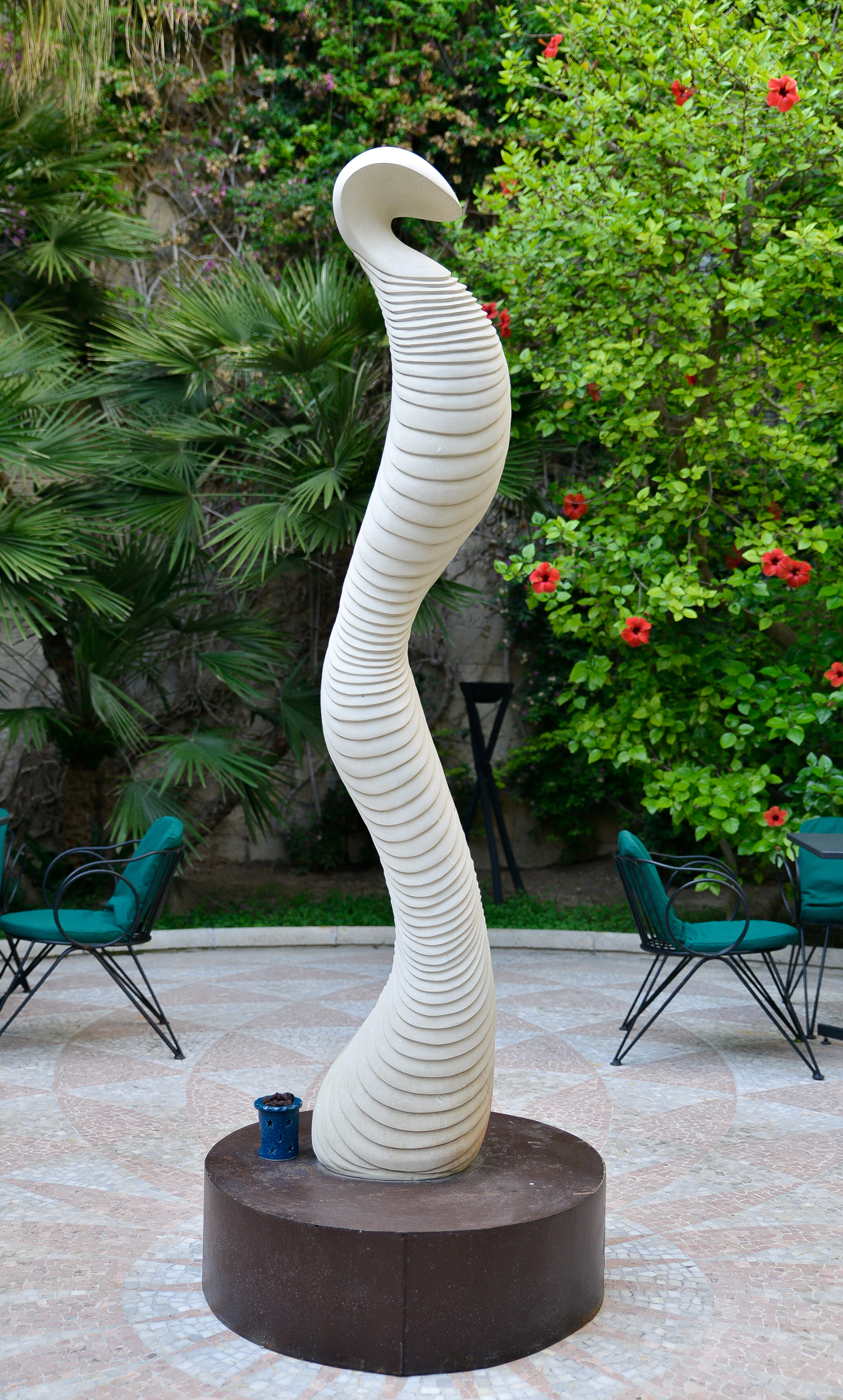
This limestone has marine origins, and while sculpting, you often uncover fragments of fossils and shells trapped for millennia. When you encounter these “memories” during the process, how do you decide whether to incorporate them into your design or follow the original idea you had in mind?
The beauty of this stone’s surface lies in the possibility of finding millions of fossils. For example, I find shark teeth from the Mesozoic era — some huge, some tiny. These fossils are the fingerprints of the stone’s past. They are a testimony of life — its tattoo, its DNA.
When I’m working the surface and a fossil doesn’t come away, I leave it. I don’t force it out — I let it remain part of the stone. Recently I created a round sculpture with a stunning inclusion running through it: it looks like Saturn, and it’s beautiful.
We must never forget that we are working with the skin of the Earth. I always thank Mother Earth for giving me this material that I transform into artworks.
In your collections, pure sculpture often merges with interior design, giving life to lamps, seats and decorative objects. How do you balance the aesthetics of an artwork with everyday functionality, considering the natural porosity and delicacy of this material?
This is a good question, because many people think they can buy a bowl and use it as a container — filling it with water, fruit, objects. But Lecce stone doesn’t allow that.
In 1996 I created the first collection of lamps in the world made from this stone. But they weren’t designed to read a book or light up a room. When you turned them on, the light inside was ochre or golden. They were meant to create harmony — to reproduce the light that, at sunset, turned Lecce’s churches red.
The beauty of the lamps was when they were off: I worked on the external texture and form, not on the light itself. The same goes for the bowls: they were made with grooves and various finishes, but inside you could place only decorative objects — or nothing at all.
When I entered the world of design in 1996, my intention was to create limited‑edition handmade pieces in stone. This was important for journalists and creators of the time, because it signaled the beginning of a new era — one of more evolved, research‑driven craftsmanship.
So those objects stopped being simple design accessories and became mini‑artworks. The bowl was purchased for its aesthetics alone — because it had reached that subtle boundary between art and design: applied arts.
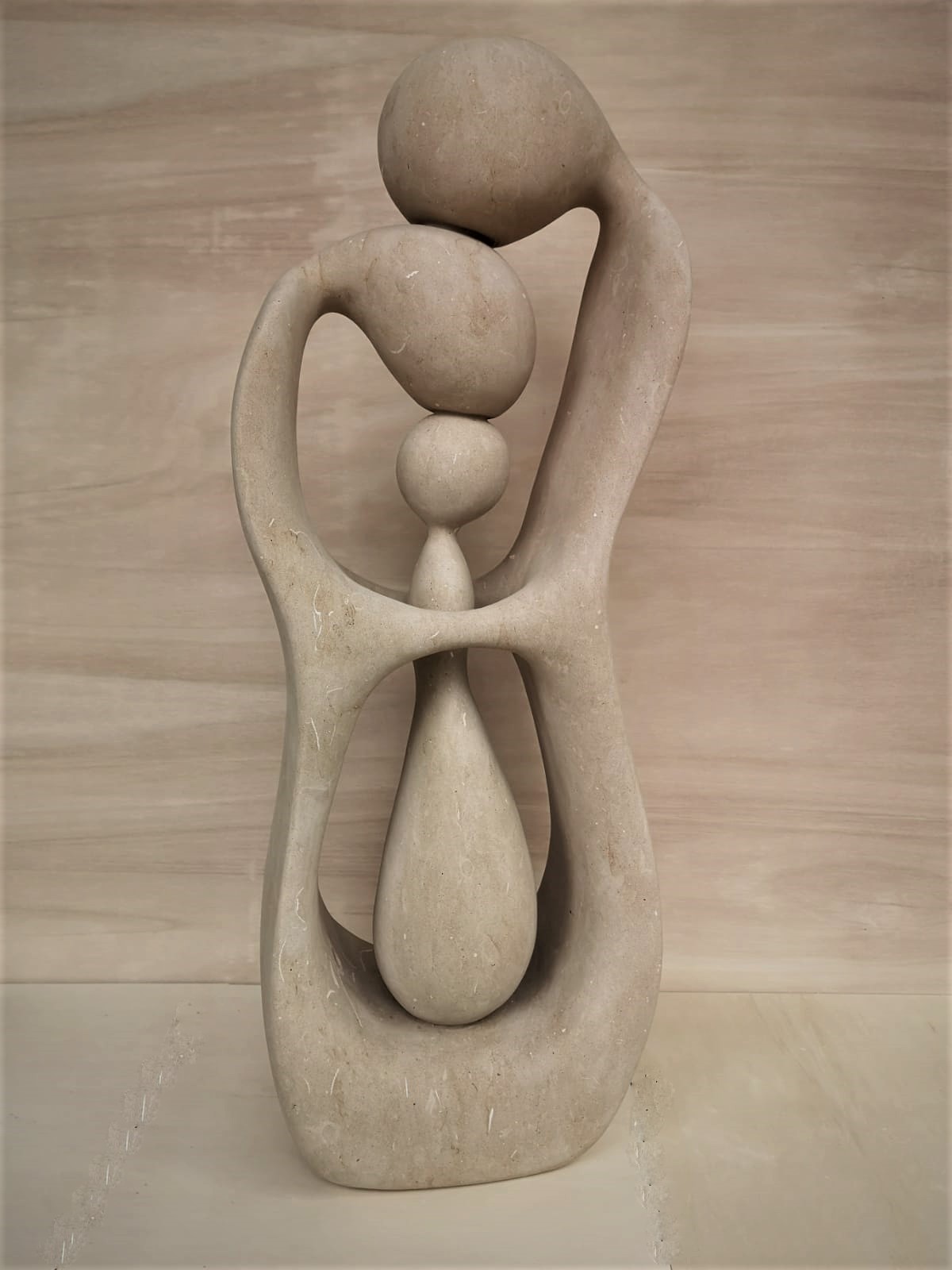
Today there is a risk that craftsmanship linked to local stone becomes flattened into mass‑produced souvenirs for tourists. What is your advice for young creatives approaching this ancient material? How can we protect and project such a precious art into the future without distorting it?
This is a project I’ve been working on since the late ’90s and early 2000s, when I began speaking to local administrations and provinces, pointing out that many young people were lost — with no awareness of what to do, no desire to study, no desire to do anything. And that it was time to create craft schools, where young people could learn what it means to produce with their hands, to learn a trade that belongs to us.
Because only in this way can we preserve historical memory: we can do it only if masters or experienced people pass it on. It’s useless for me to be excellent at what I do if I don’t transfer this knowledge to others who can carry my vision forward.
These young people, without guidance, go nowhere. By guidance I mean people who have walked a path, who have left a mark in history. And to save themselves, young people should attend courses taught by specialized professionals who can teach them what it means to preserve a tradition.
I myself would have gone nowhere if I hadn’t first looked at tradition — at Baroque — and studied what happens with stone. Stone absorbs light and transmits luminosity. Marble doesn’t — it cools.
I studied this for 25 years. If you don’t understand that stone is light, you can’t work it. But if no one explains it to you, helps you perceive it, know it, understand it, you will never enter that material.
Young people today are lost because no one gives them the right direction. They need information about digital marketing, sculpture, manual skills, thought, and the use of virtual tools when necessary. I use virtual tools correctly because they allow me to speed up communication with clients, galleries, people.
So we must teach all this — but institutions must take a step forward and create schools with mentors who can teach young people who want to learn what craftsmanship truly is, starting from the past. You cannot look to the future without looking to the past.
Institutions cannot abandon young people — they cannot waste money on poorly structured courses. Training must be done well. I want young people to be trained, to come out with all the skills they need.
I teach a course for autistic students in a social academy, helping them sculpt stone. Every time I go there, I’m filled with unimaginable joy: they absorb so much energy from me, but I’m incredibly happy to see their ability to create. It’s wonderful to speak with their parents or guardians and say: “They made this.”
It’s wonderful to show that with your hands you can do anything, even if you are a special young person. I trained six students — I hired them — they worked with me supplying galleries.
They were 17 when they started. They left when they were 25. I had created “monsters”: they had ethics, a way of thinking, a way of working, punctuality, precision. And their parents thanked me.
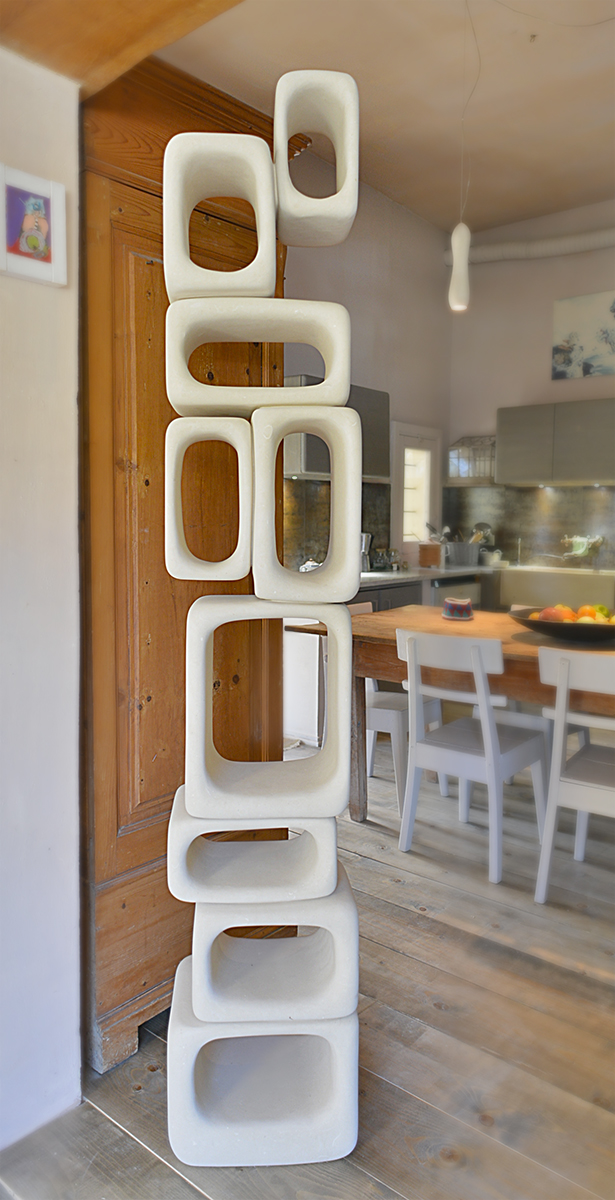
In conclusion, Lecce stone is not merely a historical heritage — it is an art form to be preserved and passed down through time.
The research and experimentation that define Renzo Buttazzo’s work demonstrate that antiquity and modernity can always meet. Art constantly reinvents itself, and its beauty can be found in contemporary forms and everyday life. This is confirmed by the numerous awards his works have received both in Italy and abroad.
We thank Renzo Buttazzo for guiding us into the world of Lecce stone and revealing the secrets of an art with such a rich and ancient history.

Con l’arrivo della Pasqua torna protagonista uno dei simboli più amati di questa festività: il ciocc...

In 2023, within the Ferrovie dello Stato Italiane Group, a new company was born with the aim of revo...

Alessandro Ristori has brought back the energy of rock’n’roll and the elegance of Italy’s “Dolce Vit...

Il 21 marzo è visto da tutti come un giorno felice, come un giorno in cui i cappotti si chiudono nel...

Fresh from his twentieth Sanremo Festival, Maestro Enzo Campagnoli confirms himself as one of the mo...

Today, March 8, the world celebrates International Women’s Day.Although it is commonly referred to a...
Rivista online registrata al Tribunale di Napoli n. 43 del 23/03/2022
Direttore: Lorenzo Crea
Editore: Visio Adv di Alessandro Scarfiglieri
Insight italia srl (concessionario esclusivo)
Rivista online registrata al Tribunale di Napoli n. 43 del 23/03/2022
Direttore: Lorenzo Crea
Editore: Visio Adv di Alessandro Scarfiglieri
Insight italia srl (concessionario esclusivo)
