
Rivista online registrata al Tribunale di Napoli n. 43 del 23/03/2022
Direttore: Lorenzo Crea
Editore: Visio Adv di Alessandro Scarfiglieri
Insight italia srl (concessionario esclusivo)
Rivista online registrata al Tribunale di Napoli n. 43 del 23/03/2022
Direttore: Lorenzo Crea
Editore: Visio Adv di Alessandro Scarfiglieri
Insight italia srl (concessionario esclusivo)
From the legendary founding of Rome to the sprawling cultural events organized by the city, the Natale di Roma 2026 is bringing the capital alive with historical reenactments, perf…
By Serena Trivelloni · April 20, 2026 · ≈ 4 min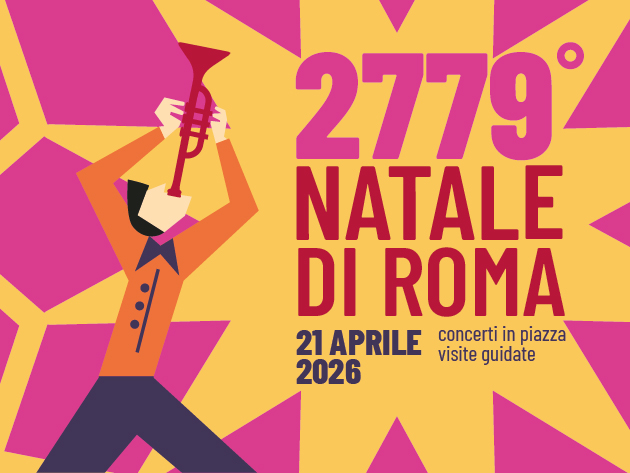
By Serena Trivelloni · April 20, 2026 · ≈ 4 min
From the legendary founding of Rome to the sprawling cultural events organized by the city, the Natale di Roma 2026 is bringing the capital alive with historical reenactments, performances, and bold new artistic visions.
Some cities tell their stories through their streets. Then there is Rome. On April 21, this city does not just tell its story. It celebrates it, reinvents it, and reaffirms its eternal soul. Today the capital marks its 2,779th birthday, a number that feels almost unreal, yet here you can feel it in every stone, every ruin, every glimmer of light on the Tiber River.
The so called Natale di Roma is rooted in the legend of Romulus and Remus, but over time it has grown into something far greater than a historical reenactment. It is a collective ritual, a declaration of identity that bridges past and present.
According to tradition, Romulus traced the sacred furrow on the Palatine Hill on April 21, 753 BC. That symbolic gesture has now evolved into a citywide celebration, that cuts across centuries and artistic languages.
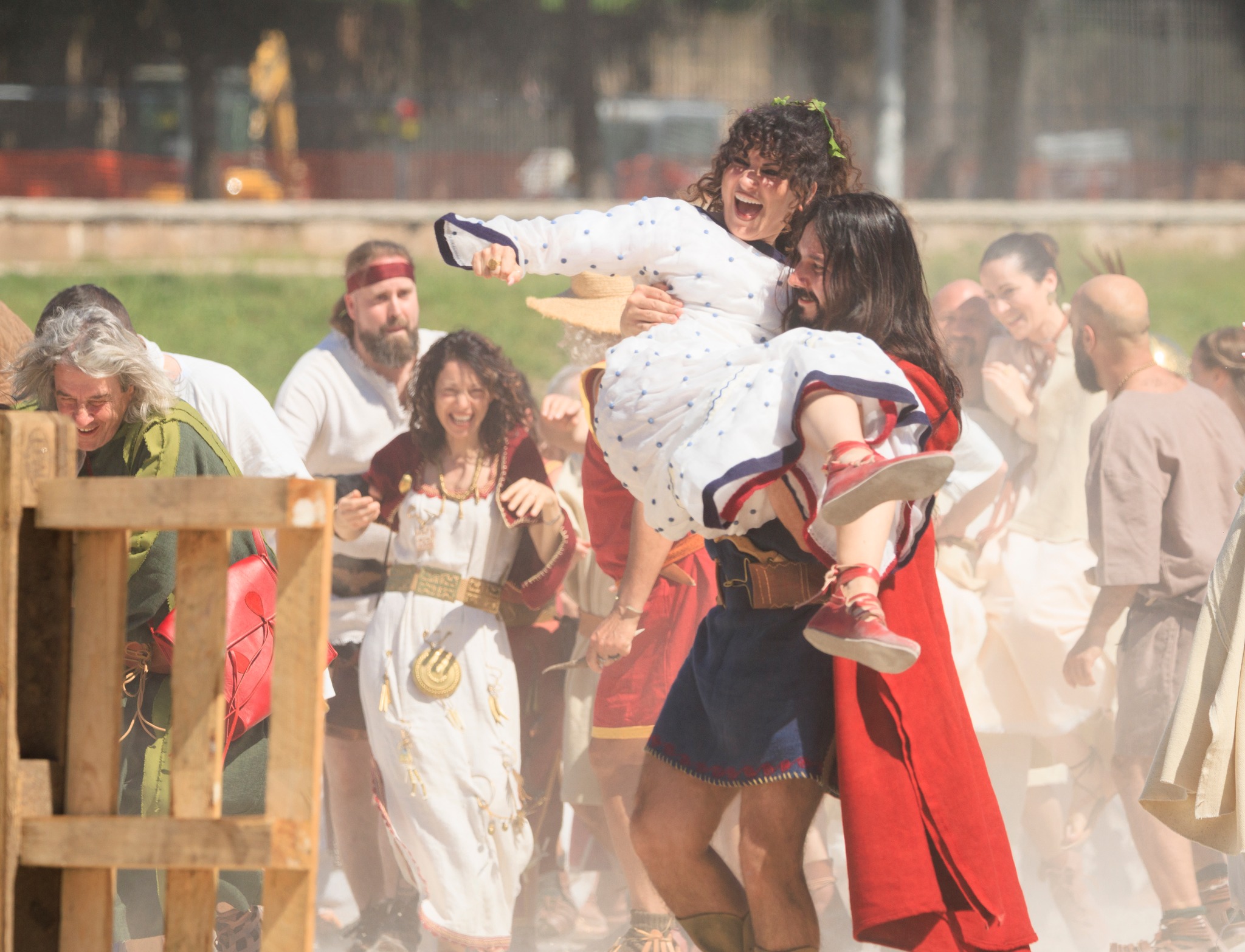
This year, historical reenactments once again take center stage. Costumed groups fill the Circo Massimo and the Fori Imperiali, giving visitors the image of ancient Rome as something alive, pulsing, almost cinematic. This is not just entertainment. It is memory made flesh.
The Natale di Roma 2026 unfolds as a sprawling urban story from April 19 through 22, with its epicenter between the Circo Massimo, Fori Imperiali and the Campidoglio. The big day, April 21, kicks off with official ceremonies at the Altare della Patria at 9:00 AM, where the laying of a laurel wreath renews the holiday's civic and symbolic meaning.
But the real celebration happens in the city's living, breathing streets. The area between Piazza della Bocca della Verità and Via Petroselli becomes entirely pedestrianized and transforms into a continuous performance space. Music, art installations, and street theater create a contemporary narrative that speaks directly to the city's memory.
At the Circo Massimo, the scenic heart of the event, historical reenactments curated by the Gruppo Storico Romano unfold as open air theater. Parades, military drills, gladiator battles, and reconstructions of daily life deliver a powerful, historically rigorous portrait of ancient Rome. Not mere entertainment, but a collective staging of history.
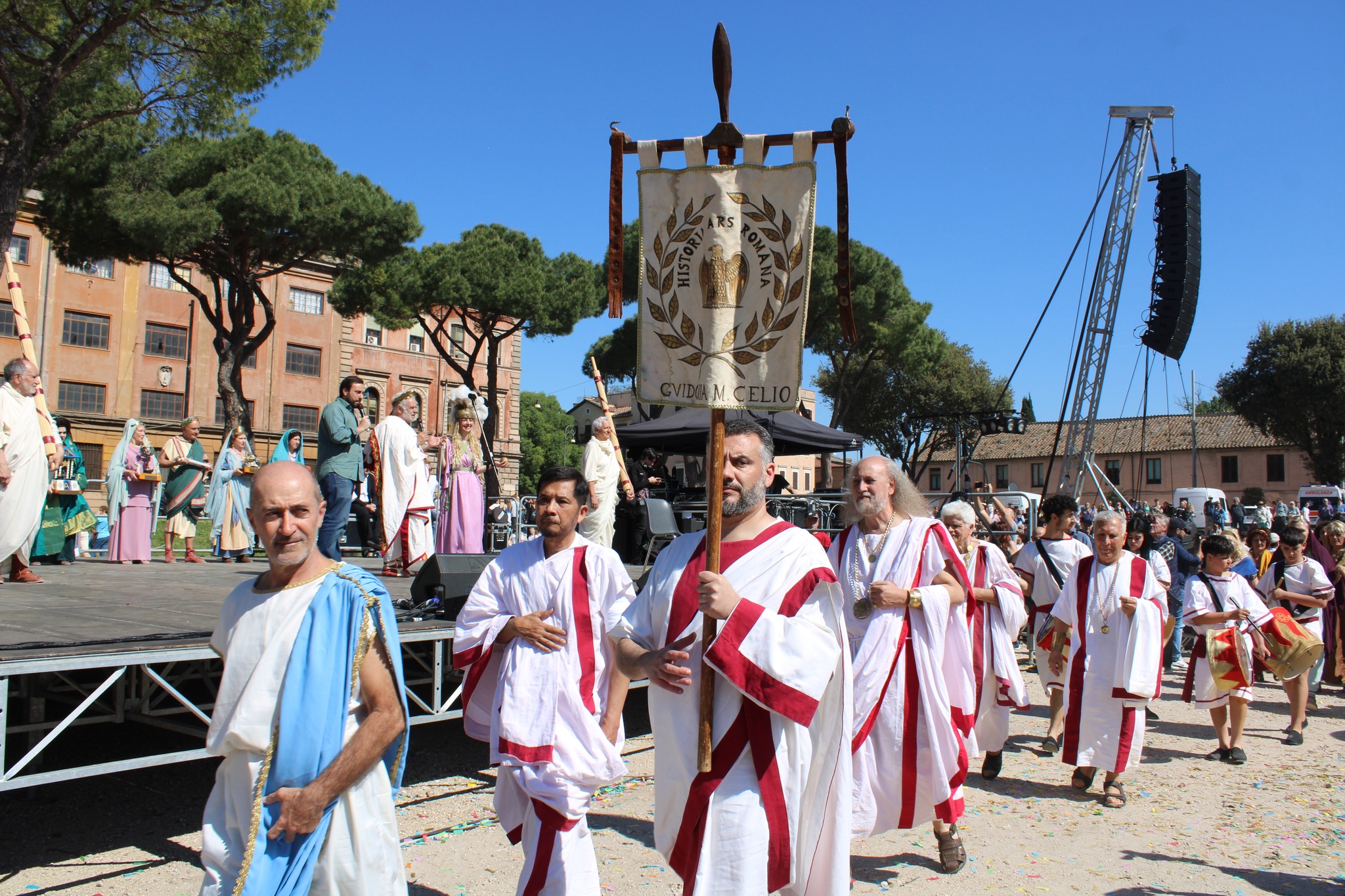
One of the most symbolic moments this year: the reenactment of the furrow tracing ritual, the founding act attributed to Romulus, will take place not on the Palatine but at the Terme di Diocleziano (Baths of Diocletian), accompanied by the rituals of the Parilia and the renewal of the sacred fire. It is a blend of sacred rite and spectacle that remains one of the celebration's most powerful identity markers.
Meanwhile, the Imperial Forums and several archaeological sites become destinations for guided exploration*offering a deeper, less touristy reading of the ancient city.
Alongside the historical dimension, 2026 is embracing contemporary languages in a big way. At the Mercati di Traiano (Trajan's Markets), a new immersive, multisensory installation uses technology and perception to reinterpret the archaeological space. The Rome Planetarium reopens with a brand new digital program, turning scientific knowledge into a spectacular experience.
Another first this year: on April 21 at 5:30 PM, seven military bands will perform simultaneous concerts in seven different squares across the city center, including Trinità dei Monti, Piazza San Silvestro, and Piazza di Pietra, giving Rome a sweeping, solemn soundtrack.
The very idea of performance is expanding beyond traditional theater. Experiences like "Viaggi nell'Antica Roma - 2 storie, 2 percorsi" (Journeys into Ancient Rome - 2 Stories, 2 Paths) offer immersive storytelling that blends historical reconstruction with technology, giving audiences a form of narrative that is both educational and theatrical.
On this April 21, Rome is not just hosting events. It becomes the stage itself, abandoning the traditional closed theater to turn the entire urban space into a living, breathing scene where past and present overlap.
Living in Rome on its birthday is more than a celebration. It is the physical sensation of belonging to a story that never stopped.
Walking between the Colosseum and Piazza Venezia, you get the feeling that time here is not linear. It is layered. Every era coexists with every other. Every step is a crossing.
Maybe that is the truest meaning of the Natale di Roma: not commemorating a distant origin, but reaffirming a living continuity.
Rome does not just celebrate its birth. It stages it. And it invites everyone to be part of it.
Most Natale di Roma events are free, especially the reenactments and urban performances. Some immersive experiences and guided tours (such as "Viaggi nell'Antica Roma") require mandatory reservation. For the official program and updates, visit Rome's cultural portal or Natali di Roma.
For info and reservations, call 060608 (Rome's tourist call center, active daily from 9:00 AM to 7:00 PM).
Rome, once again, does not merely celebrate its own birth. It stages it. And it invites everyone, whether Roman, Italian, or traveler, to step into the story.
