
Autore: Luigi Graziano Di Matteo • 25/08/2025 21:01
Monte Echia is undoubtedly one of Naples’ main attractions, a tangible testament to the city’s ancient Greek roots and its mythical connection to Parthenope.
Together with the extinct volcanoes of Chiaia and Capodimonte, it is among the oldest volcanic formations in the area — even older than the more famous Phlegraean Fields and Mount Vesuvius.
It is, in fact, a tuff cone, of which only the summit is visible today. The hill is composed of tuff, lapilli, pumice and volcanic scoria — materials that reveal the explosive power of the ancient eruption that created it.
This explosion was caused by the interaction of magma and water, producing what volcanologists call a phreatomagmatic eruption.
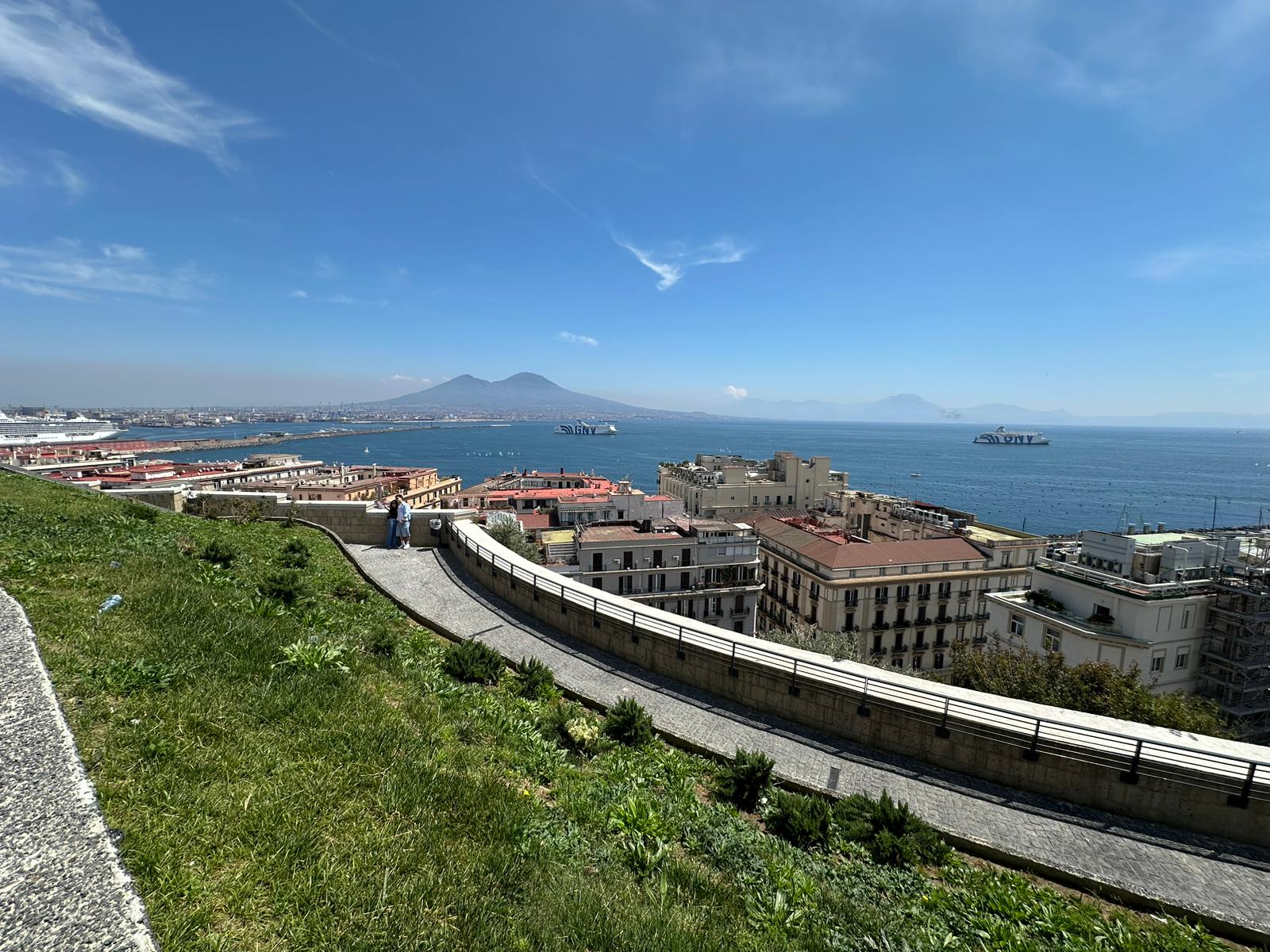
Geographically, Monte Echia corresponds to the yellow tuff cliff rising on the Pizzofalcone hill, in the San Ferdinando district.
It is perhaps the most panoramic spot in Naples, overlooking the Gulf of Naples between Santa Lucia and Chiaia.
It was precisely at the foot of Monte Echia that, in the 8th century BC, the Cumaeans founded the city of Parthenope.
At that time, Parthenope was connected to its beach and harbour by a single road. Later, during the Roman era, under Lucullus, the area was radically transformed with the construction of his famous villa, the Castrum Lucullanum. This fortress-like residence played a crucial defensive role for the city thanks to its strategic position.
The remains of this extraordinary Roman complex can still be seen in the area, and right beside them visitors can enjoone of the most breathtaking views of the Bay of Naples.
Nearby stand the Palazzo di Santa Severina, the Church of the Immacolatella, and several early 16th-century buildings, while on the opposite side rises the Gran Quartiere di Pizzofalcone, today housing a police barracks.
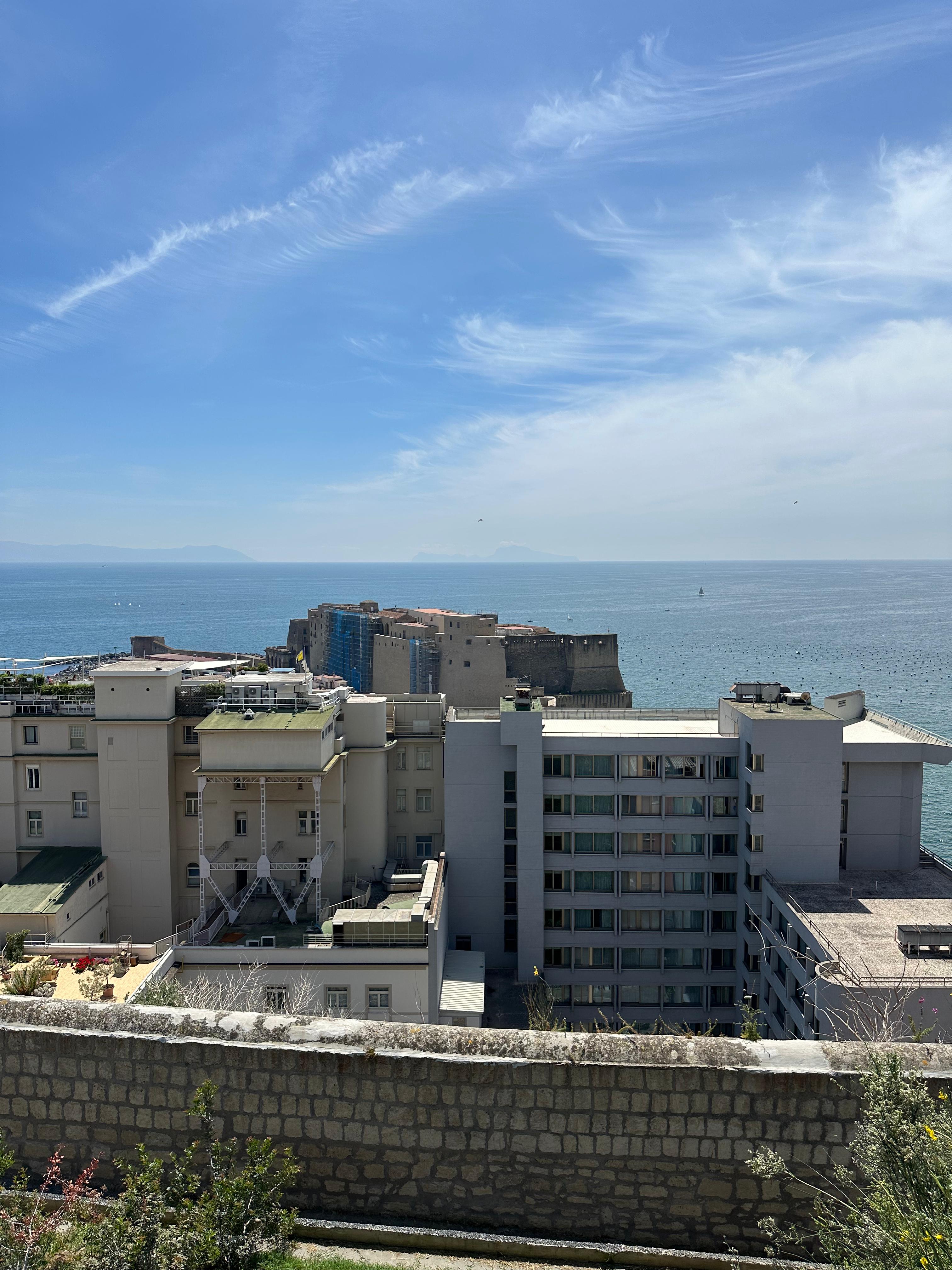
Dominating the panorama near Monte Echia is the iconic Castel dell’Ovo, another of Naples’ landmarks, also built of tuff — the same material that defines the city’s landscape and the golden hue of Monte Echia itself.
The yellow Neapolitan tuff, easily quarried but highly prone to erosion and landslides, has played a major role in shaping the hill’s evolution.
For centuries, blocks of tuff extracted from the nearby cliffs were used to build much of the city, and the proximity to the sea made their transport remarkably easy.
The Monte Echia elevator, managed by ANM, is a true gem of Italian engineering that allows visitors to travel from the waterfront up to the city’s most scenic overlook.
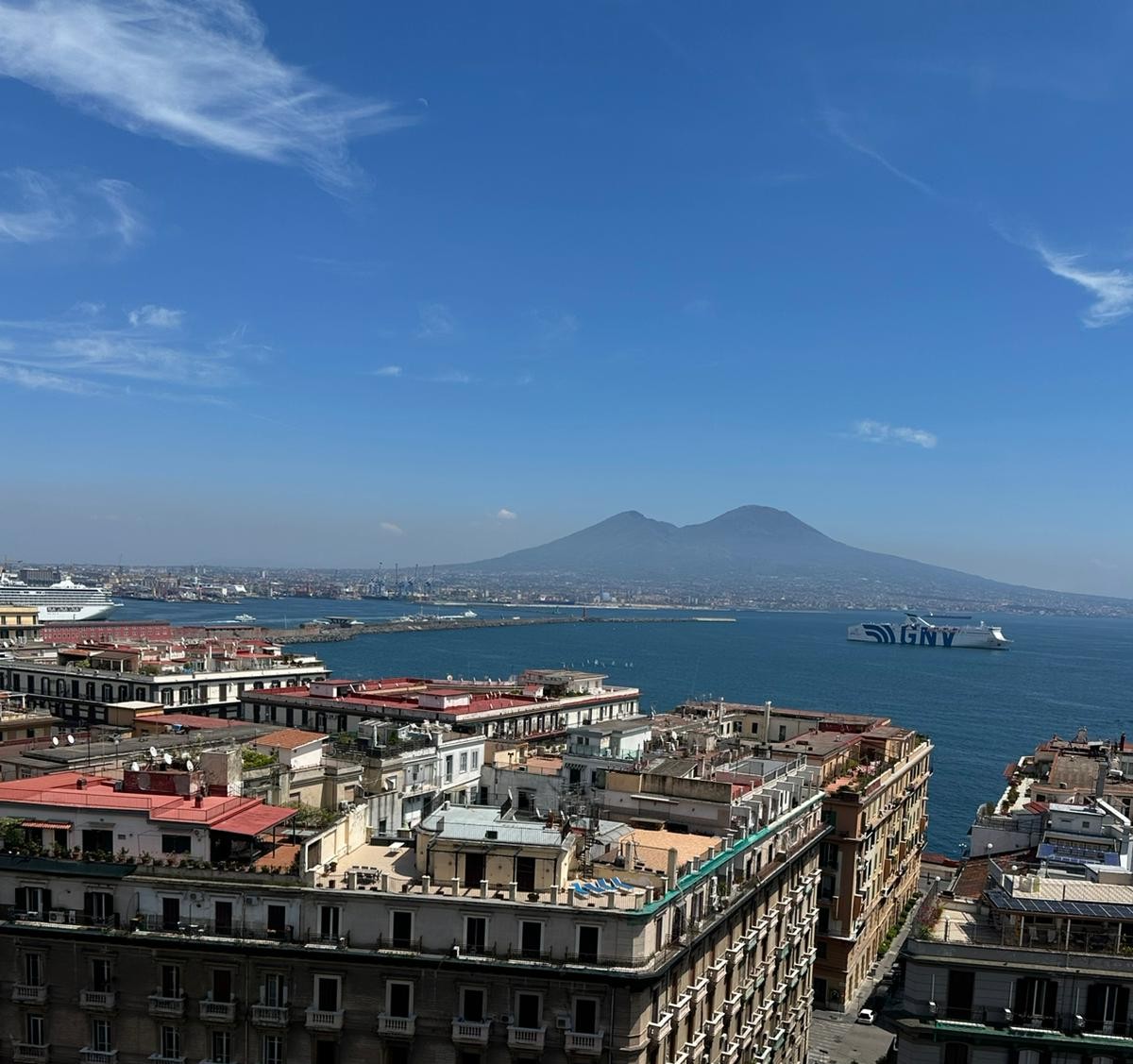
From the top, you can enjoy a spectacular 360° view — from Capodimonte to Vesuvius, from Sorrento to Capri, from Castel dell’Ovo to Posillipo.
This remarkable structure, opened to the public on April 9, 2024, at a cost of around 3 million euros, has revitalized the entire belvedere area of Monte Echia.
The twin elevators can carry up to 34 people at a time, marking the first step in a broader urban renewal project that also involves the State Archives.
🕒 Opening hours: every day from 7:00 a.m. to 10:30 p.m.
Monte Echia is also the source of a volcanic spring that, in ancient times, was famous among Neapolitans as “acqua zuffregna”, “acqua ferrata” or “acqua di mummare.”
The latter name derives from the “mummarelle”, small earthenware flasks once used to collect this ferruginous water from city fountains.
The spring was closed in the early 1970s, during Naples’ fight against a cholera outbreak, to prevent potential contamination.
After 27 years and extensive testing, it was reopened to the public, with four small fountains installed near Palazzo Reale, along Via Riccardo Filangieri di Candida Gonzaga.
However, in 2003, after the spring stopped flowing, the fountains were once again shut down.
The panorama of Monte Echia is waiting for you!
You can reach it either from the Pizzofalcone hill, through the small street adjacent to Piazza del Plebiscito, or via the ANM elevator, which connects Santa Lucia directly to the scenic belvedere.
Cover photo credit: Comune di Napoli

There is a sound that never fades. Not the kind that dissolves into the air, but that of bronze bell...

In small, middle-class Milan, near the Villaggio dei Giornalisti, temporary housing units were built...

We are in the early 1960s. On one side there is Enzo Ferrari, the "Drake", absolute monarch of the a...

From April 13 to 16, 2026, the Bologna Children’s Book Fair returns for its 63rd edition. Once again...

In 1291, Doge Pietro Gradenigo signed a decree that would forever change the history of European cra...

Tornano sabato 21 e domenica 22 marzo le Giornate FAI di Primavera, il più grande evento di pia...
Rivista online registrata al Tribunale di Napoli n. 43 del 23/03/2022
Direttore: Lorenzo Crea
Editore: Visio Adv di Alessandro Scarfiglieri
Insight italia srl (concessionario esclusivo)
Rivista online registrata al Tribunale di Napoli n. 43 del 23/03/2022
Direttore: Lorenzo Crea
Editore: Visio Adv di Alessandro Scarfiglieri
Insight italia srl (concessionario esclusivo)
