
Rivista online registrata al Tribunale di Napoli n. 43 del 23/03/2022
Direttore: Lorenzo Crea
Editore: Visio Adv di Alessandro Scarfiglieri
Insight italia srl (concessionario esclusivo)
Rivista online registrata al Tribunale di Napoli n. 43 del 23/03/2022
Direttore: Lorenzo Crea
Editore: Visio Adv di Alessandro Scarfiglieri
Insight italia srl (concessionario esclusivo)
Entering sacred architecture means entering the vibrant cultural heart of our land. The entire peninsula, in fact, is dotted with churches, basilicas, and astonishing places of wor…
By Redazione · August 9, 2025 · ≈ 2 min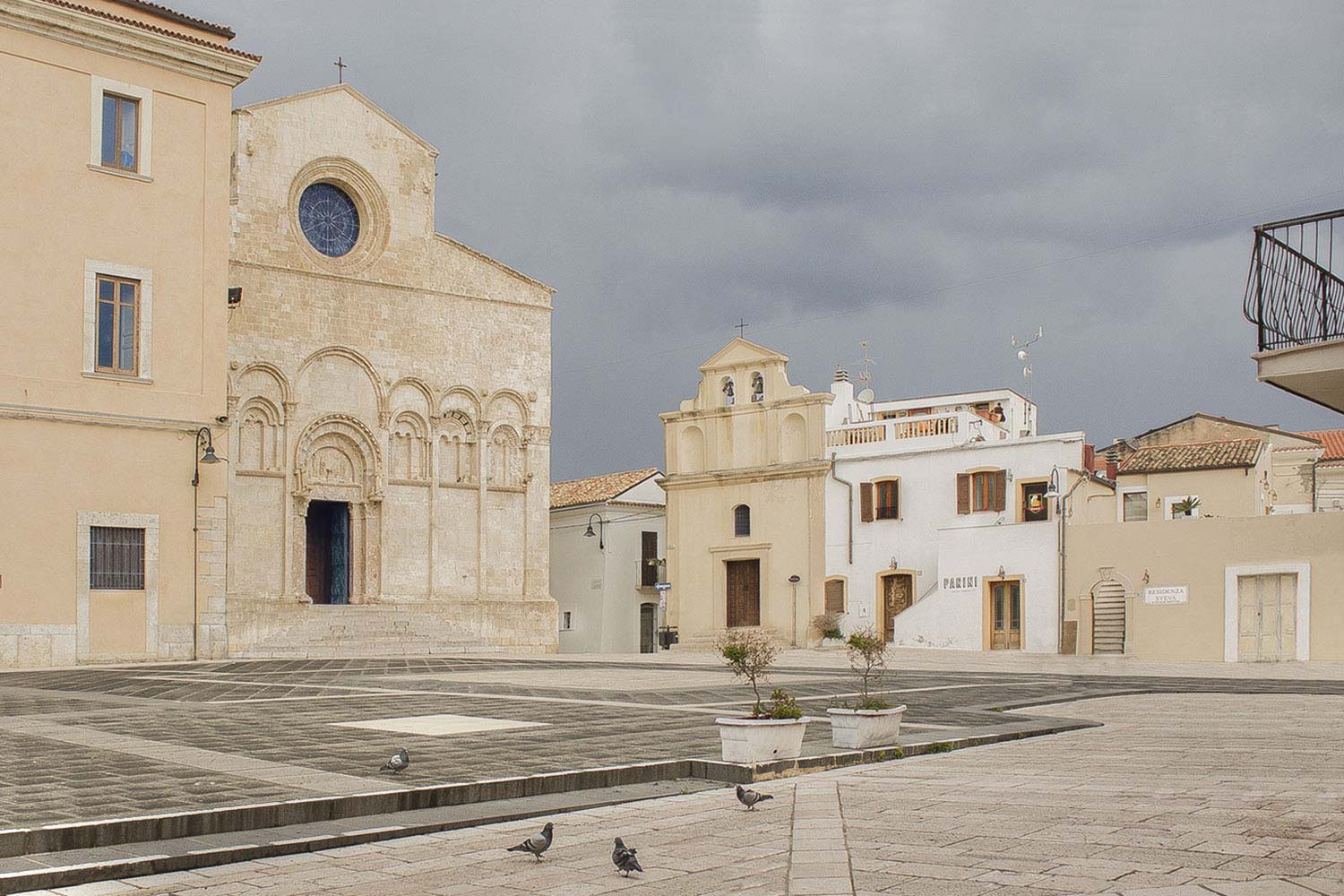
By Redazione · August 9, 2025 · ≈ 2 min
Entering sacred architecture means entering the vibrant cultural heart of our land. The entire peninsula, in fact, is dotted with churches, basilicas, and astonishing places of worship. These are places that bear witness not only to the devotion that has always characterized our history, but also to the profound synergy that has always linked creativity and artistic movements to the exaltation of the sublime.
A stop on this journey through sacred buildings is the Cathedral of Termoli.
Cathedral of Termoli: history, art, tradition
The Cathedral of Termoli is undoubtedly one of the most vivid examples of medieval architecture, blending the stylistic expressions of central Italy with the architectural experience of Apulia.
Its origins date back to the 11th century, when it was built over a pre-existing early Christian church. In 1240, during the reign of Frederick II of Swabia, an earthquake damaged part of the structure, prompting a reconstruction that gave the cathedral its current appearance. The result is a fusion of Romanesque elements and Gothic influences, especially visible in the sculptural decorations and the façade layout, creating a fascinating and iconic architectural structure.
The interior of the Cathedral of Termoli features three naves separated by columns with decorated capitals supporting round arches. The Romanesque sobriety of the space is enriched by refined artistic details, such as medieval frescoes still visible in some side chapels and a geometric opus sectile floor. In the crypt—the beating heart of the cathedral—are preserved the relics of Saint Basso, patron saint of Termoli, traditionally transferred here in the 12th century.
On August 3rd and 4th, the celebrations dedicated to Saint Basso begin at the Cathedral of Termoli and culminate in the evocative maritime procession of the saint’s statue.
The Cathedral of Termoli, with its monumental architecture, is just one example of how sublime the historical and architectural strength of our country can be; of how great the legacy is that we are called to defend and preserve.
Photo credit: Wikipedia – Hocrux
