

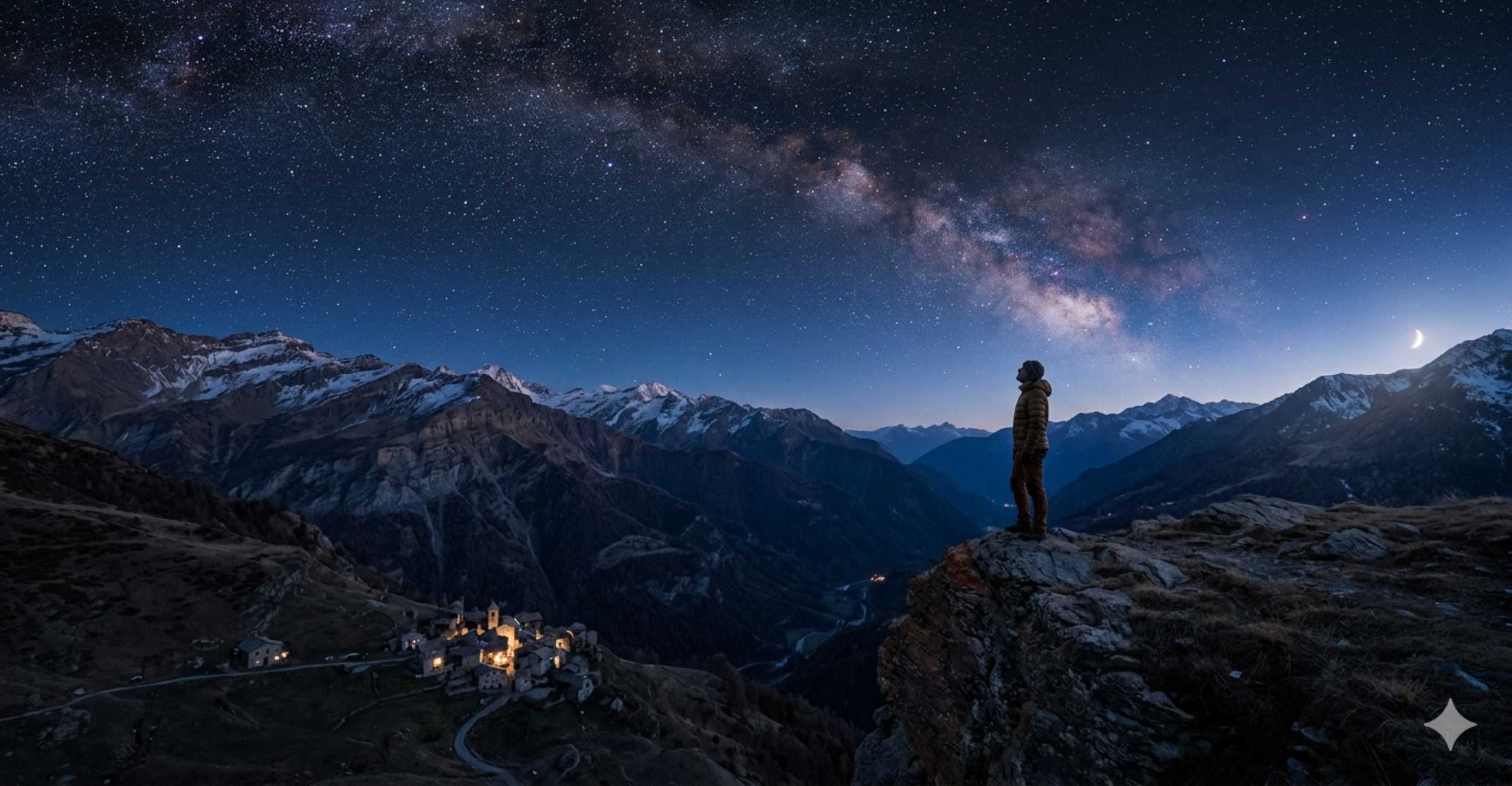
Astrotourism in villages: a practical guide to stargazing
Astrotourism blends astronomy, nature and slow travel. In Italy, many small historic villages and protected parks hold certifications that guarantee excellent night skies. Below is a concise guide to certified locations, recommended activities and practical tips to plan your stargazing trip.
Where to go: certified villages and areas
- Val d'Ayas (Aosta Valley) – Italy's first Starlight Stellar Park, offering high-altitude locations and very dark skies; suited to mobile planetarium events and guided night walks.
- Isnello (Sicily) – A Madonie village with Starlight recognition; hosts observatory nights with telescopes and expert guides.
- Pollino National Park (Basilicata/Calabria) – Vast areas with minimal light pollution, perfect for seeing the Milky Way and joining nocturnal hikes.
- Val di Sole (Trentino) – Numerous certified spots in the valley, with scheduled stargazing evenings by local observatories and municipalities.
- Maremma (Tuscany) – Protected coastal and inland zones with Dark Sky-friendly routes and community initiatives.
- Interior Sardinia – Some of Europe's darkest skies; villages like Orgosolo and areas of the Supramonte offer excellent stargazing opportunities.
Recommended activities in the villages
- Join public observing sessions organized by planetariums or local astronomy clubs.
- Stay at agriturismos that arrange "star nights" and local astro-guides.
- Combine daytime hikes or cultural visits with nighttime observation for a full experience.
- Pair stargazing with local food tastings to enjoy regional products after dark.
Practical tips for stargazing
- Best period: July to September; meteor showers like the Perseids are highlights.
- Timing: After midnight, especially when the Moon is waning for darker skies.
- Gear: Blanket, red-light headlamp, binoculars; telescopes are optional.
- Avoid: artificial lights, active screens and cloudy conditions.
Accessibility and travel
Most listed villages can be reached within a few hours by car from major cities and some offer seasonal shuttles. For families, look for guided programs aimed at children; for solitude, choose rural accommodations immersed in nature.
FAQ
- Do I need a telescope? No: certified sites provide rewarding naked-eye views and binocular observations.
- Are events expensive? Many are free or low-cost; organized experiences may charge a fee.
- Can I see the Milky Way? Yes—at low light pollution sites and on clear nights the Milky Way is clearly visible.
Astrotourism in historic villages is a chance to slow down, reconnect with nature and discover communities that protect the night sky. Consider destinations such as Val d'Ayas, Isnello, the Pollino or Val di Sole for memorable starry nights.
Where it is
Location: Valle di Ayas, 11020 Pilaz AO, Italia
Coordinates: 45.8166667, 7.7