
Autore: Michele Spinelli • 15/10/2025 17:14
Verona is undoubtedly one of the most fascinating and historically rich destinations Italy has to offer. A UNESCO World Heritage Site since 2000, this pearl of the Veneto region enchants visitors with its extraordinary artistic heritage, ranging from the Roman era to the Renaissance and the splendour of the Scaliger era. The city, immortalised by William Shakespeare as the setting for the tragic love story of Romeo and Juliet, actually offers much more than just a literary backdrop: it is a veritable open-air museum where every stone tells centuries of history, art and culture.
This 48-hour itinerary has been designed to allow you to discover the wonders of Verona in a comprehensive and in-depth way, making the most of your time and ensuring an unforgettable experience.
Verona enjoys a privileged geographical position that makes it easily accessible by various means of transport. For those travelling by car from the north, the main options are the A22 Brennero motorway, which connects Modena to the Austrian border, and the A4 Milan-Venice motorway, with the recommended exit at Verona Sud to quickly reach the city centre. Coming from the south on the A1, you can take the A22 at Modena Nord and continue towards Verona for about 70 kilometres.
Valerio Catullo Airport, located about 12 kilometres from the city centre, offers frequent connections to major Italian and European cities, with shuttle buses providing transfers to the historic centre every 20 minutes.
Verona Porta Nuova railway station is a key hub on the Milan-Venice high-speed line and the Bologna-Brenner route, with frequent and fast connections to all major Italian cities. From Rome, for example, there are about 20 daily connections with an average journey time of 3 hours.
The historic centre of Verona is subject to traffic restrictions (ZTL). There are several park-and-ride car parks with good connections to the centre: the Cittadella car park (in Viale Cristoforo Colombo) and the Arena car park are particularly convenient due to their proximity to the main attractions. Alternatively, the Porta Nuova park-and-ride car park offers ample space and frequent bus services to the centre.
The city is easy to visit on foot or by bicycle, but for longer journeys there is an efficient public transport service operated by AMT. To make the most of your visit, consider purchasing the Verona Card, available in 24-hour or 48-hour versions, which is the ideal choice for visitors who want to optimise their time and budget. The card includes admission to most of the city's attractions at a significant discount on admission prices. It also includes unlimited use of urban transport. It can be purchased online on the official website or at the ticket offices of the main attractions.
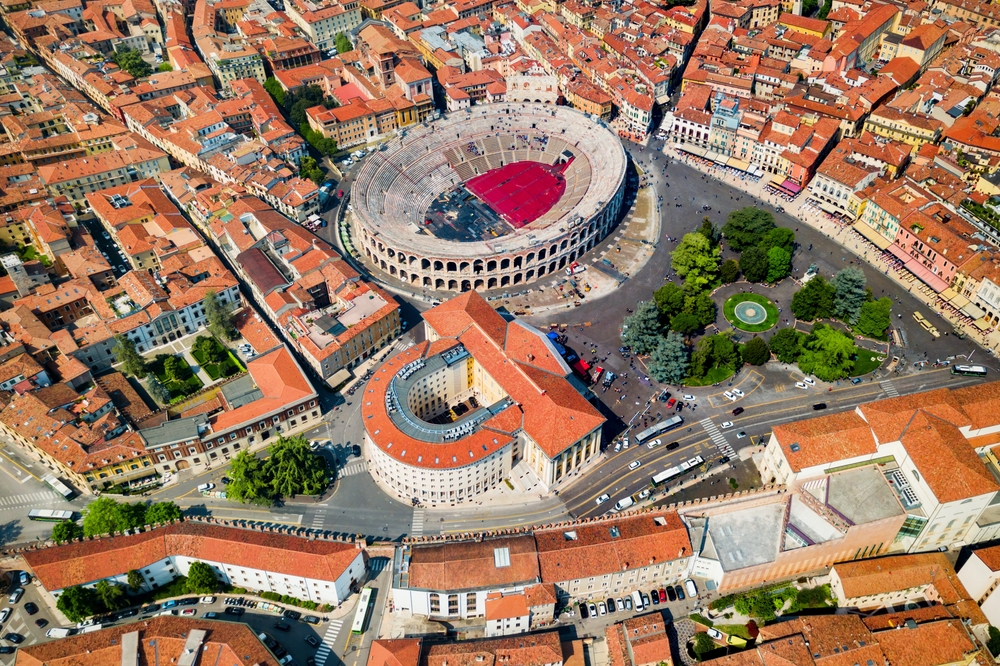
The Verona Arena, an imposing Roman amphitheatre located in the heart of Piazza Bra, is undoubtedly the city's most iconic monument. Built in the 1st century AD, this extraordinary architectural work is preserved in exceptional condition, so much so that it is still used today for international opera performances, concerts and theatrical performances. Measuring 152 metres long and 128 metres wide, the Arena could originally seat over 30,000 spectators, an impressive number that testifies to Verona's importance in Roman times.
A visit inside offers unforgettable emotions: the mighty cavea and the exceptional natural acoustics leave visitors speechless. The acoustics of the Arena are so perfect that no amplification system is required during performances.
Piazza Bra: Verona's elegant salon
Piazza Bra, with its 20,000 square metres of surface area, is the largest square in Verona and one of the most popular meeting places for both tourists and locals. Its large pedestrian area, bordered by important historical buildings such as the Palazzo della Gran Guardia and the neoclassical Palazzo Barbieri, invites visitors to stop and relax.
Il Liston, the characteristic red marble strip that borders the western side of the square, has been the traditional walking area for Veronese people for centuries.
The square also offers numerous bars and restaurants where you can sample typical Veronese cuisine, while the public gardens at the eastern end are an oasis of peace and greenery, ideal for a refreshing break.
Juliet's House: in the temple of universal love
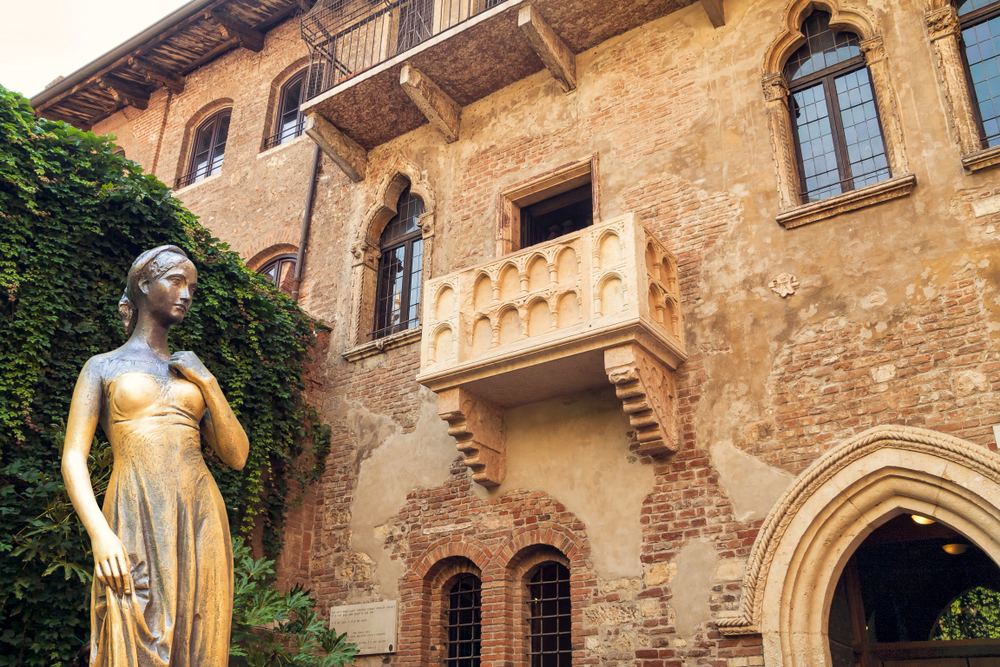
Juliet's House, located in Via Cappello in the heart of the historic centre, attracts millions of visitors from all over the world every year, eager to pay homage to the myth of eternal love made famous by Shakespeare.
The inner courtyard, accessible through a characteristic doorway surmounted by the Dal Cappello family crest, which some identify with the Capulets, houses the famous stone balcony from which, according to tradition, Juliet listened to Romeo's declarations of love.
The bronze statue of Juliet, created by sculptor Nereo Costantini, has become a real cult object over time: popular tradition has it that touching it brings good luck in love, as evidenced by the thousands of love notes that visitors hang on the adjacent walls.
Piazza delle Erbe: the ancient Roman forum revived
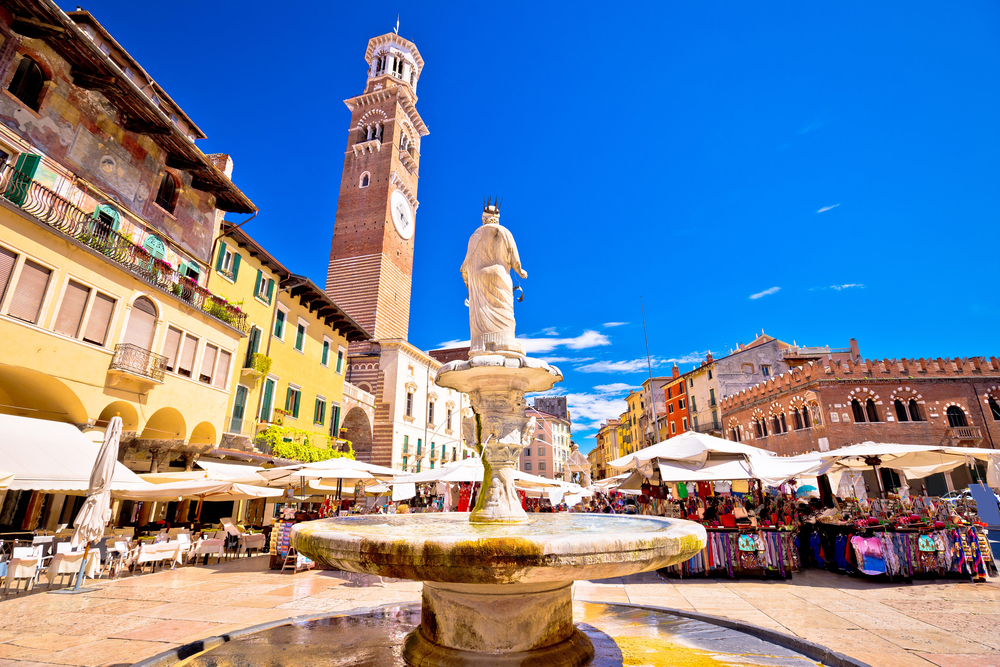
Piazza delle Erbe, built on the site of the ancient Roman forum, is the beating heart of historic Verona and one of the most extraordinary examples of urban continuity in Italy. The square, which has maintained its commercial vocation over the centuries, is now home to a lively daily market where colourful stalls offer fruit, vegetables, spices and handicrafts, keeping alive a tradition that has its roots in antiquity.
The irregularly shaped square is surrounded by historic buildings of extraordinary architectural value: on the northern side stands the Palazzo del Comune with the Torre dei Lamberti, on the western side the Baroque Palazzo Maffei dominates, while on the eastern side are the Case Mazzanti, covered with magnificent Renaissance frescoes.
In the centre of the square stands the Fontana di Madonna Verona, built in 1368 by Giovanni di Rigino and Cansignorio della Scala, which incorporates a 1st-century AD Roman statue representing a woman in a toga, symbol of the city.
Torre dei Lamberti: the most spectacular view of Verona
The Torre dei Lamberti, with its 84 metres in height, dominates the panorama of Verona's historic centre. Built in 1172 at the behest of the Lamberti family, the tower is one of the finest examples of medieval civil architecture in Italy.
From the top of the tower, the view stretches across the entire historic centre: the ellipse of the Arena, the winding course of the Adige River with its historic bridges, the majestic Cathedral and, on clear days, the Veneto Pre-Alps in the background are clearly visible.
Piazza dei Signori and Arche Scaligere: the power of the Scaligeri
Piazza dei Signori, accessible through the characteristic Voltone del Consiglio, is the heart of medieval power in Verona and one of the most elegant and harmonious urban environments in Italy. The square, which is quadrangular in shape, is surrounded by historic buildings of extraordinary value.
In the centre of the square stands the statue of Dante Alighieri, while on the southern side is the entrance to the Biblioteca Capitolare, one of the oldest libraries in the world still in use.
A wrought-iron gate leads to the courtyard of the Arche Scaligere, the funeral monuments of the Della Scala family who ruled Verona between the 13th and 14th centuries.
Castelvecchio and Ponte Scaligero: the fortress overlooking the Adige
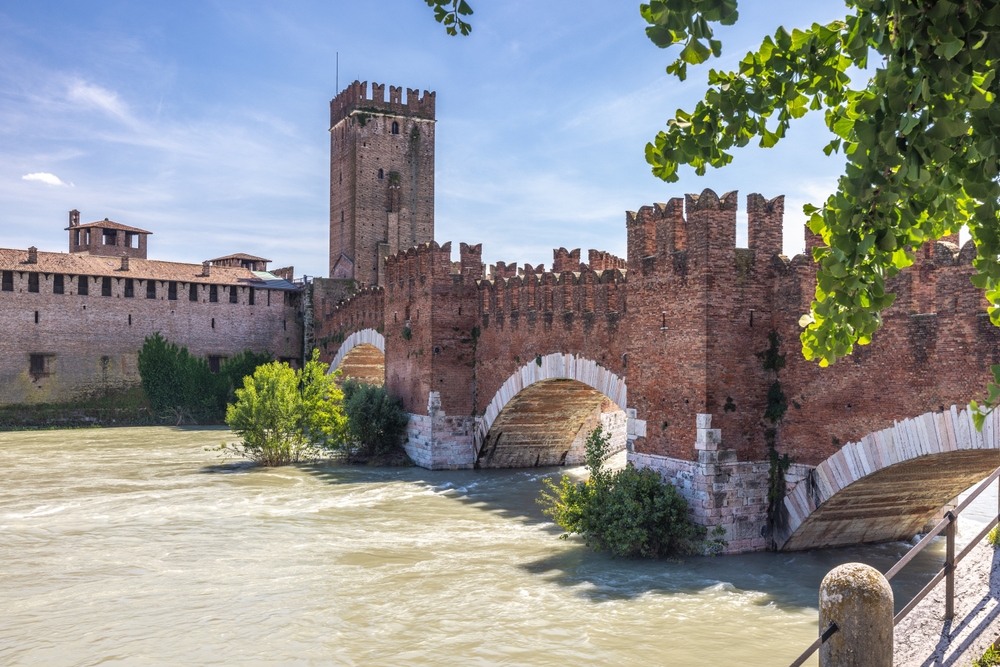
Castelvecchio, an imposing medieval fortress built by Cangrande II della Scala, is one of the most important fortified complexes in Italy and Verona's main civic museum. The fortress, characterised by alternating red bricks and tuff elements, stretches along the banks of the Adige River with a system of towers, courtyards and walkways of rare beauty.
Today, Castelvecchio houses the Civic Museum, which boasts collections of extraordinary value: the art gallery includes masterpieces by Pisanello, Mantegna, Bellini, Tintoretto and Veronese, while the sections dedicated to applied arts display medieval sculptures, goldsmith's work, antique weapons and fine ceramics.
The Scaligero Bridge, faithfully rebuilt after its destruction during the Second World War, connects Castelvecchio with the other bank of the Adige River, offering panoramic views of extraordinary beauty.
Verona Cathedral: the splendour of sacred art
Verona Cathedral, dedicated to Santa Maria Matricolare, is one of the most important religious buildings in northern Italy and an extraordinary compendium of architectural styles ranging from Romanesque to Gothic. The façade is characterised by Maestro Nicolò's porch, with its sculptures depicting knights, prophets and biblical scenes of rare finesse.
The cathedral complex also includes the church of Sant'Elena, with its 6th-century mosaic floor, and the Capitolare library, which houses illuminated manuscripts of inestimable value.
Ponte Pietra and the Roman Theatre: Verona's Roman roots
Ponte Pietra, the only Roman bridge still intact in Verona, connects the historic centre with the charming area of the Roman Theatre and the hill of San Pietro. Built in the 1st century BC from local white stone blocks, the bridge has undergone various reconstructions over the centuries that have altered its original appearance, while maintaining its ancient charm intact.
The theatre, partially carved into the rock of the hill, dates back to the end of the 1st century BC and could seat around 5,000 spectators. Although smaller than the Arena, the Roman Theatre exudes a particularly evocative atmosphere, especially during the summer performances of the Shakespearean festival.
Castel San Pietro: a picture-postcard view
The climb up the hill of San Pietro, which can be done on foot through characteristic alleys or by modern funicular railway, is amply rewarded by the breathtaking view from the top. From the terrace of Castel San Pietro, a 19th-century building erected on the ruins of an Austrian fortress, you can enjoy the most iconic and photographed view of Verona, the one that appears on all postcards and tourist guides.
The view encompasses the entire city, following the winding course of the Adige River, which forms a characteristic double bend around the historic centre. The Arena, the towers of the main churches, the Ponte Pietra bridge and, in the background, the morainic hills of Lake Garda are clearly visible.
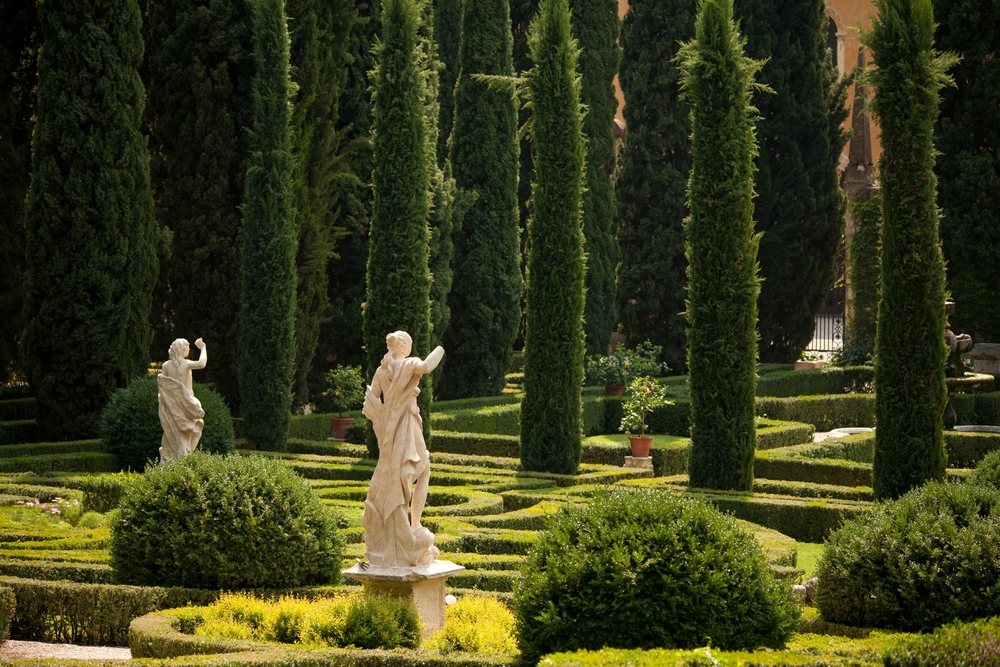
Giardino Giusti: Renaissance harmony
The Giusti Gardens, created at the end of the 15th century next to the palace of the noble Veronese family, are one of the best-preserved examples of Italian gardens and a must-see for discerning visitors. The garden, laid out on several terraced levels, combines architectural, sculptural and plant elements in perfect harmony according to the canons of the Renaissance.
The tour winds through the garden with its splashing fountains and plant maze. The belvedere offers an alternative and equally enchanting view of the city, through a unique perspective that frames the monuments among centuries-old cypress trees and Mediterranean essences.
If you have more time: excursions around Verona
For visitors who have extra time, the Verona area offers numerous opportunities for excursions of great interest. About 30 kilometres from the city, Borghetto sul Mincio is a village of extraordinary beauty, with its ancient water mills that seem to float on the river and its characteristic stone houses.
Just over an hour's drive away, the shores of Lake Garda offer scenery of incomparable beauty, with the characteristic villages of Sirmione, Lazise and Bardolino offering opportunities for relaxation, water sports and visits to historic sites of great value such as the Grotte di Catullo and the Rocca Scaligera.
Where to eat in Verona: the flavours of an ancient tradition
Veronese cuisine is characterised by robust and flavourful dishes, the result of a peasant tradition rooted in the rural culture of the Po Valley. Among the local specialities that every visitor should try are:
For an authentic experience, we recommend the taverns in the historic centre or the San Zeno area, where you can enjoy traditional cuisine in characteristic surroundings. Pandoro, the Christmas cake par excellence, originates from Verona and can be purchased all year round in the city's historic bakeries. The local wine tradition boasts products of the highest quality, including Amarone della Valpolicella, a full-bodied, structured wine that pairs well with the more robust traditional dishes.
Verona is a destination that can fully satisfy the expectations of all visitors, offering a perfect balance of art, history, culture and food and wine. This 48-hour itinerary allows you to capture the essence of the city, leaving room for further exploration based on your personal interests.
Have a good trip, Verona is always ready to welcome everyone!
Cover photo credits: saiko3p

There is a sound that never fades. Not the kind that dissolves into the air, but that of bronze bell...

In small, middle-class Milan, near the Villaggio dei Giornalisti, temporary housing units were built...

We are in the early 1960s. On one side there is Enzo Ferrari, the "Drake", absolute monarch of the a...

From April 13 to 16, 2026, the Bologna Children’s Book Fair returns for its 63rd edition. Once again...

In 1291, Doge Pietro Gradenigo signed a decree that would forever change the history of European cra...

Tornano sabato 21 e domenica 22 marzo le Giornate FAI di Primavera, il più grande evento di pia...
Rivista online registrata al Tribunale di Napoli n. 43 del 23/03/2022
Direttore: Lorenzo Crea
Editore: Visio Adv di Alessandro Scarfiglieri
Insight italia srl (concessionario esclusivo)
Rivista online registrata al Tribunale di Napoli n. 43 del 23/03/2022
Direttore: Lorenzo Crea
Editore: Visio Adv di Alessandro Scarfiglieri
Insight italia srl (concessionario esclusivo)
