

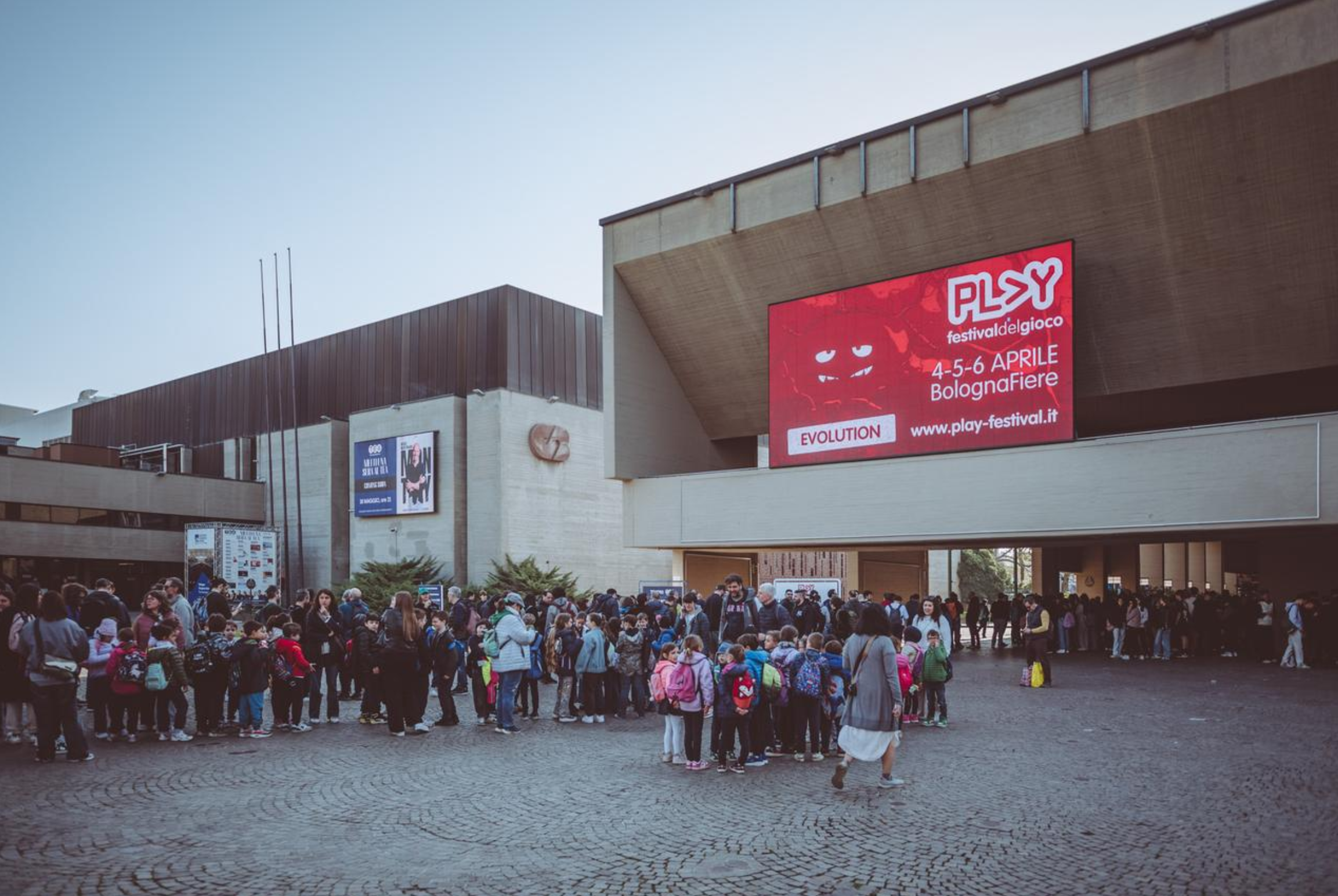
There is a place in Italy where, for three days a year, tens of thousands of people sit around a table and stop doing anything else. Nobody looks at their phone screen, nobody waits to speak while the other is talking, nobody is distracted by something more urgent. At the Play Festival del Gioco, the urgency is the game itself, and everything else can wait outside the door. Now in its seventeenth edition, this Bolognese festival has built over time something difficult to define with a single word: it is not a fair, it is not a tournament, it is not a convention, even though it contains a bit of all of these. The festival manages to unite adults and children in play, combining complex and historical games with alternative games for childhood and primary education in a single festival, educating and entertaining at the same time. It is, as its own slogan states, the largest games library in Italy, a physical and mental space where gaming is treated for what it is, a serious and ancient form of collective intelligence. BolognaFiere hosts the event in its pavilions, an exhibition centre that for three days transforms into something radically different from itself, populated not by trade exhibitors but by families, students, enthusiasts, researchers and the curious of all ages, united by a single desire: to play.
The year Play chose an article
Every edition of Play brings with it a theme, a key to reading that crosses the spaces, guides the programming and gives meaning to otherwise seemingly casual choices. For 2026, the festival has made a clear and significant choice, which says a lot about where this event wants to go. The theme is the female contribution to society and to the world of gaming, chosen on the occasion of the eightieth anniversary of women's suffrage in Italy. Eight decades ago, Italian women voted for the first time, and Play has decided to celebrate that moment not with a commemorative exhibition, not with an academic conference, but with something much more pervasive: a linguistic and cultural revision of the entire event. On the official social media channels, the over-extended feminine is adopted, a choice declared as a tool to make all identities visible, rejecting stereotypes and underlining the importance of equality.
And then there is the question of the article. If people have always wondered which article to assign to the name of the festival, the answer arrives this year with a certain solemnity: the feminine definite article. Not il Play, but la Play. A choice that is at once a linguistic act and a political gesture, to the extent that language is always, inevitably, also political. Gaming as a space for equity, encounter, and symbolic redistribution; this is the cultural bet that la Play 2026 brings with it.
A universe of tables, dice and imagination
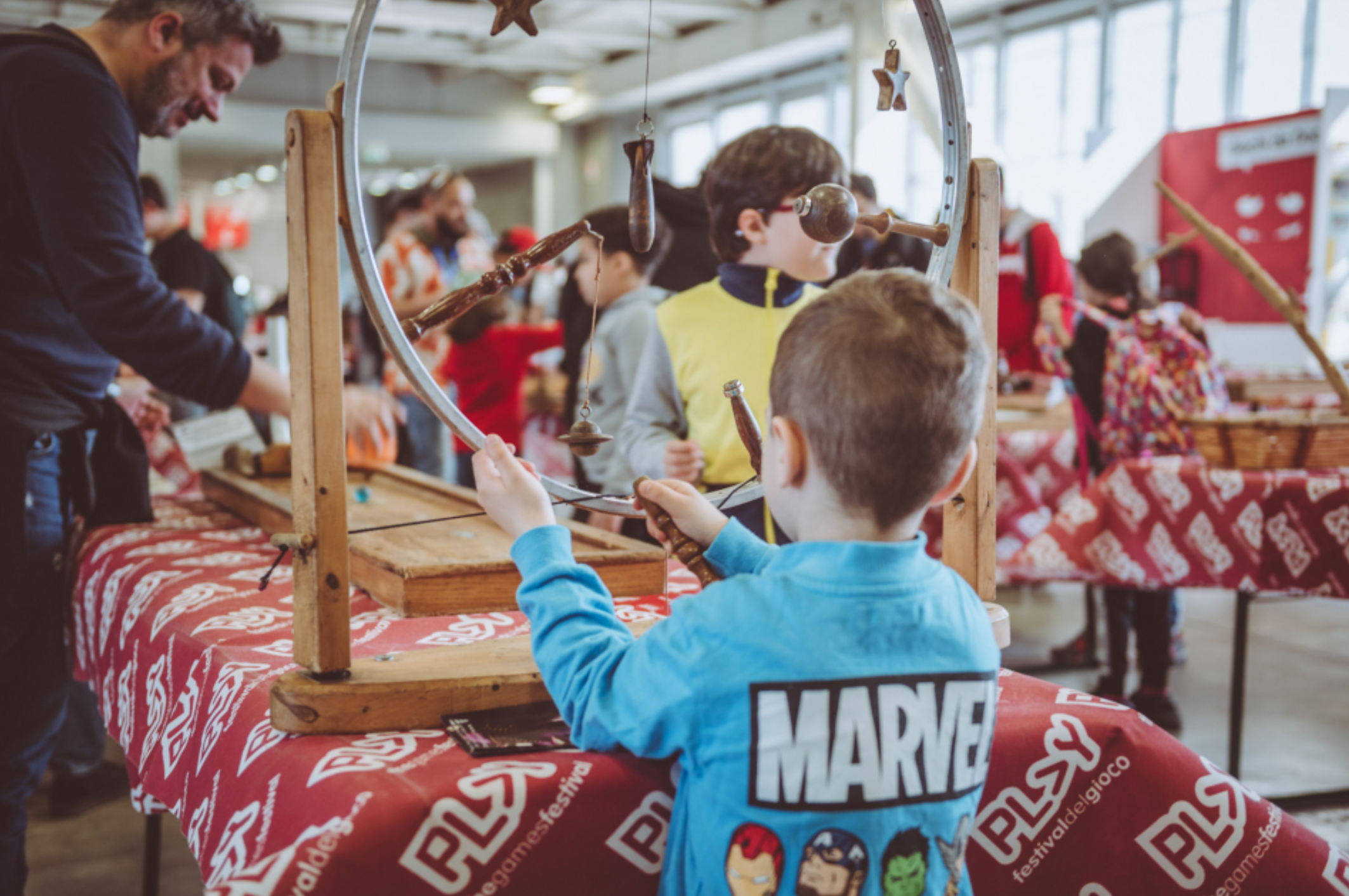
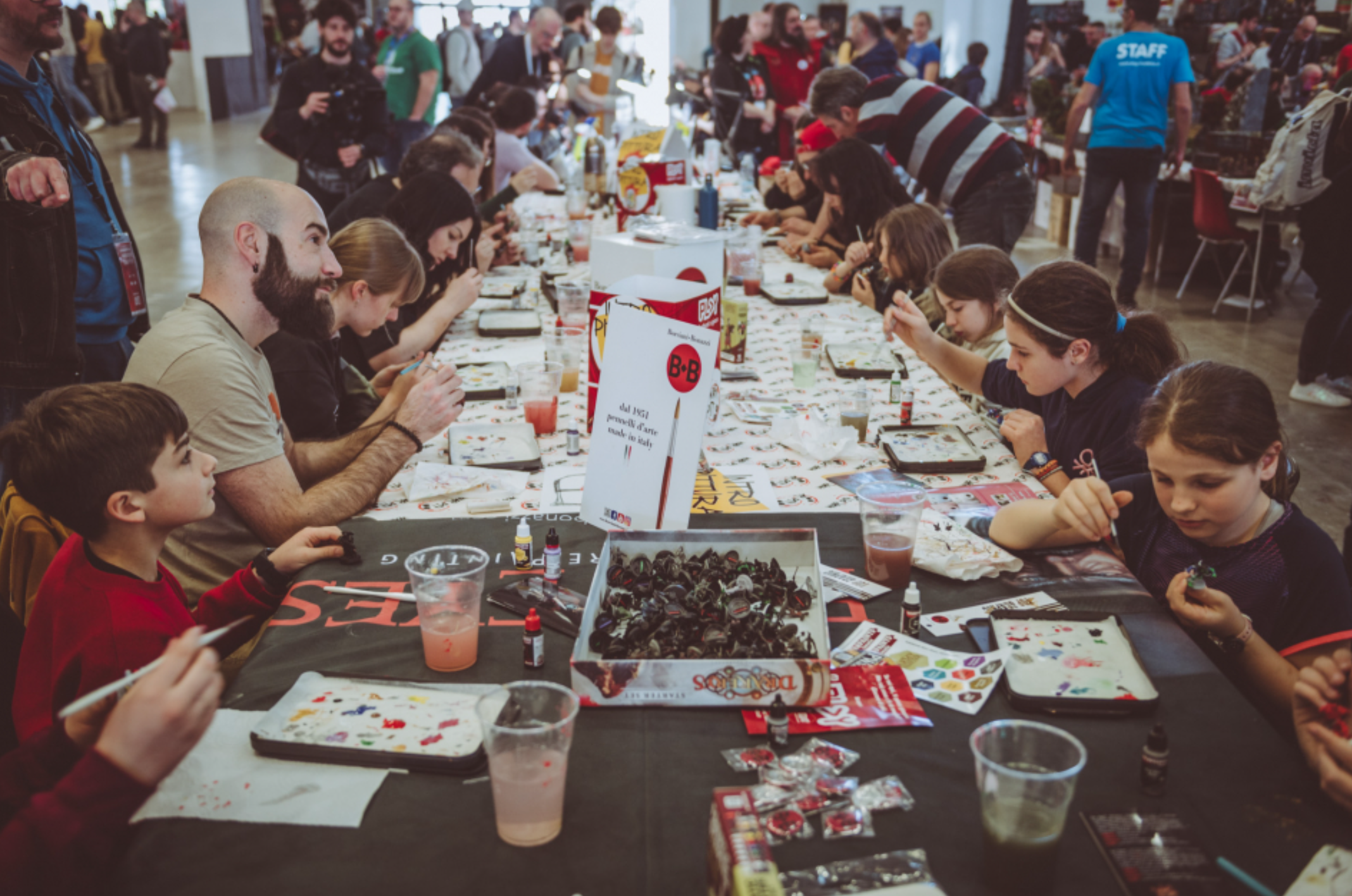
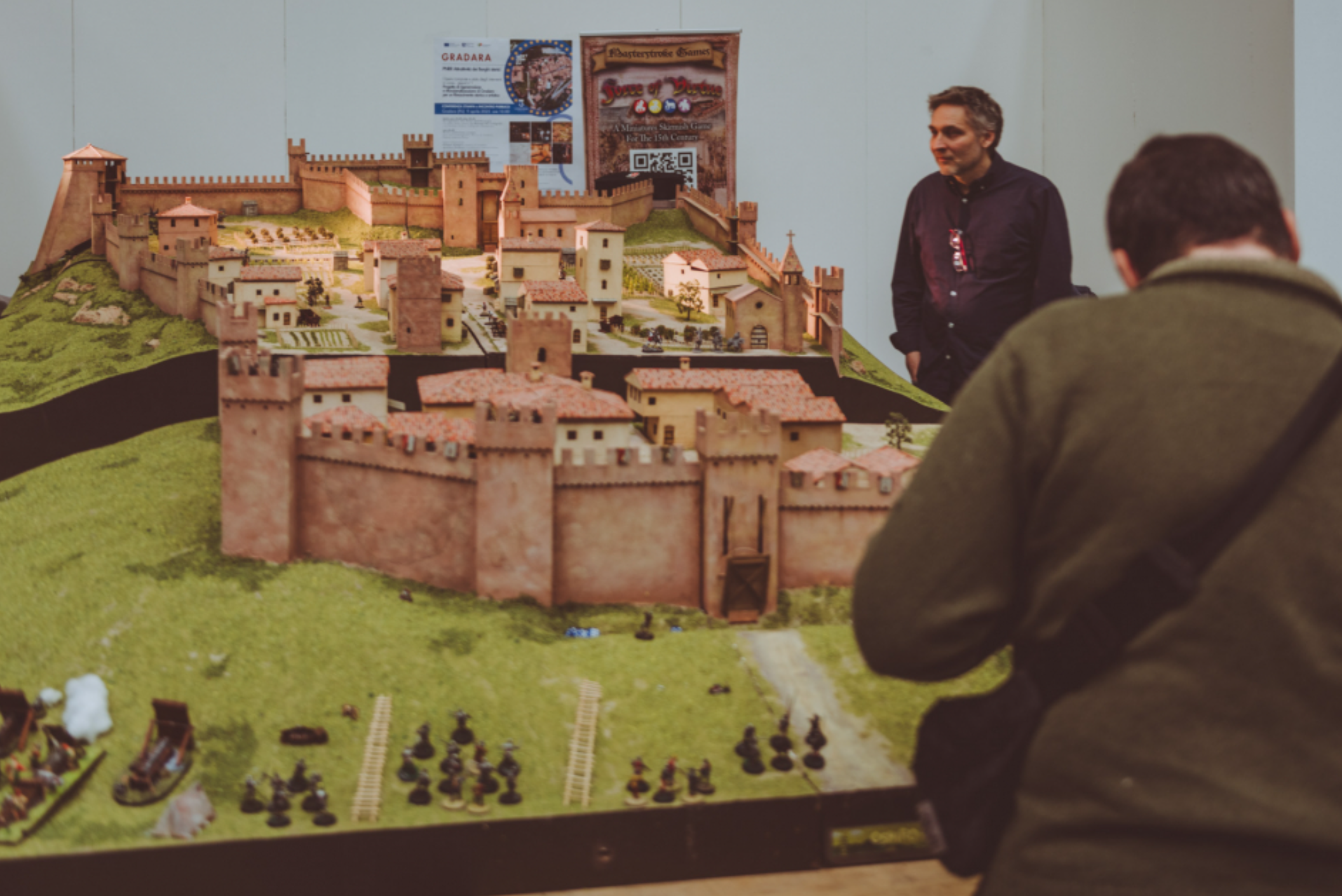
Those who have never participated in Play Festival del Gioco struggle to imagine its variety. It is not a single type of game, celebrated and repeated on every available table: it is an ecosystem, where different forms of intelligence and pleasure coexist side by side, often cross-contaminating. Board games occupy a huge space, from beloved classics to the latest editorial releases, available to try freely without any obligation to buy. Role-playing games inhabit dedicated rooms, with game masters available to welcome groups of every experience level, from absolute novices to veterans of decade-long campaigns. The wargame finds its home in the Play Warpit area, where finely painted miniatures face each other on three-dimensional surfaces, and where plastic creativity is as much a protagonist as military strategy. The world of LARP, live-action role-playing, takes shape in the Play Village, where fiction becomes embodied and costumes transform people into characters. The gamebook, that interactive literary form that marked the childhood of entire generations, has its own spaces, its own awards and its own passionate community. And then there is Magic: the Gathering, the famous collectible card game, which in this edition debuts with the Pauper format, three days of tournaments designed for a more accessible and competitive gameplay mode.
In all of this, between one pavilion and another, between one match and the next, la Play is also a place for conversation, friendship, and exchange: people do not just play, they talk about gaming, share rules, teach mechanics, and discuss design and narrative.
Gaming enters the laboratory
The most significant innovation of this edition, the one that best represents the direction in which the festival is growing, is the Ludoteca Scientifica (Scientific Games Library): a new area hosted in Pavilion 15, making its debut at la Play 2026 with a very precise identity. The underlying idea is that gaming is not just entertainment, but a real and verifiable tool for popularisation, learning and experimentation. Game Science, to put it in the term the area has chosen as its banner.
In this space, students, researchers, training bodies, museums and research foundations bring projects built around gaming as a vector of knowledge. The themes addressed are transversal, from scientific research to emotional education, from biodiversity to soft skills, from archaeology to recycling, from gender equality to Italian political history. Seventeen bodies coming from five Italian regions responded to the call, bringing twenty gaming proposals that will alternate over the three days across eighteen tables, ranging between board games, role-playing games and LARP. What emerges from this area is not just a cultural programme, but a profound reflection on the epistemic value of gaming: playing can be a way to understand the world, not just to forget it for a while. Universities, museums and foundations choosing the gaming table as an educational tool send a precise message: the separation between academic knowledge and popular culture is less distinct than one might think, and the festival is the place where that separation, for three days, completely disappears.
The party that continues after sunset
Play is not just daytime. On the evening of Saturday 23 May, the festival extends its opening hours until 23:00, transforming into something different and, in some ways, more intimate. Play by Night brings food trucks and free tables, a more informal atmosphere where the light changes and even the rhythm of the game becomes less intense. It is the part of the festival where games run long without anyone looking at the clock, where conversations between strangers become natural, and where the pleasure of gaming mixes with that of a summer evening.
Among the most anticipated events of the entire manifestation is the Asta Tosta (Tough Auction), scheduled for the opening Friday: an appointment that over time has acquired its own mythology among regular festival-goers. On the guest front, Barbascura X brings his hybrid of scientific popularisation and comedy to the stage, a presence consistent with the theme of the edition and with the festival's openness towards the world of communicated science. International awards complete the cultural profile of the event: the RPG Magnifico celebrates the best role-playing games of the year, while the Librogame Magnifico, now in its fifth edition, recognises excellence in interactive narrative. These are awards that do not make the news in the major national media, but in the world of gaming, they hold real weight, capable of guiding the reading and purchasing choices of an international community.
How to get to where the games are
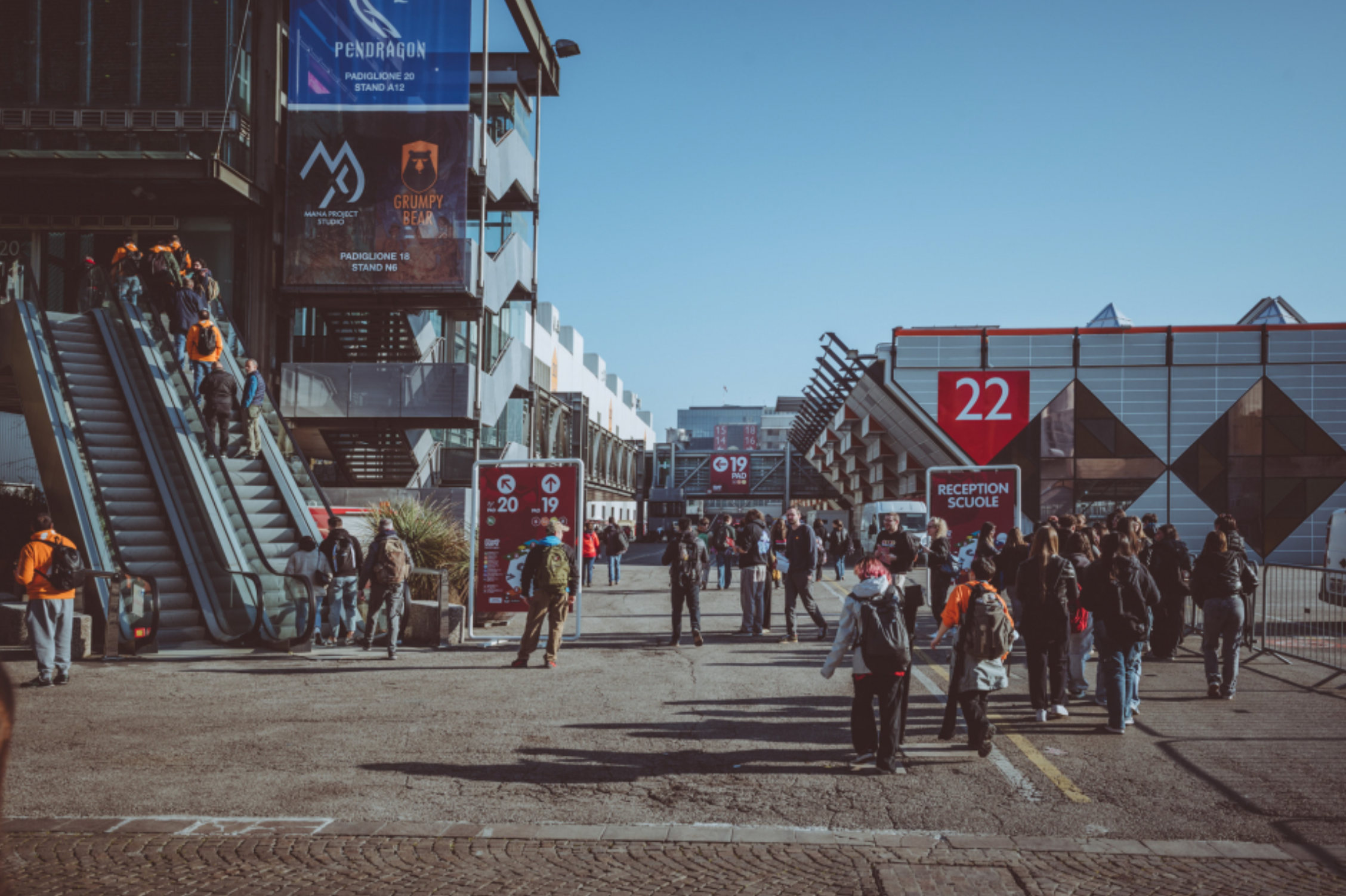
BolognaFiere is located in viale della Fiera 20, in the exhibition district of Bologna, easily accessible from the railway station thanks to two bus lines connecting the two points. For those arriving by car, the exhibition district has dedicated car parks. The pavilions involved, 15, 16, 18 and 20, cover a covered surface area of over 43,000 square metres, a figure that alone conveys the scale of the event.
The festival opens every day at nine and closes at nineteen, with the exception of Saturday 23rd evening which continues until 23:00. Particular attention is earned by the choice to make this edition more accessible to those with communication disabilities: thanks to the collaboration with Auxilia, for the first time la Play adopts AAC symbols (Augmentative and Alternative Communication), so that visitors with different communication needs can also orient themselves in the spaces and participate in the experience. It is a small step in practice, but significant in principle: a games festival that truly wants to be for everyone cannot afford to leave anyone outside the door.
The University of Bologna is among the entities that have granted their patronage to the event, confirming an institutional recognition that goes beyond simple participation. Play Festival del Gioco is not just an appointment for enthusiasts: it is, by now, part of the cultural calendar of a city that has taken gaming seriously.
Credit photos: www.play-festival.it