
Autore: Redazione • 01/08/2025 09:05
If you were asked to represent Naples with an image, the Vesuvius, flanked by Monte Somma, would most likely be present in the background. This volcano has fascinated the whole world since antiquity: thus, on June 5, 1995, the Vesuvius National Park was established by a Presidential Decree, to best preserve its natural beauties. Let's delve deeper together!
Vesuvius National Park: the importance of protecting the territory
Vesuvius is still a subject of study by experts today, since it is an active volcano. More precisely, today it is considered a dormant volcano (quiescent): its last eruption dates back to over eighty years ago. The choice to found the Vesuvius National Park is based on the aim of protecting its peculiar animal and plant range, of enhancing its geological features, of preserving its aesthetic value, and maintaining its geological and ecological balance. The Park also emphasizes environmental education and the need to instill in young people a sense of belonging to the homeland and to make them understand the importance of knowing their history, promoting cultural activities of various kinds.
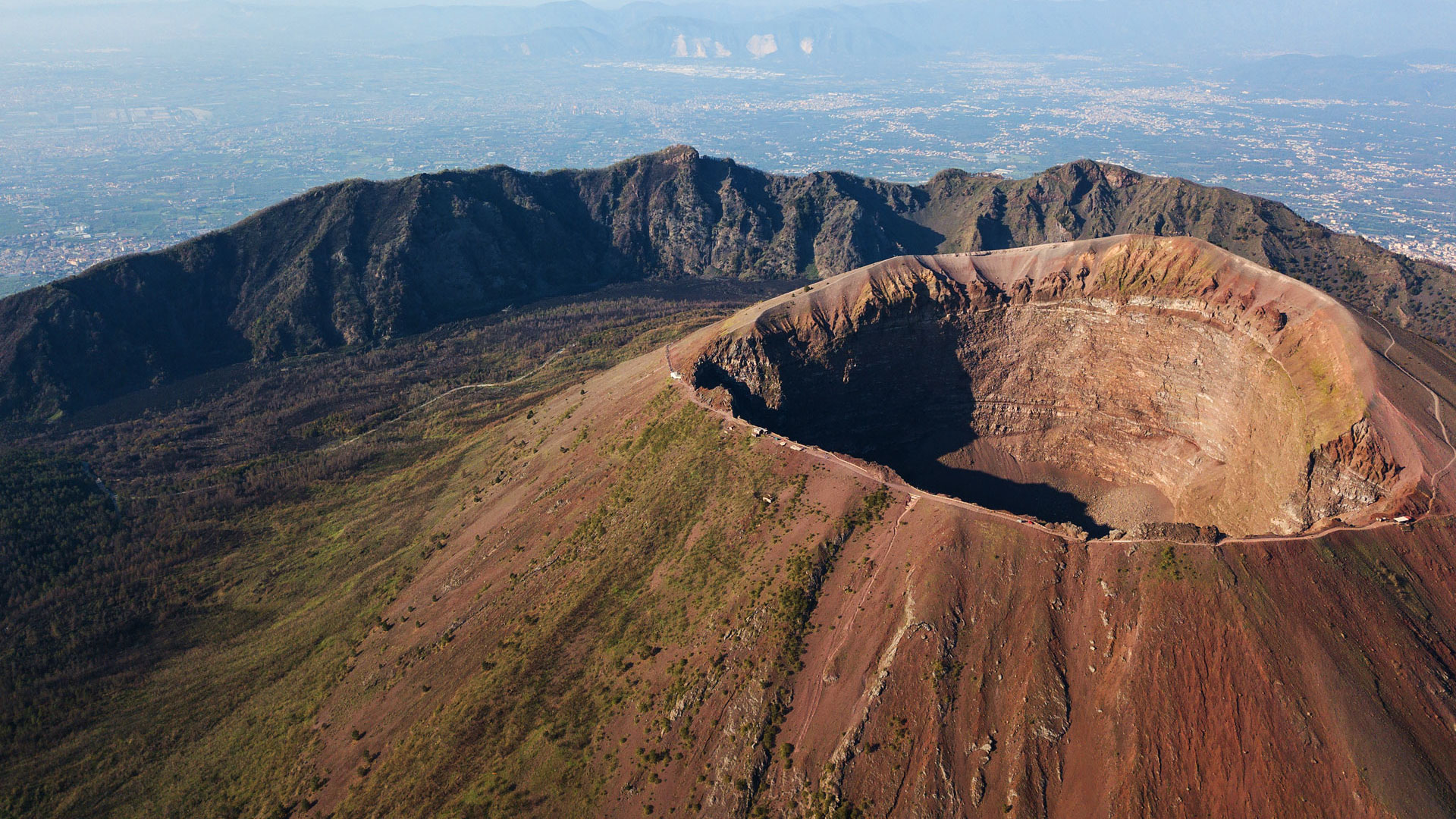
That the Vesuvius territory is so biologically rich is not a surprise. The formation of the Somma-Vesuvius complex dates back to about 400 thousand years ago, and the ash left by the continuous eruptions of Vesuvius over the years has made the soil particularly fertile: today it is one of the areas richest in minerals on the planet, as well as in plant species when compared to the relatively small size of the territory. The Romans were already used to cultivating the land: in Roman iconographic sources, Vesuvius was often represented as covered with vegetation and vineyards.
Even today, there are numerous typical agricultural specialties of the Vesuvius area. For example, we recall the Vesuvius apricot, locally called crisommola: the name derives from the Greek chrysomelos, meaning golden apple (the shape recalls that of a small yellow apple). There are many varieties: the apricot tree is the most common tree locally after the fig tree. The Pellecchiella apricot is the most prized and famous of the Vesuvius apricot varieties.
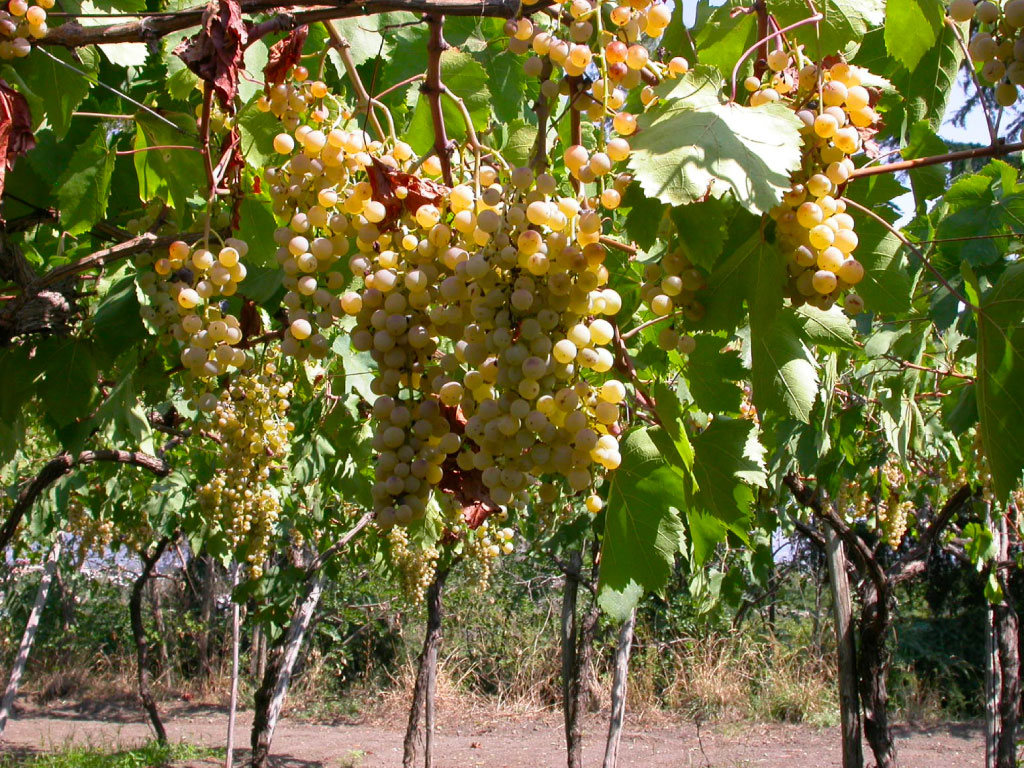
The local grape is also of considerable importance, from which the Vesuvio Lacryma Christi DOC wine can be obtained: already in the Roman era, Latin poets, including Pliny the Elder, praised the quality of Vesuvius wines. A particular Vesuvius grape is the Catalanesca grape, with a white, fleshy pulp and a very sweet flavor.
But we cannot forget the Pomodoro del Piennolo del Vesuvio (Vesuvius Piennolo Tomato). It received the DOP (PDO) quality mark in 2009, after having already been recognized as a traditional agri-food product by the Campania region. They have an elongated oval shape, and are typically harvested in clusters and hung on balconies, hence the name "Piennolo", meaning pendulum (hanging). Today the Vesuvius National Park is part of a complicated territorial context. Vesuvius is one of the most dangerous active volcanoes in Europe and the world, not only because of the magnitude of its eruptions (just think of the eruption of 79 AD, which destroyed the areas of Herculaneum and Pompeii), but also due to the strong urbanization that surrounds the volcano. It therefore becomes a fundamental mission to protect the territorial richness of Vesuvius. The Vesuvius National Park has an extension of 8482 hectares and its territory touches thirteen municipalities belonging to the Province of Naples.
Activities for Park visitors
The Vesuvius National Park offers eleven different hiking trails that visitors can take. The most loved by tourists is undoubtedly the Gran Cono (Great Cone), the path that leads from Piazzale Ercolano to the crater of the volcano. At the end of the trail, tourists can enjoy a spectacular view of the Gulf of Naples and the Campanian islands.
Among the other trails of the Vesuvius National Park, we mention the one of the Tirone-Alto Vesuvio Nature Reserve, a protected natural area and forest zone of about a thousand hectares where a rich flora and fauna is found; Il Vallone della Profica, which climbs the slopes of the eastern side of Monte Somma; Il Trenino a Cremagliera (Rack Railway), a route that starts from the hill on which the Vesuvius Observatory stands and climbs the volcano; Il Fiume di Lava (Lava River), for those who want to experience the thrill of walking on a lava flow; L'Olivella, a road through the countryside of Sant'Anastasia that leads to the springs of the same name; La Pineta di Terzigno (Terzigno Pine Forest), a flat path rich in vegetation. Another attraction of interest within the Vesuvius National Park is the Vesuvius National Park Museum, divided into five rooms. Located in the Villa Regina Cultural Center, it is intended to present the visitor with the geological evolution of the volcanic complex, the interaction of man with the volcano, and the development of the different plant and animal species. The volcano room focuses on the geological evolution of the volcanic complex. Through a model of the volcanic edifice, it is possible to observe the reconstructions of the volcano's recent eruptions and their consequences on the environment. In the room of the birth and evolution of the Vesuvius soil, it is possible to delve into the formation and change over time of the volcanic soil. In the room dedicated to soil and biodiversity, the main plant and animal species that populate the Vesuvius environment and the agricultural environment can be observed. One room is dedicated to anthropized soil: it educates the visitor on the consequences of an "incorrect" use of the territory and the negative impacts on the environment and man. The last room focuses on the man-Vesuvius interaction: the history of man's interaction with the volcanic environment is explored. In conclusion, come and admire with your own eyes one of the areas richest in history and natural beauty on the planet!
For more information, visit the official Park website.
Photo credit: official Vesuvius National Park website

There is a sound that never fades. Not the kind that dissolves into the air, but that of bronze bell...

In small, middle-class Milan, near the Villaggio dei Giornalisti, temporary housing units were built...

We are in the early 1960s. On one side there is Enzo Ferrari, the "Drake", absolute monarch of the a...

From April 13 to 16, 2026, the Bologna Children’s Book Fair returns for its 63rd edition. Once again...

In 1291, Doge Pietro Gradenigo signed a decree that would forever change the history of European cra...

Tornano sabato 21 e domenica 22 marzo le Giornate FAI di Primavera, il più grande evento di pia...
Rivista online registrata al Tribunale di Napoli n. 43 del 23/03/2022
Direttore: Lorenzo Crea
Editore: Visio Adv di Alessandro Scarfiglieri
Insight italia srl (concessionario esclusivo)
Rivista online registrata al Tribunale di Napoli n. 43 del 23/03/2022
Direttore: Lorenzo Crea
Editore: Visio Adv di Alessandro Scarfiglieri
Insight italia srl (concessionario esclusivo)
