
Autore: Redazione • 22/10/2025 09:37
Abruzzo reveals itself as one of the most authentic and surprising regions in central Italy, a territory where the majesty of the Apennines merges with the breath of the Adriatic. Rightly defined as "the green lung of Europe" for its three national parks and the protected marine area, this land safeguards a natural and cultural heritage of rare beauty. From the peaks of the Gran Sasso to the golden beaches, via medieval villages that seem suspended in time, Abruzzo offers a journey into the most genuine tradition.
This 48-hour itinerary has been conceived to discover the essence of a region that has known how to preserve its deepest identity, guaranteeing an unforgettable travel experience amidst breathtaking landscapes and little-known artistic treasures.
How to reach Abruzzo
Abruzzo is easily reachable via several modes of transport. For those travelling by car from the North, the main options are the A14 Bologna-Taranto motorway, with exits at Pescara north or south, and the A24 Rome-L'Aquila, which connects the capital to the heart of the region through evocative mountain tunnels. When coming from the South, the A14 again represents the main artery, with exits at Vasto, Ortona and Chieti.
The Abruzzo International Airport in Pescara, located approximately 5 kilometres from the city centre, offers connections to main Italian and European cities, with both scheduled and low-cost flights. Numerous bus companies guarantee transfers to the city centre and the region's main localities.
The region is well served by rail transport along the Adriatic line, with frequent connections between Ancona, Pescara and Vasto. The regional rail network also connects the hinterland with the coast, albeit with longer journey times compared to the car. From Rome, around 15 daily connections to L'Aquila are available via regional bus lines.
How to get around Abruzzo
Abruzzo, given its predominantly mountainous conformation and the dispersal of its inhabited centres, is more convenient to visit with one's own vehicle. However, a public transport network exists that connects the main centres, managed by the TUA and Arpa companies.
For exploring the national parks and the more remote villages, the car remains the ideal choice. The region offers numerous car hire possibilities at the main airports and stations. For trekking enthusiasts, many trails are accessible via shuttle services from the main inhabited centres.
To optimise the visit, it is advisable to consider purchasing the CartAmica Abruzzo, a tourist card that offers discounts and benefits in museums, accommodation facilities and restaurants. The card, available in 3 or 7-day versions, includes discounts for entry to numerous cultural and natural attractions in the region.
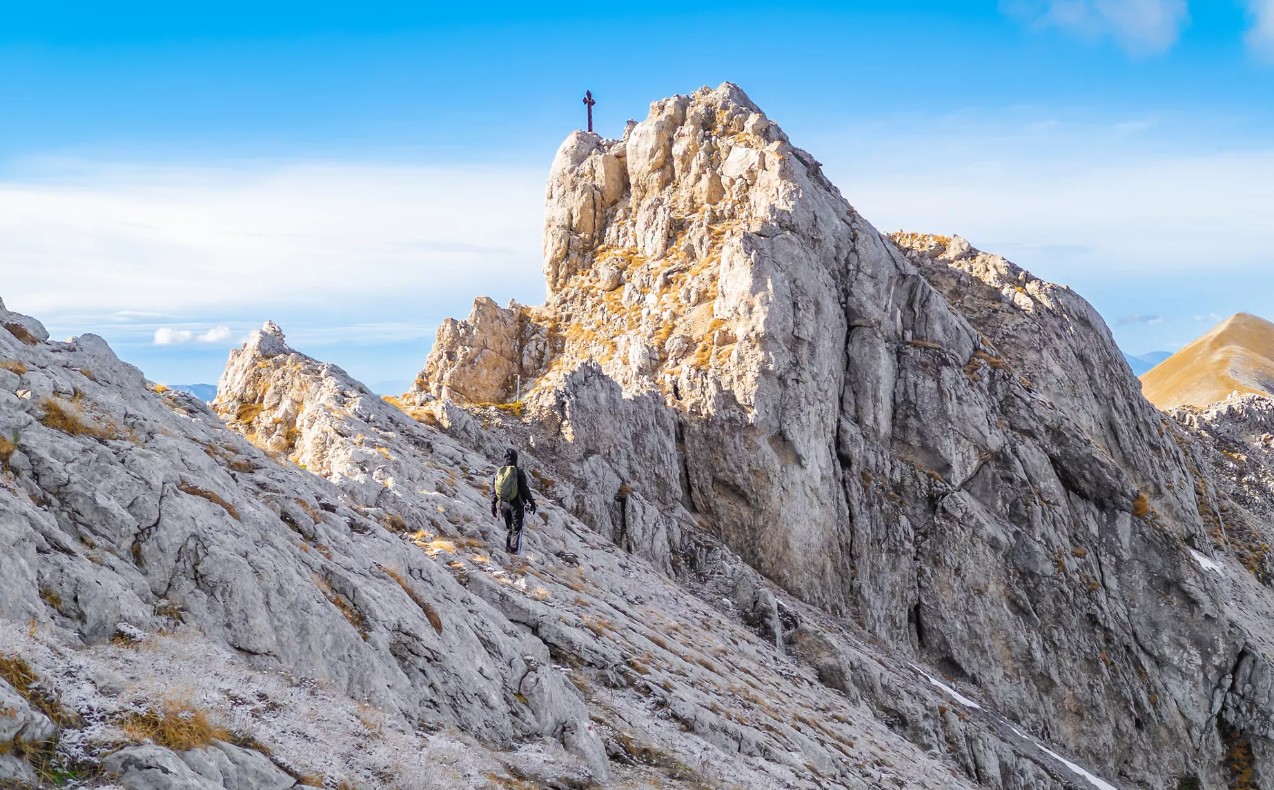
Rocca Calascio and Campo Imperatore: the majesty of the mountain
The day begins with one of the most iconic places in Abruzzo: Rocca Calascio. Situated at 1,460 metres above sea level in the Gran Sasso and Monti della Laga National Park, this medieval fortification offers one of the most spectacular panoramas in Italy. The fortress, reachable via a short 15-minute walk, dominates the Tirino Valley and the Navelli Plain; the structure represents one of the highest examples of military architecture in Europe.
The visit to the fortress, made famous by numerous films including "The Name of the Rose", provides unforgettable emotions: the castle ruins, the church of Santa Maria della Pietà and the view of the Corno Grande peaks create an atmosphere of rare fascination. From the summit, the gaze spans the entire Gran Sasso massif, the surrounding villages and, on the clearest days, as far as the Adriatic Sea.
Continuing to Campo Imperatore, often referred to as "the little Tibet", one immerses oneself in a lunar landscape of incomparable beauty. The plateau, situated at about 2,000 metres above sea level, extends for approximately 27 kilometres, offering scenes of absolute wilderness. During the summer season, it is possible to spot chamois, deer and golden eagles, while in winter the area transforms into a renowned ski resort.
Santo Stefano di Sessanio: the perfectly preserved medieval village
A few kilometres from Rocca Calascio, Santo Stefano di Sessanio represents one of the most characteristic villages in Abruzzo. The town, one of the "most beautiful villages in Italy", has maintained its medieval structure intact, with narrow alleyways, stone houses and architecture that recounts centuries of history.
The village, after a period of depopulation, was the subject of a careful restoration that preserved its authenticity. Today it is possible to walk the cobbled alleys, discover the characteristic underpassages and visit the Medicean tower, the symbol of the town; the historic centre represents a rare example of perfectly preserved mountain architecture.
The village offers numerous opportunities for shopping: from local products such as the lentils of Santo Stefano and the saffron from L'Aquila, to traditional crafts. For lunch, it is recommended to sample the typical cuisine in one of the village's characteristic inns.
L'Aquila: the city that is being reborn
In the afternoon, the visit continues towards L'Aquila, the regional capital and a symbol of Abruzzo resilience. Despite the damage from the 2009 earthquake, the city is experiencing an extraordinary rebirth, with the restoration of numerous monuments and places of worship.
The Basilica of Santa Maria di Collemaggio, recently reopened after a complex restoration, represents one of the greatest examples of Abruzzo religious architecture. The Romanesque-Gothic façade, characterised by the typical rose window and the rich portals, welcomes visitors in an atmosphere of profound spirituality. The interior houses the mausoleum of Celestine V, the pope of Dante's "great refusal".
Piazza Duomo, the heart of the city, hosts the Cathedral of San Massimo and numerous historic palaces recently restored. The Fountain of the 99 Spouts, a symbolic monument of the city, tells through its sculptures the story of the 99 castles that founded L'Aquila in the 13th century.
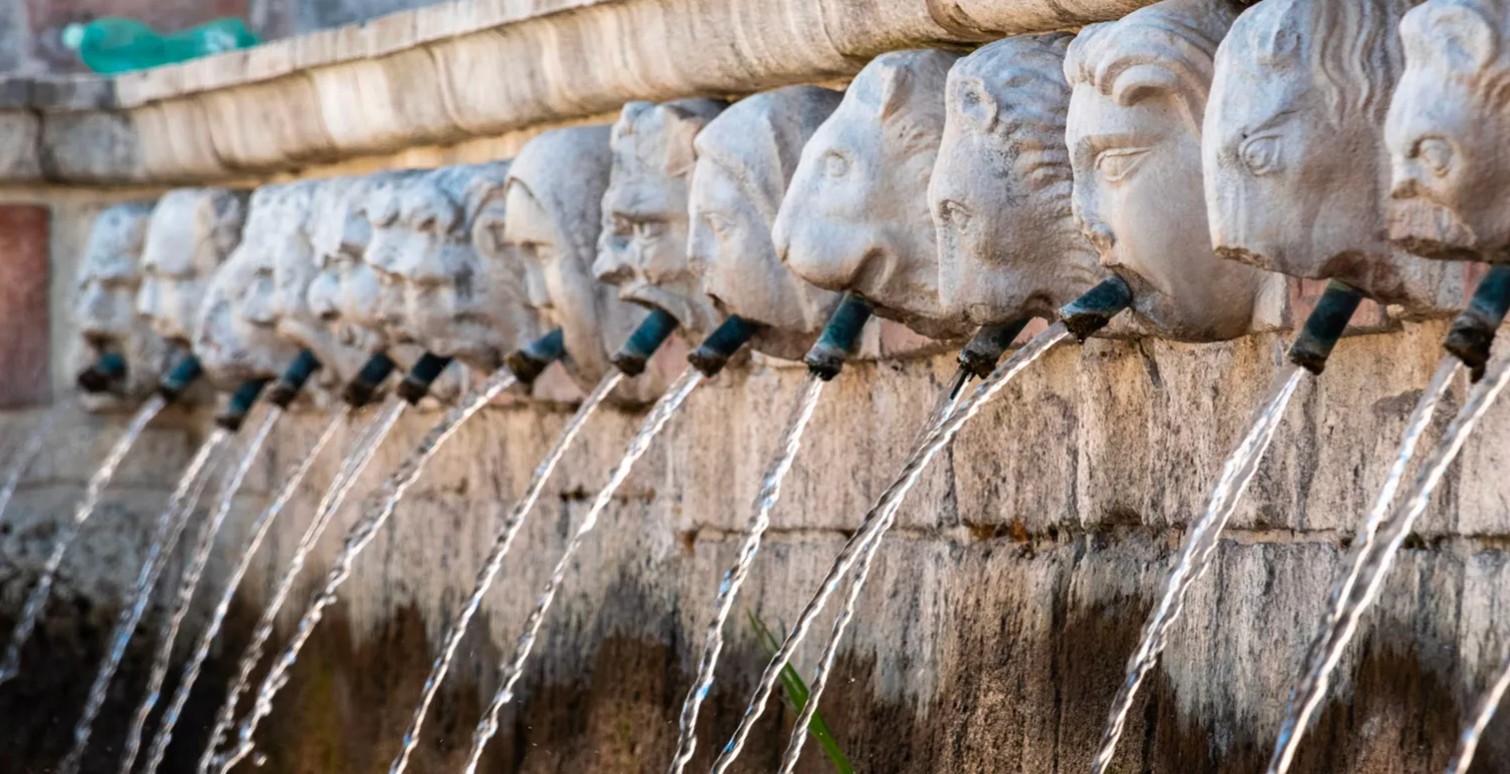
The evening visit can conclude with a dinner in the historic centre, where it is possible to sample the traditional dishes of L'Aquila in one of the restaurants that have reopened, contributing to the rebirth of city life.
Second day: From the Costa dei Trabocchi to the villages of the Majella
Costa dei Trabocchi: where history meets the sea
The second day begins with the discovery of one of the most suggestive coastal stretches in Italy: the Costa dei Trabocchi. This strip of Adriatic coastline, which extends from Francavilla al Mare to San Salvo, takes its name from the characteristic stilt fishing machines that dot the coast.
These ancient wooden structures represent a unique example of marine industrial archaeology. Many trabocchi have been converted into restaurants where it is possible to taste freshly caught fish, offering a highly suggestive gastronomic experience.
Among the unmissable stops along the coast, Fossacesia stands out, with the Abbey of San Giovanni in Venere and the Turchino trabocco; San Vito Chietino, where Gabriele D'Annunzio set part of "The Triumph of Death"; and Rocca San Giovanni, with its characteristic perched historic centre.
The coastal route offers numerous free beaches and hidden coves, perfect for a refreshing stop during the summer months. The Costa dei Trabocchi cycle path, recently created, allows one to explore this stretch of coast by bicycle, fully enjoying the breathtaking landscapes.
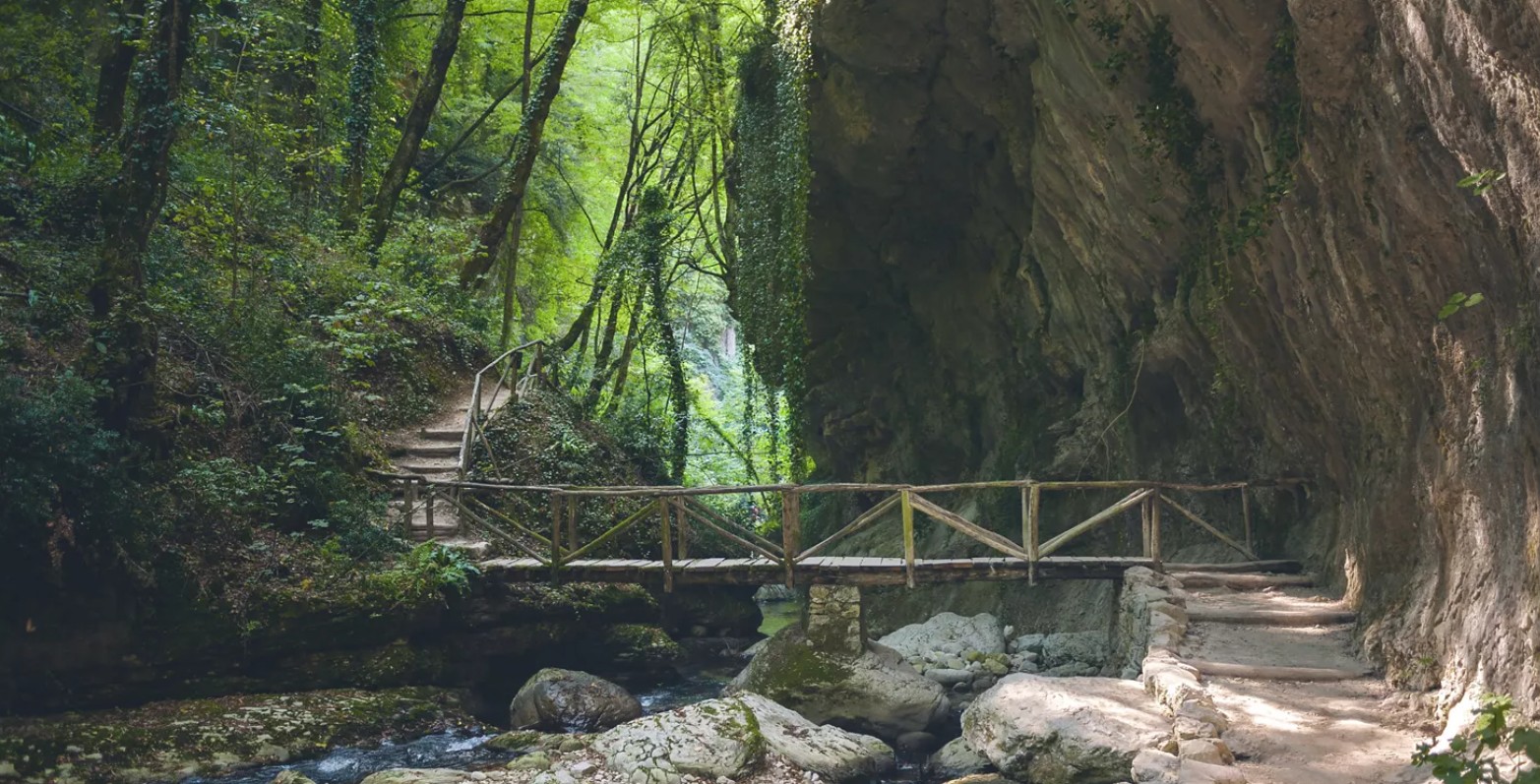
National Park of the Majella: the sacred mountain
After a lunch based on fresh fish, the day continues inland, with the discovery of the National Park of the Majella. Defined as the "mother mountain" by the Abruzzese, this massif safeguards a unique biodiversity and numerous hermitages that bear witness to a long spiritual tradition.
The Hermitage of Santo Spirito a Majella, situated in the municipality of Roccamorice, represents one of the most suggestive places in the park. The hermitage was founded by Pietro da Morrone, who lived here before becoming Pope Celestine V. The structure, partially carved into the rock, emanates an atmosphere of profound spirituality and seclusion.
The visit to the hermitage provides intense emotions: the rupestrian chapel, the monks' small cells and the panorama over the valley create a perfect union between nature and spirituality. The path to reach the hermitage, although not particularly difficult, requires suitable footwear and a reasonable level of fitness.
Guardiagrele: the city of wrought iron
Continuing northwards, one reaches Guardiagrele, defined as "the terrace of Abruzzo" for its panoramic position overlooking the Majella and the Adriatic Sea. The village is celebrated for the artisan craftsmanship of wrought iron and copper. The medieval historic centre conserves numerous artistic treasures such as the Cathedral of Santa Maria Maggiore, with its 13th-century portico and the silver antependium by Nicola da Guardiagrele; the church of San Francesco, which houses a valuable cycle of frescoes; and the artisan workshops where it is possible to witness metalworking.
The tradition of goldsmithing and metalworking dates back to the Middle Ages, when the city was an important artisan centre. Today it is possible to purchase objects in copper and wrought iron directly from the historic workshops in the centre.
Where to eat in Abruzzo: the flavours of an ancient tradition
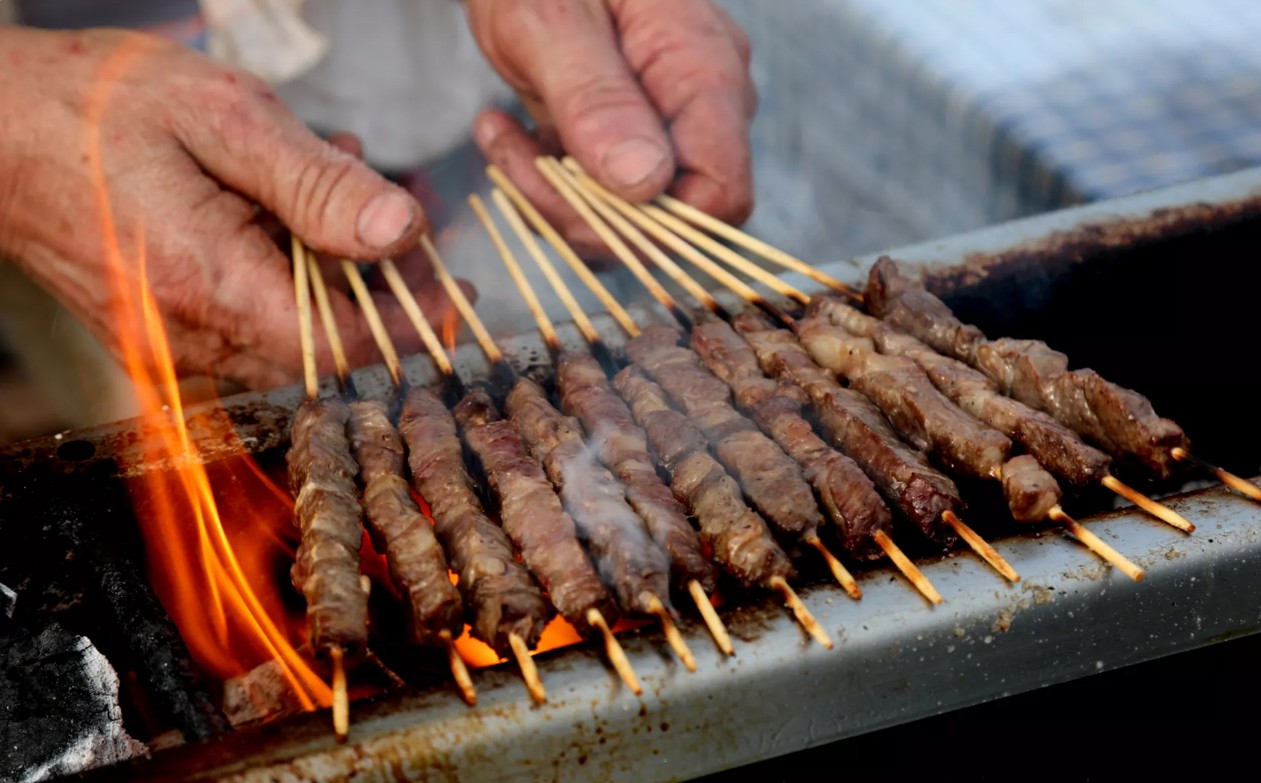
Abruzzo cuisine is characterised by robust and flavourful dishes, the result of a tradition that combines mountain products with those from the sea. Among the regional specialities that every visitor should taste are: Arrosticini: skewers of ovine meat cooked on special grills, the symbolic dish of the region; Maccheroni alla Chitarra: fresh pasta rolled with the traditional instrument, seasoned with meat sauce or a 'pallottine' ragù; Pallotte Cace e Ove: cheese and egg balls, fried and seasoned with tomato sauce; Brodetto di Pesce: the Abruzzese version of fish soup, prepared with at least thirteen varieties of fish; Confetti di Sulmona: traditional sweets made with almonds covered in sugar, famous throughout the world.
For an authentic experience, the trattorias in the mountain villages or the restaurants on the coast are recommended, where it is possible to savour traditional cuisine in characteristic settings. The local wine tradition boasts highest quality products, among which Montepulciano d'Abruzzo and Trebbiano d'Abruzzo stand out.
If you have more time: excursions in the surrounding area
For visitors who have additional time, Abruzzo offers numerous opportunities for highly interesting excursions. The Abruzzo, Lazio and Molise National Park represents an unmissable destination for nature lovers, with the possibility of spotting the Marsican brown bear, the Abruzzo chamois and the Apennine wolf.
Sulmona, the birthplace of Ovid and the capital of confetti, offers a historic centre of great merit with the Palazzo dell'Annunziata and the complex Abbey of Santo Spirito al Morrone; furthermore, the city jealously guards one of the oldest artisan traditions in Italy in the production of confetti.
For art lovers, Atri represents an obligatory stop with its Cathedral of Santa Maria Assunta, which houses one of the most important cycles of medieval frescoes in central Italy.
Abruzzo represents a destination capable of satisfying the expectations of the most demanding visitors, offering a perfect balance between nature, history, culture, and food and wine. This 48-hour itinerary allows one to grasp the essence of the region, while still leaving room for possible further exploration based on personal interests.
From the majesty of the Gran Sasso to the spirituality of the hermitages of the Majella, from the allure of the Costa dei Trabocchi to the art of the medieval villages, Abruzzo reveals itself as a land of endless surprises, capable of conquering the heart of every visitor and inviting them to return again and again.

There is a sound that never fades. Not the kind that dissolves into the air, but that of bronze bell...

In small, middle-class Milan, near the Villaggio dei Giornalisti, temporary housing units were built...

We are in the early 1960s. On one side there is Enzo Ferrari, the "Drake", absolute monarch of the a...

From April 13 to 16, 2026, the Bologna Children’s Book Fair returns for its 63rd edition. Once again...

In 1291, Doge Pietro Gradenigo signed a decree that would forever change the history of European cra...

Tornano sabato 21 e domenica 22 marzo le Giornate FAI di Primavera, il più grande evento di pia...
Rivista online registrata al Tribunale di Napoli n. 43 del 23/03/2022
Direttore: Lorenzo Crea
Editore: Visio Adv di Alessandro Scarfiglieri
Insight italia srl (concessionario esclusivo)
Rivista online registrata al Tribunale di Napoli n. 43 del 23/03/2022
Direttore: Lorenzo Crea
Editore: Visio Adv di Alessandro Scarfiglieri
Insight italia srl (concessionario esclusivo)
