
Autore: Redazione • 26/08/2025 10:01
History and Description
Located in the area of the Phlegraean Fields, Cuma, founded around 730 B.C. by Greek colonists, is one of the earliest Hellenic colonies in Italy, later ruled by the Samnites and the Romans. After a long period of abandonment, the city was rediscovered thanks to archaeological excavations that began in the 17th century, which led to the discovery of the Cave of the Sibyl—a tunnel carved into tuff—the Byzantine Tower and Belvedere, remnants of ancient fortifications, the Temple Terraces (divided into upper and lower levels), and the Lower City, which preserves the Roman forum, thermal baths, and necropolis.
Curiosities
The park’s fame, beyond the archaeological significance of its ruins, is closely tied to the myth of the Cumaean Sibyl, also recounted by Virgil. According to legend, the Sibyl of Cumae, a priestess of Apollo, presided over the oracle of Cumae near Lake Avernus, communicating with the gods and foretelling the future. Her prophecies were later compiled in the Sibylline Books. Today, the Sibyl’s Cave remains preserved in a way that evokes the mystical atmosphere of the myth, with lighting and side cisterns that seem to recall the oracular mouths.
Access Information
The Archaeological Park of Cuma can be reached by car, taking the Naples ring road toward Pozzuoli, by train in the same direction, or by local bus.
Visiting the Archaeological Park of Cuma means not only walking through history but also stepping directly into one of the most legendary myths of all time — a truly unmissable destination!
Photo credits: MentNFG (Wikipedia) - Licensed by CC 3.0

Vittorio Camaiani at Palazzo Colonna: "Senza Confini" Spring/Summer 2026 Designer Vittorio Camaiani ...

Fiorinfiera in Borgo San Lorenzo: 13th edition From 17 to 19 April 2026 Borgo San Lorenzo hosts the ...

Dialogus Temporum: Maurizio Rapiti at Palazzo del Podestà Dialogus Temporum is a solo painting exhib...

Alchemy in Ceramics: Shilha Cintelli at the Carlo Zauli Museum The Carlo Zauli Museum in Faenza host...
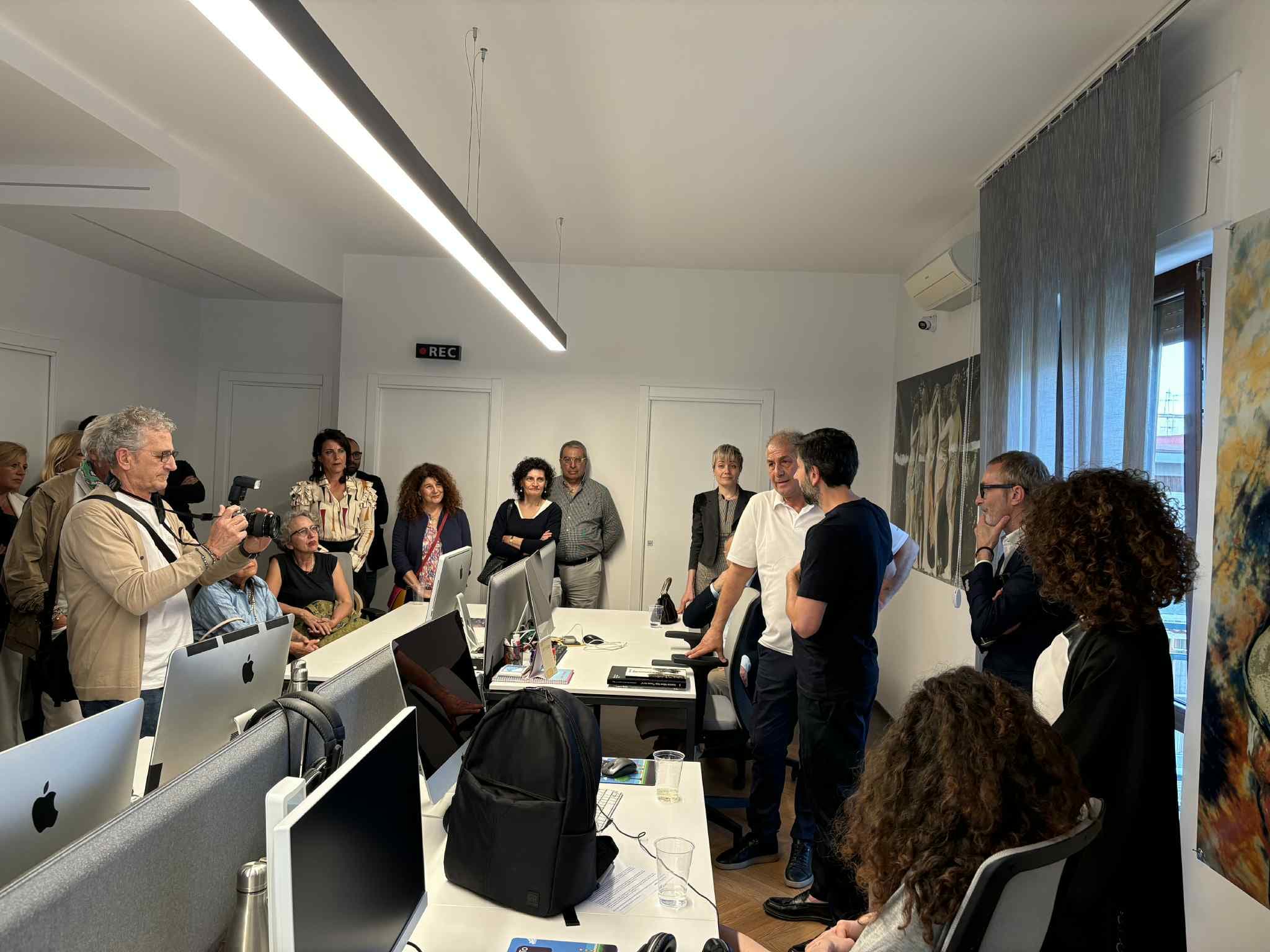
Manualità & Arte: exhibition by Gerardo Di Fiore and Cristina Cianci The Teleclubitalia newsroom...

Artisanal gelato up for UNESCO recognition: why consumer choices matter On 12 March 2026 the nominat...
Rivista online registrata al Tribunale di Napoli n. 43 del 23/03/2022
Direttore: Lorenzo Crea
Editore: Visio Adv di Alessandro Scarfiglieri
Insight italia srl (concessionario esclusivo)
Rivista online registrata al Tribunale di Napoli n. 43 del 23/03/2022
Direttore: Lorenzo Crea
Editore: Visio Adv di Alessandro Scarfiglieri
Insight italia srl (concessionario esclusivo)
