
Rivista online registrata al Tribunale di Napoli n. 43 del 23/03/2022
Direttore: Lorenzo Crea
Editore: Visio Adv di Alessandro Scarfiglieri
Insight italia srl (concessionario esclusivo)
Rivista online registrata al Tribunale di Napoli n. 43 del 23/03/2022
Direttore: Lorenzo Crea
Editore: Visio Adv di Alessandro Scarfiglieri
Insight italia srl (concessionario esclusivo)
Maria Giovanna Paone, Chairwoman of the Board and CEO of Ciro Paone S.p.A., has always been an international reference point for high-end men’s and women’s tailoring thanks to the…
By Luigi Graziano Di Matteo · August 1, 2025 · ≈ 6 min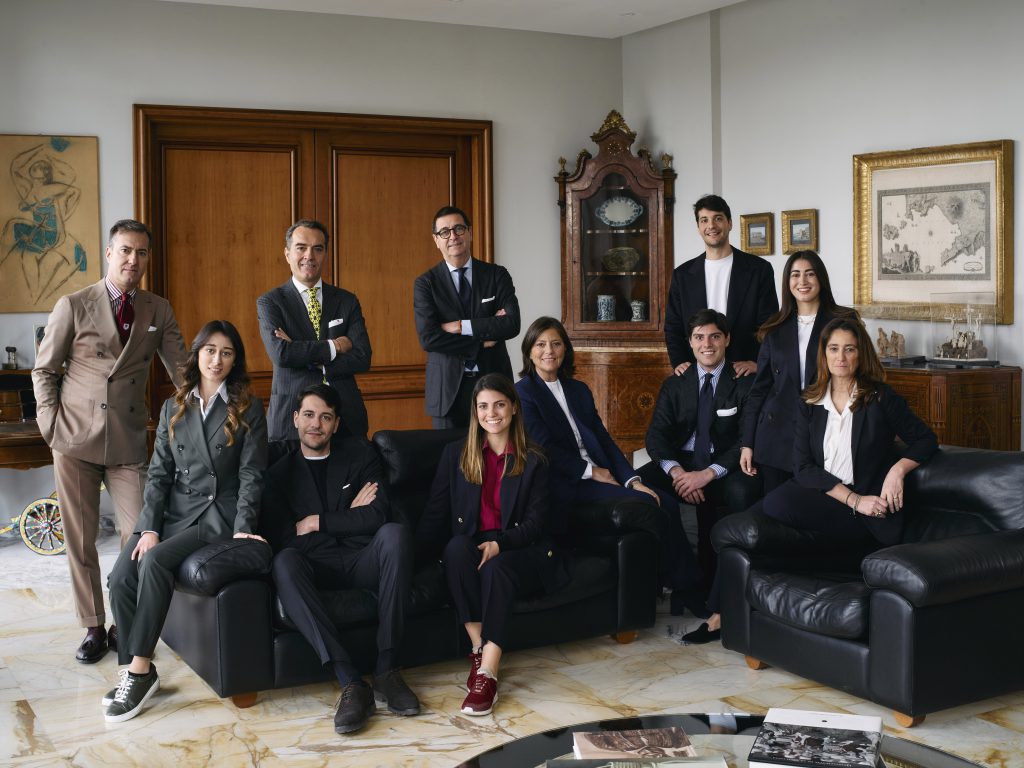
By Luigi Graziano Di Matteo · August 1, 2025 · ≈ 6 min
Maria Giovanna Paone, Chairwoman of the Board and CEO of Ciro Paone S.p.A., has always been an international reference point for high-end men’s and women’s tailoring thanks to the Kiton brand.
In the 1990s she took on the role of Creative Director of the women’s line, which she herself created, further strengthening Kiton’s identity.
Her entrepreneurial figure has grown in parallel with the expansion of the Kiton group, which today counts over sixty monobrand boutiques worldwide and two strategic distribution hubs in the USA and Asia.
Her contribution was recently recognized with the honor of Cavaliere del Lavoro, the same title awarded to her father in 1999.
Dr. Paone, welcome to InItaly. It is an honor to have you with us. Can you tell us the story of Ciro Paone S.p.A., from its foundation by your father to your entry into the company?
My father founded the company in 1968. Initially, he had a fabric shop in Piazza Mercato, Naples. With the advent of prêt-à-porter, traditional tailoring went into crisis: people preferred to buy ready-made garments, and fabric shops began to suffer. From there came the idea of creating a sartorial product that could be offered as prêt-à-porter.
Thanks to his deep knowledge of fabrics, my father began selecting the best suppliers, both Italian and English, and building a production chain that industrially reproduced the work of the traditional tailor. He organized the work in phases—cutting, sewing pockets, collars, sleeves, etc.—to obtain a uniform product, but with the same quality and artisanal care as a bespoke garment.
He began offering this product in Italy and then immediately in France and Germany, the first foreign markets. It wasn’t easy: Naples in the 1960s was not the easiest place to establish oneself in the fashion world. But thanks to the quality of the product and reliability in deliveries, Kiton gained credibility. Soon came the American and Asian markets as well.
I entered the company in 1986, at 18, after graduating in accounting. At first, my father was against it: he thought the world of men’s tailoring wasn’t suitable for a woman, both for the sensitivity required and because it was an environment dominated by male clients and suppliers. But over time he saw my determination.
He realized I couldn’t carry the company forward alone, so he involved other family members: my cousins, including Antonio De Matteis, now CEO, who followed my father step by step in developing the business. My sister also played an important role, first in the warehouses and later as HR director. My father always placed great importance on personal relationships with every employee.
In the 1980s we opened the corporation in America, and in 2010–2011 we expanded into Asia. At the same time, we evolved the concept of sartorial product into a total look: from ties to shirts, outerwear, leather goods, denim, knitwear—also thanks to the acquisition of artisanal companies in difficulty that had worked for other brands.
Today we have about 60 monobrand boutiques, 50 of which are directly managed. In the 1990s we also launched the women’s line, which from 2010–2015 became a true collection. We produce four collections a year, collaborating with external designers for fabric selection and creative development, with a particular focus on silk.
Kiton is now a global reality. What entrepreneurial strategies have allowed such significant growth?
The fundamental strategy has always been to maintain the highest product quality. It’s not a choice that pays off immediately, but over time it yields great results. We never waited for the client to come to us: we brought our product even to difficult and distant markets, building an international client network.
It must be said that in our case it wasn’t a strategy written at a desk. Ours is a strategy built day by day, based on sixty years of work, made of gradual, thoughtful, and sustainable choices. We don’t believe in quick operations or overly rigid plans: our market needs time to truly understand and appreciate the product.
In what ways does Kiton stand out compared to competitors?
Above all, in quality. Our garments are of a superior level, but not always immediately understood by the market. Patience is needed; the client must be educated to the value of the product. We produce only 60 men’s garments and 20 women’s garments per day: a very limited number, because quality requires time, craftsmanship, and attention.
Beyond clients, we must also consider the political and economic contexts of different countries. One cannot ignore the overall picture.
Your tailoring school, founded in 2001, represents an important pillar. How do you pass on this art to new generations?
At the end of the 1990s we faced a deep crisis: our tailors were retiring and there was no generational turnover. The average age was very high, and we risked losing our know-how in just a few years.
So we created the school. At first it was difficult to find young people interested: many children of tailors were pushed by their families toward university paths, considered “more prestigious.” But we mainly turned to young people between 16 and 21 who didn’t want to continue studying, offering them the chance to learn a trade.
The school is free, lasts three years, and admits only one class of 20–22 students each year. The students enter the company, are trained, and are often hired. Today many of them work with us or have opened their own businesses. The perception of the trade has also changed: today being a tailor, especially in the Neapolitan tradition, has a charm it didn’t have before.
In October we will start the new course. Enrollment is open online, and we have distributed posters in schools.
You are a Cavaliere del Lavoro. How have you balanced the role of entrepreneur with that of mother and woman in a traditionally male sector?
Today it all seems easier, but looking back I really wonder how I managed. Certainly, I was lucky and could count on my family: my cousins, my sister, all involved in the company. We divided tasks, even the more personal ones.
A woman is always the pivot of the home: husband, children, parents. When my father fell ill and was in a wheelchair for fifteen years, my role as a daughter required me to be by his side. Balancing these roles is not easy, but it can be done, especially if you have people around you who support you.
Being a woman in a male world requires patience and strength. It’s true that there are times when a woman is less present in the company, but it’s equally true that she can give much more in other areas. It’s a matter of balance. And today I can say I never gave up. I thank God for this, for my family, for my children, and also for my husband, with whom—through ups and downs—I’ve shared 30 years of marriage. I’ve been fortunate.
After Asia and the United States, what are Kiton’s target markets?
We are closely observing India, which is a potentially very rich market. We already serve Indian clients from our stores in London and Paris, but opening directly there requires a specific strategy: luxury there is often consumed in private settings, not in boutiques.
South America has always been fascinating but complicated. We partly serve it already through our stores in Florida, between Miami and Palm Beach, which act as a bridge to that market.
We have just opened the first directly managed store in Japan, while in Korea we have six. In Australia, however, we are not yet structurally present. Twenty years ago we had a client there, but nothing more.
We are also looking at the United Arab Emirates, where we already have some local partners. But once the main centers (Doha, Dubai, Abu Dhabi, Riyadh, Kuwait) are covered, there are fewer possibilities for expansion. Each market must be analyzed and planned carefully.
Overall, are you satisfied with Kiton’s current position?
Very much. The children of all the partners are entering the company and bringing great energy. It’s wonderful to see a new generation fascinated by this work, just as it happened to me with my father. Today I go to work with my children: it’s an immense joy.
The market is constantly evolving. One never stops: there is always a project to develop, an idea to pursue. And this is the most exciting part of our work.
Thank you for being with us. We look forward to hearing from you soon with important news about your entrepreneurial activities with Kiton.
Visit the official Kiton Group website.
