
Autore: Michele Spinelli • 28/02/2026 14:15
There are places in the world where the history of a territory coincides so deeply with that of a material that the two concepts become almost inseparable. Fabriano, a town in the Marche region nestled between the Esino valley and the Apennine foothills, is one such place. Here, since the 13th century, paper production has not been simply an economic activity: it has become a collective identity, a form of knowledge passed down from generation to generation, one of the most extraordinary stories of artisanal innovation that European history knows.
The first documented evidence dates back to 1264: in a notarial deed from the municipality of Matelica, the purchase of notebooks made from paper produced in Fabriano is recorded. From that moment on, the town became the most important centre of paper production in medieval Christian Europe. This was not a mere continuation of the Arab tradition, which had spread paper from China to the West through Xàtiva in Spain in the 12th century, but a true technical revolution. The master papermakers of Fabriano did not simply replicate what they had learned: they transformed it, improved it, made it competitive on a continental scale.
Emperor Frederick II himself had banned, in 1231, the use of paper in the official acts of the Kingdom of Sicily, because the sheets of the time deteriorated easily with humidity. This obstacle, which discouraged many production centres from pursuing paper manufacturing, instead became the stimulus that drove the papermakers of Fabriano to find new technical solutions. Necessity, as often happens in the history of innovation, was the mother of invention.
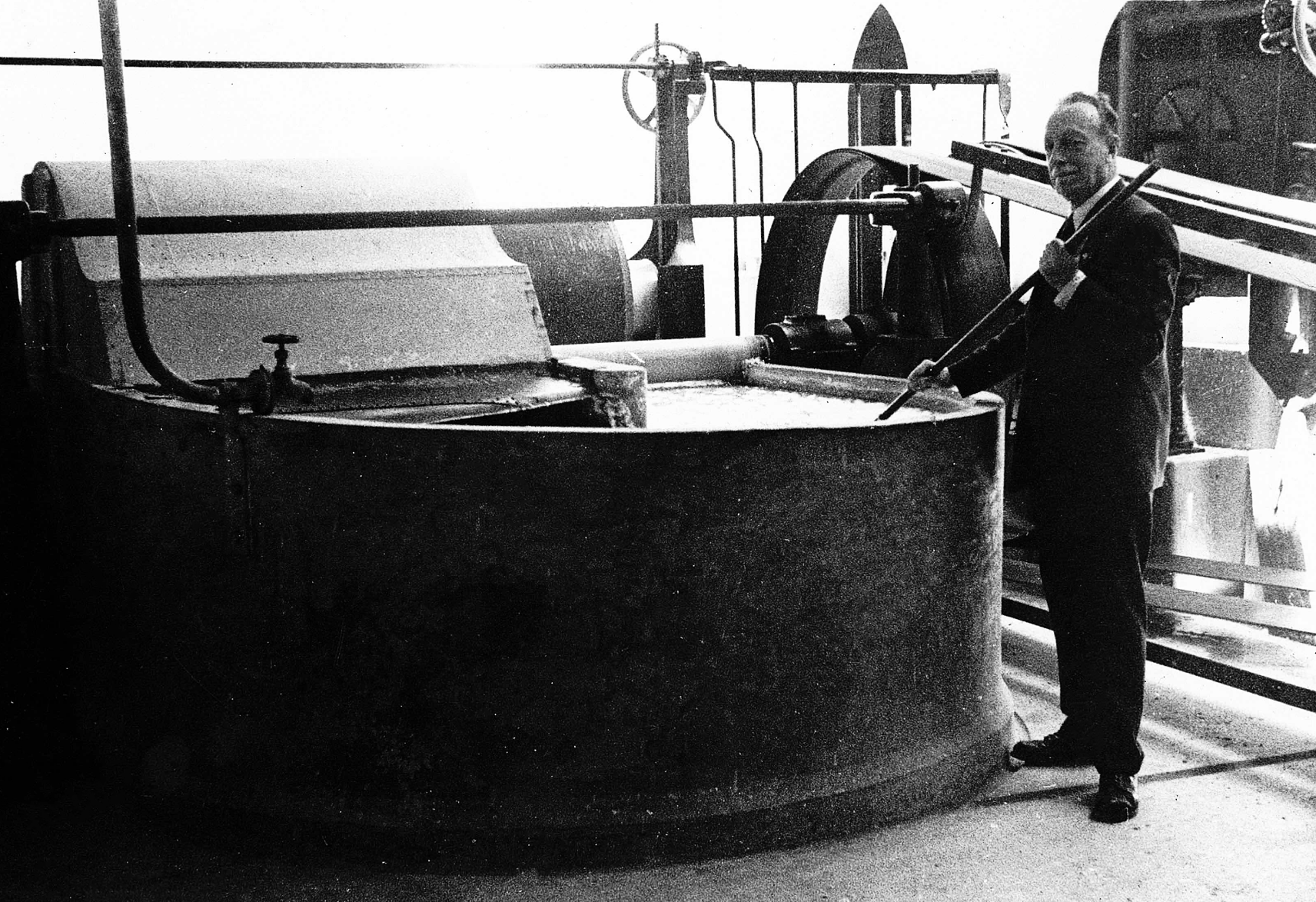
Between the end of the 13th and the beginning of the 14th century, the master papermakers of Fabriano introduced three fundamental innovations that radically transformed the quality and scalability of production. These three inventions—the multiple-hammer hydraulic stamping mill, animal gelatine sizing, and the watermark—are not merely technical improvements: they are the foundation upon which the entire history of modern Western paper is built.
The multiple-hammer hydraulic stamping mill was born from a fortunate cross-pollination of different artisanal skills: the master papermakers adapted the machinery used in wool processing, transforming it into a tool to reduce hemp and linen rags—the raw materials of paper—into pulp. Powered by the hydraulic energy of the Giano River, this machine definitively replaced the primitive hand pestle used by the Arabs, allowing for much more homogeneous fibres to be obtained in vastly superior quantities. By the second half of the 14th century, the Fabriano paper mills were already producing a million sheets a year.
The second innovation directly addressed the problem raised by Frederick II: the sheet's vulnerability to humidity and microorganisms. The Fabrianese solution consisted of abandoning traditional vegetable glues—porous starches subject to biological deterioration—in favour of animal gelatine, obtained by boiling waste from local tanneries. This sizing process waterproofed the sheet, made it resistant to ink without it spreading, and guaranteed a durability over time that parchment itself could not always boast. It was this innovation that truly paved the way for the use of paper for official documents and notarial deeds.
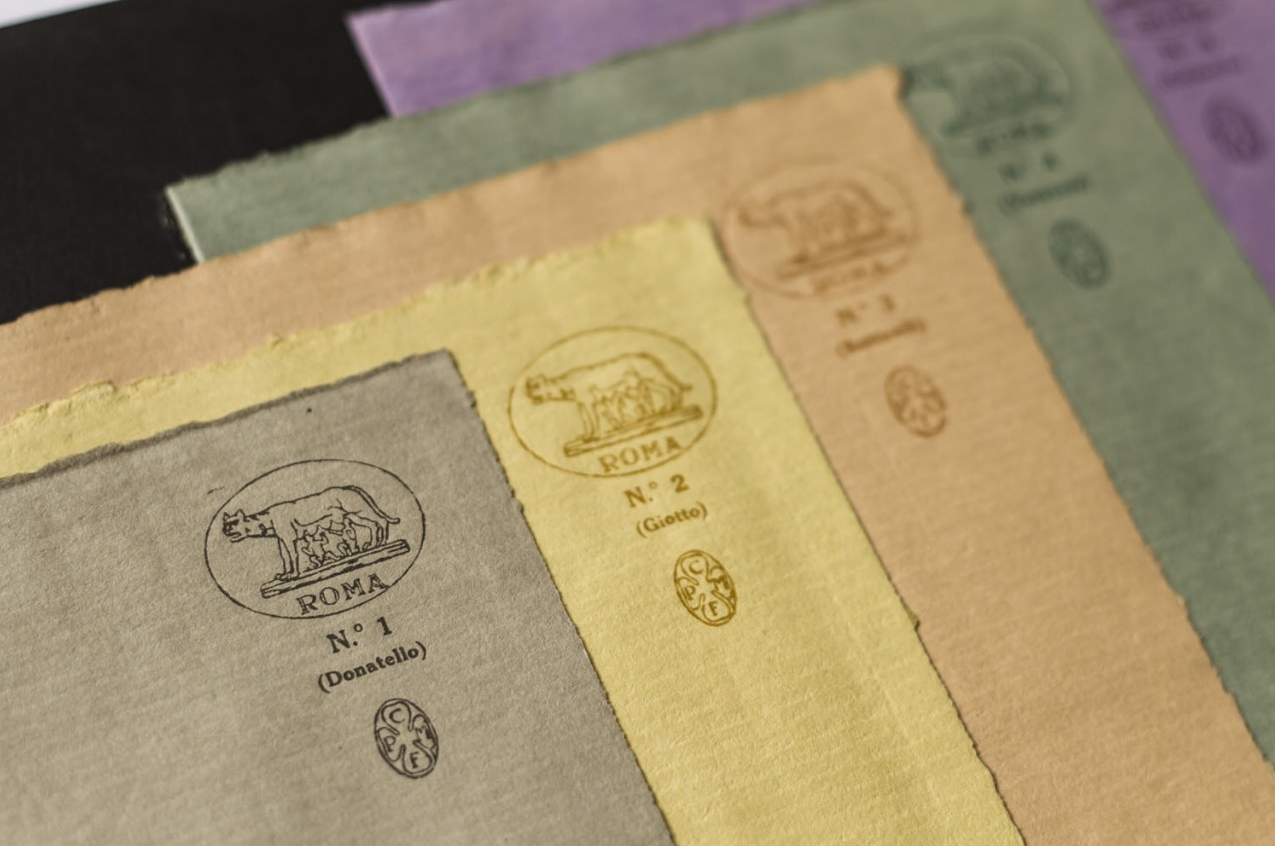
The third innovation is perhaps the most fascinating, the one that has left the most lasting mark on history, and not only metaphorically. The watermark, known in English as watermark, is an image visible when the sheet is held up to the light, impressed during the paper-forming phase by means of thin intertwined metal wires on the mould. The oldest documented examples of the Fabrianese watermark date back to 1293, preserved in the municipal historical archive.
The exact origins of the watermark are uncertain. Legend has it that the discovery happened by chance: a wire on the mould breaking left an imprint on the sheet, and some master papermaker realised that this unintentional imprint could become a deliberate mark. What is certain is its original function: it identifies the producing workshop, certifies the quality of the sheet, and protects the market from counterfeiting. The jurist Bartolo da Sassoferrato, who lived not many years after the appearance of the first watermarks, explicitly recognised its value as an identifying signum.
The watermark did not remain a simple commercial mark. Over the centuries, it acquired its own artistic value, becoming a sophisticated visual language that master papermakers used to represent coats of arms, religious figures, heraldic symbols, and decorative motifs of great refinement. Even today, it is the most widespread anti-counterfeiting technology in the world: every banknote in circulation carries, when held up to the light, the direct legacy of that 13th-century Fabrianese invention. The European Central Bank, upon the introduction of the euro, entrusted the production of paper for the new banknotes precisely to the Italian papermaking tradition.
The leap from artisanal manufacture to industrial production occurred in Fabriano, as in the rest of Europe, during the Industrial Revolution. But unlike many other production centres, where industrialisation swept away the artisanal tradition, in Fabriano the two levels coexist in a balance that lasts to this day. The key figure in this transition was Pietro Miliani, who in 1782 founded, together with Antonio Vallemani, the paper mill that would bear his name. In a few decades, Miliani unified numerous artisan papermakers scattered across the territory under a single production entity, building an industrial hub that preserved traditional skills within itself.
The excellence of Fabrianese production was recognised internationally as early as the 19th century. At the London Exhibition, the Cartiere Pietro Miliani Fabriano, by then passed to his nephew Giuseppe, received a gold medal for excellence, unique among Italian participants. The name Fabriano became synonymous with paper quality worldwide. Michelangelo used Fabriano paper in his correspondence, Raphael employed it for his preparatory sketches, and an autograph manuscript by Ludwig van Beethoven bears the watermark of the Cartiere Pietro Miliani Fabriano.
The 20th century brought nationalisations, crises, and transformations. But even in these difficult phases, the town never interrupted its profound relationship with its papermaking tradition. Hand production survived alongside industrial lines, guarded by a small community of master papermakers who transmitted a complex and refined knowledge. In 2002, the Cartiere Miliani Fabriano became part of the Fedrigoni Group of Verona, inserting the Fabrianese tradition within an industrial reality of European scale.
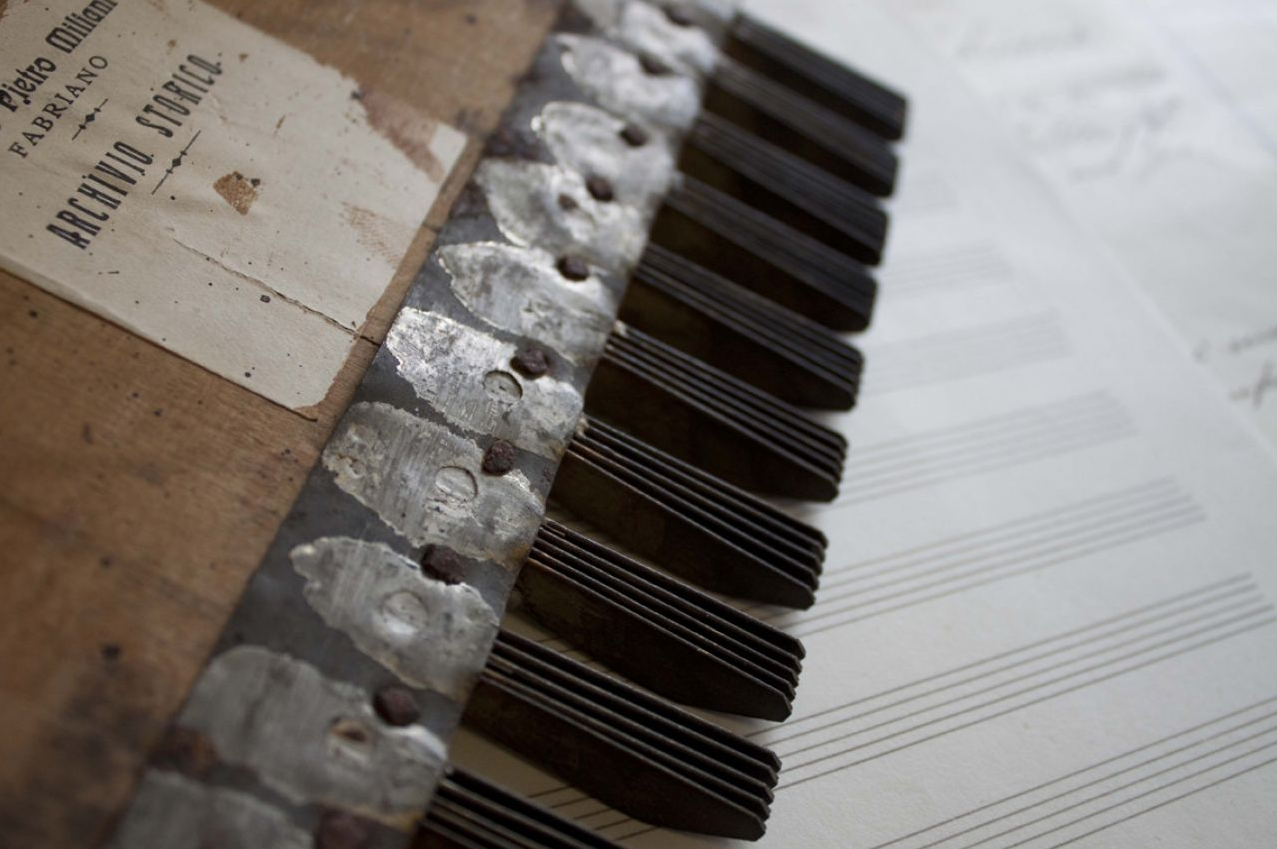
Today in Fabriano, the artisanal production of paper is not a historical re-enactment: it is a living practice, preserved at the Museo della Carta e della Filigrana (Paper and Watermark Museum), where every day master papermakers demonstrate to the public the techniques dating back to the 13th century. The process has remained substantially unchanged: hemp and cotton rags are selected, macerated, reduced to pulp in the hydraulic stamping mill, then spread on moulds and left to dry. Sizing with animal gelatine completes the cycle, yielding a sheet with unique consistency and durability.
In 2013, Fabriano received UNESCO recognition as a Creative City, with specific reference to crafts and folk art. This recognition does not consecrate the past but commits to the future: the city is called upon to guarantee the transmission of this knowledge to new generations, to find forms of enhancement that make it economically sustainable, and to build networks with other artisanal realities worldwide. Projects are multiplying in the area, attempting to recreate the complete historical supply chain: from handmade paper, to printing with movable type, to calligraphic writing, to traditional bookbinding.
The challenge is real and not without tensions. The Fabriano area has undergone a significant industrial crisis over the last twenty years, which has also affected production sectors linked to paper. The Consorzio Carta Fabriano (Fabriano Paper Consortium), recently established, represents an attempt at a collective response: a shared brand that protects the product's identity, guarantees verifiable quality standards, and offers the market a mark of recognition for tradition. It is not a romantic return to pre-industrial craftsmanship, but a bet on the possibility that authentic quality, rooted in the territory and accumulated knowledge, can find its own economic space in the contemporary market.
The history of Fabriano paper is, ultimately, the story of how a place can build and maintain over time its own identity through technical knowledge. Not through extraordinary natural resources, not through privileged geographical positions, but through the capacity to innovate, to transmit, to adapt without ever losing the thread of its origin. Three medieval inventions—the hydraulic stamping mill, animal sizing, the watermark—changed the way Europe produced and used paper, made possible Gutenberg's movable type printing, and put into circulation the documents upon which modern civilisation was built.
What remains today is not only a product of excellence, although the paper produced in the Fabrianese workshops continues to be recognised as one of the best in the world for quality and durability, but an intangible heritage concerning the way a community thinks of itself and tells its story. Every sheet produced by hand by today's master papermakers carries with it seven hundred and sixty years of accumulated experience, of corrected errors, of transmitted intuitions, of knowledge that has crossed economic crises, wars, industrial and digital revolutions while remaining substantially faithful to itself.
In an era where technological innovation seems to proceed ever faster towards the immaterial, towards data, the bit, communication without physical support, Fabriano paper reminds us that there exist forms of excellence that endure precisely because they are profoundly physical, tactile, linked to the gesture of the master papermaker who immerses the mould in the vat and extracts a unique sheet. It is not nostalgia: it is proof that certain forms of artisanal intelligence do not become obsolete, but transform themselves into heritage, into added value, into identity. The white sheet waiting for the pen has never been just paper.
Credit photos: Theluoz - Own work, CC BY-SA 4.0
Credit Photos: fondazionefedrigoni.it

The 103rd Arena di Verona Opera Festival lights up summer 2026 with great voices, stars, and unforge...
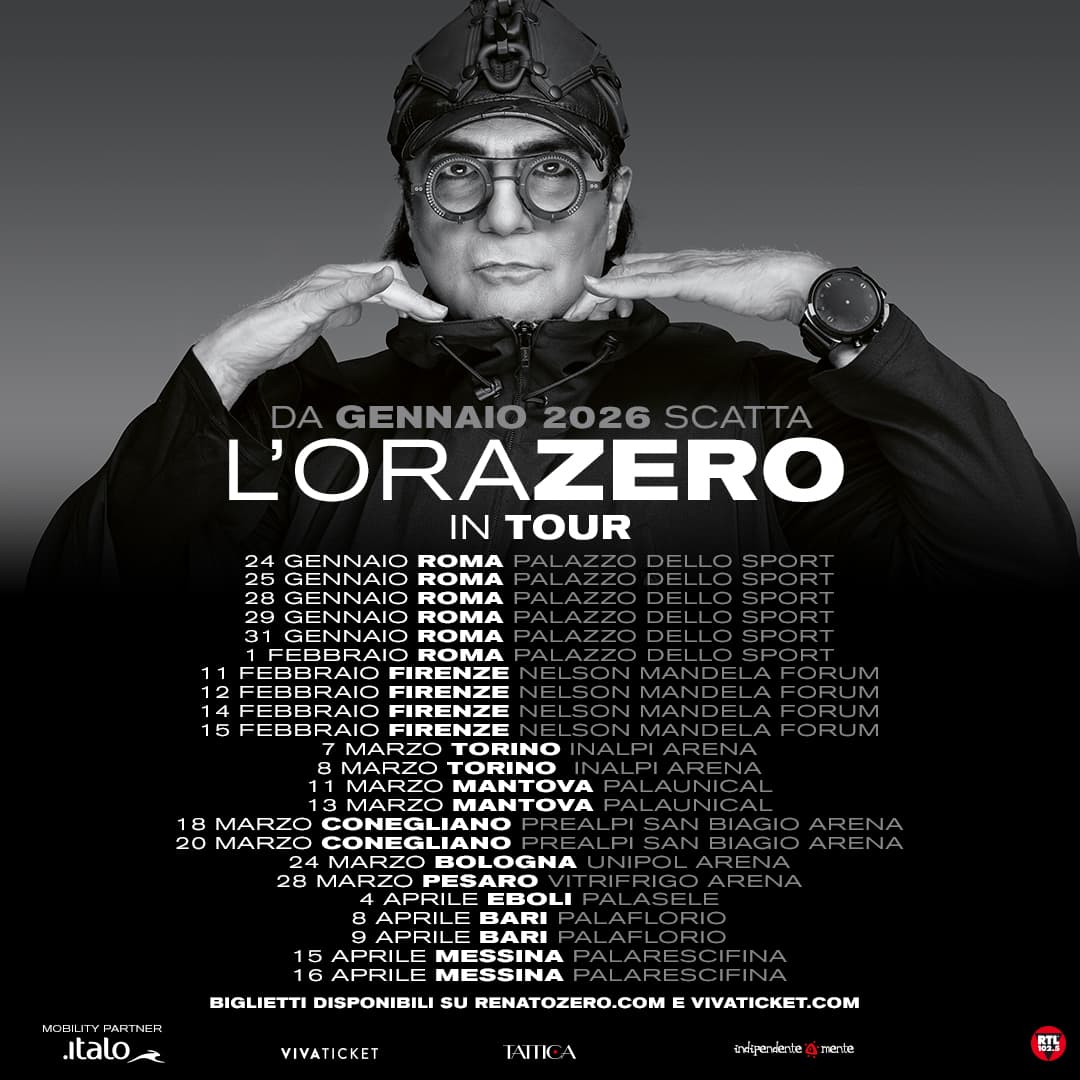
Renato Zero, icona del pop italiano, torna sui palchi dei palazzetti italiani con L’Orazero in Tour ...

The Christmas holiday season is fast approaching, and this year, once again, it promises to be a tim...

This Saturday, November 15, at 7:00 PM, Cinema Barberini in Rome will host a very special event: the...
Rivista online registrata al Tribunale di Napoli n. 43 del 23/03/2022
Direttore: Lorenzo Crea
Editore: Visio Adv di Alessandro Scarfiglieri
Insight italia srl (concessionario esclusivo)
Rivista online registrata al Tribunale di Napoli n. 43 del 23/03/2022
Direttore: Lorenzo Crea
Editore: Visio Adv di Alessandro Scarfiglieri
Insight italia srl (concessionario esclusivo)
