
Autore: Michele Spinelli • 10/12/2025 08:59
There exists a way of travelling that resembles a prolonged embrace with the landscape, where your home travels with you and the freedom to stop is the only rule! This is the art of travelling by campervan, a philosophy that finds an exceptional stage in the vast and varied upper part of the Peninsula. Here, in the folds of the Alps, the mirror of the great pre-Alpine lakes, and the breath of the Adriatic, routes unfold that are narratives of beauty, history, and flavours.
This is not a simple list of stops, but an invitation to discover a less common Italy, made of boundless national parks, villages perched like eagles' nests, and roads that climb between terraced vineyards. Boarding your campervan and setting off for these lands means rediscovering the pleasure of slowness, the taste of an unexpected stop at sunset, and the possibility of making each day a unique chapter in a very personal adventure.
The campervan journey offers a unique perspective, allowing travellers to fully live their personal adventure. A simple stop allows one to hear unique sounds, smell natural scents, like a forest after rain, or authentically experience a sunrise immersed in nature. Northern Italy, with its extraordinary landscape variety ranging from the majestic Alps to gentle hills, from the jagged Ligurian coast to the placid waters of the great lakes, lends itself to being the ideal stage for a four-wheeled adventure.
Prepare to unplug, to follow secondary roads and to discover a corner of Italy where freedom is the true destination.
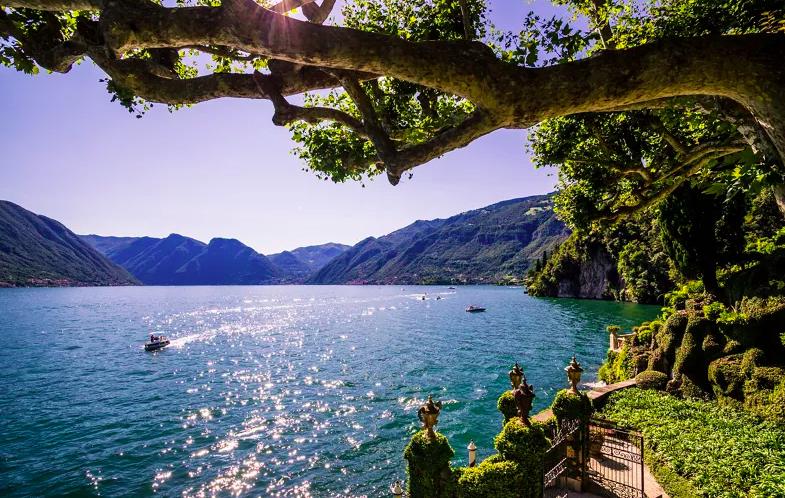
We start from the west, where the mountains plunge into blue water. Lake Maggiore is an ideal starting point, with its placid waters and the Borromean Islands that seem like floating jewels. For the campervan enthusiast, the Piedmont shore offers equipped parking areas with lake views, like those near Verbania or Stresa. From here, the coastal road heading north is a continuous sequence of vistas: small fishing villages, Liberty-style villas, and promontories covered in green.
Moving east, one encounters Lake Como, an icon of elegance and romance. While the centres of Como and Bellagio can be crowded, the true discovery for the campervan enthusiast happens along the less-travelled coast, like the eastern shore from Lecco to Colico. Here, between tunnels carved into rock and small bays, more tranquil parking areas can be found. An unmissable stop is the Pian di Spagna, a nature reserve at the northern tip of the lake, the meeting point of the waters of Lario and the River Adda. Here, as documented by the Park Authority, one can park in dedicated areas and set off on foot or by bicycle to explore a wetland area of European importance, a habitat for numerous bird species.
The journey continues towards Lake Iseo, more compact and authentic. Its pearl is Monte Isola, the largest inhabited lake island in Europe, reachable by ferry (with services for campervans from various embarkation points like Sulzano or Sale Marasino). Parking the campervan on the mainland and taking a day trip to the island is a magical experience: you get around only on foot, by bike, or with local buses, among fishing villages and ups and downs that offer unforgettable panoramas.
Finally, Lake Garda, the largest, capable of offering completely different scenes: the Mediterranean atmosphere of the Brescian shore with its lemon groves, the rocky majesty of the Trentino shore with the Dolomites mirrored in the water, and the Veneto coast, more gentle. For the campervan, the eastern shore is often richer in dedicated facilities and well-equipped service points. A road not to be missed is the Gardesana Orientale, a paved ribbon winding between tunnels and terraces overlooking the water, connecting Malcesine to Riva del Garda.
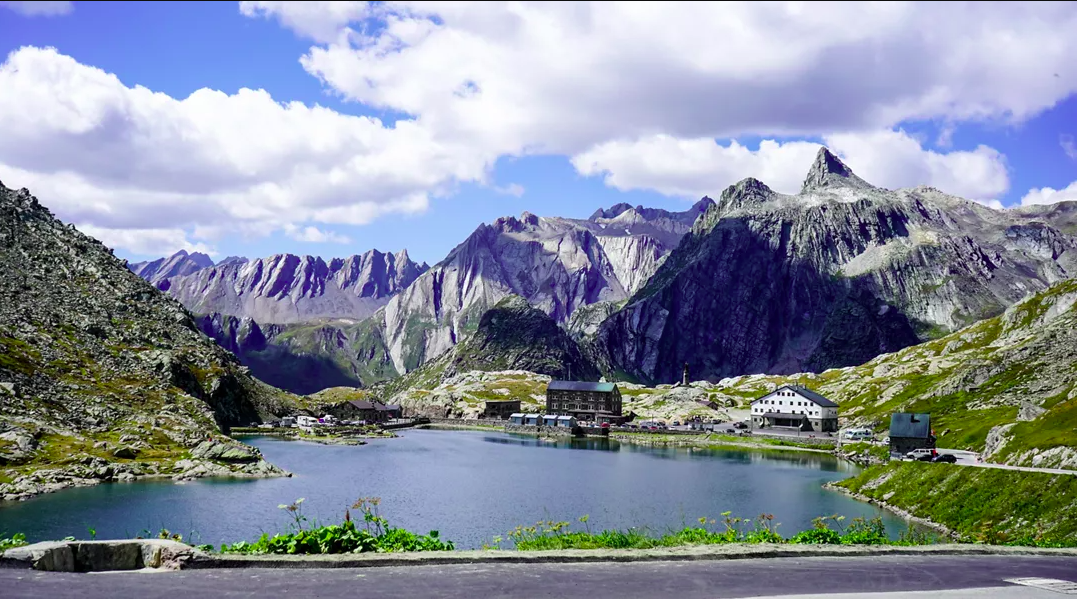
From the waters of the lakes to the power of the mountains. An Alpine itinerary in a campervan is an experience that requires careful driving and a vehicle in excellent condition, but rewards with unrivalled panoramas. Starting from Piedmont, the first stop can only be the Aosta Valley. Here, parking areas often become the starting point for exploring some of the Alps' colossi: Monte Rosa, the Matterhorn, Gran Paradiso.
The state road to the Great St Bernard Pass, for example, is an epic experience: you climb between fortresses and castles, like the perfectly preserved Castle of Fénis, up to the pass, where it is possible to park near the famous col. However, care must be taken as there are specific rules for heavy vehicles for the tunnel; it is essential to consult the official websites of the management company for all updated regulations.
Descending into Lombardy, you enter the heart of the Central Alps. Valtellina is a land to be traversed calmly. From Tirano, the starting point of the UNESCO Heritage Bernina Red Train, you ascend the valley towards Bormio. Parking areas are often strategically located to enjoy the thermal waters or to set off towards the Stelvio and Gavia passes. The Stelvio, with its 48 hairpin bends, is one of Europe's most iconic roads. Its seasonal opening, generally from late May to October, is an event for motorcyclists and campervan enthusiasts. Caution is mandatory, especially for long vehicles, but the view from the top, at 2,758 metres, embraces an ocean of mountains between Lombardy and Trentino-Alto Adige.
Moving to Trentino-Alto Adige, the itinerary can follow the famous South Tyrolean Wine Road or climb up the side valleys. Val di Funes, with its solitary little churches and the Odle Dolomites as a backdrop, offers panoramic parking areas from which to start memorable photographic hikes. Further east, in Veneto, the Belluno Dolomites, a UNESCO World Heritage site, offer fairy-tale scenery. Travelling the roads from Belluno up to Cortina d'Ampezzo means dealing with hairpin bends, but also with the absolute wonder of mountain groups like the Tofane, Civetta, or the Tre Cime di Lavaredo. Many campsites and equipped areas in the region organise guided excursions with experts from the Belluno Dolomites National Park, an excellent opportunity to discover the unique geology and fragile biodiversity of these mountains.
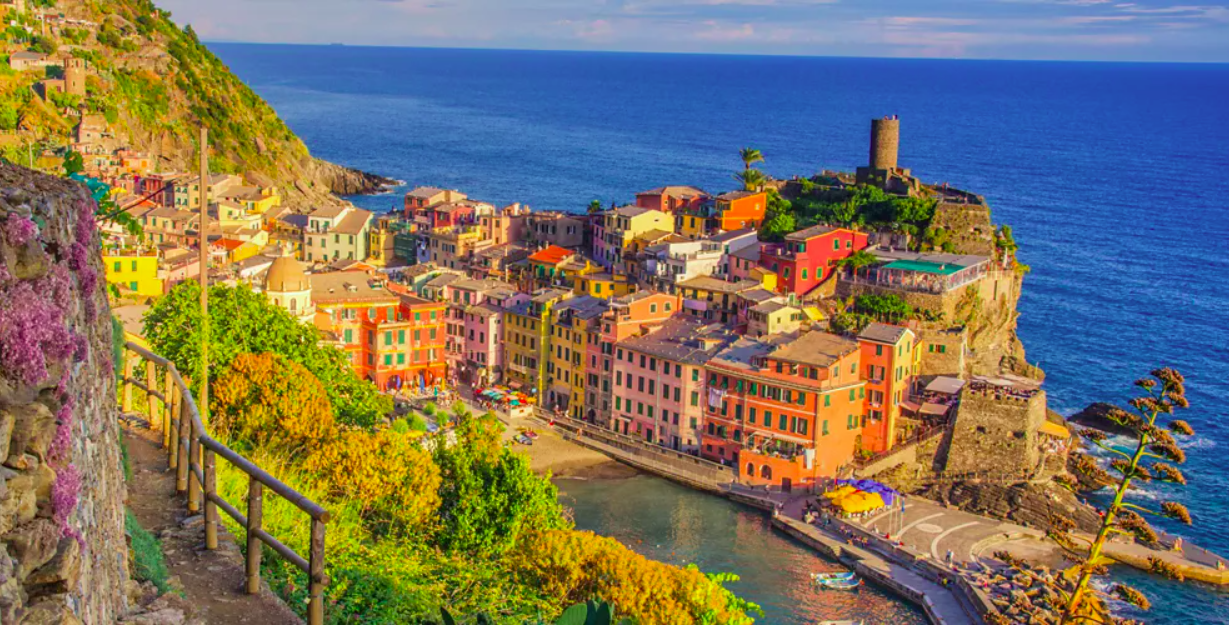
For those seeking a mix of sea, culture, and good cuisine, the itinerary combining Liguria, part of the Po Valley, and the hills of Veneto is the ideal choice.
We start from Liguria. The coast is squeezed between mountains and sea, and the roads can be winding, but the reward is infinite. Avoiding the motorway and taking the state roads, you discover the Riviera dei Fiori in Imperia, with its mimosa and olive groves, and the Riviera di Levante in La Spezia, more rugged and dramatic. The Cinque Terre are difficult to access by campervan, but you can park in convenient equipped areas in La Spezia or Levanto and use the efficient regional trains to visit the villages. The Riviera di Ponente, between Varazze and Finale Ligure, is more "camper-friendly," with numerous facilities right by the sea.
From the coast, you venture into the Ligurian and Piedmont hinterland, the Langhe and Monferrato, a UNESCO World Heritage site for its viticultural landscapes. Here the roads become soft, sinuous, designed between hills covered in orderly vineyards. Parking in an equipped area near Alba or Barolo means you can dedicate yourself to discovering wineries, medieval villages like Neive or Grinzane Cavour, and tasting products of excellence like white truffle. The pace is slow, perfectly suited to the campervan philosophy.
Continuing eastward, you briefly cross Emilia-Romagna, with a mandatory stop to sample local products at village festivals, to arrive in Veneto—but not the Veneto of art cities. It is the Veneto of the Prosecco Hills of Conegliano and Valdobbiadene, another UNESCO site. Travelling the Prosecco Road means crossing a natural amphitheatre of vineyards perched on steep slopes, dotted with *casoni* and villages like Follina or Cison di Valmarino. The parking areas here allow you to enjoy the silence and beauty of a landscape shaped by man in perfect harmony with nature.
Travelling by campervan in Northern Italy is a wonderful experience, but it requires preparation.
Italian regulations on campervan parking are governed by the Highway Code and municipal bylaws. It is essential to distinguish between a parking area and a campsite, the latter being proper accommodation facilities. Official sites like that of the Federazione Italiana Campeggiatori Turistici d'Italia (F.I.T.C.) or dedicated apps are valuable resources for finding reliable and updated points.
Before tackling Alpine passes, always check the road opening status on provincial websites or Viabilità Italia.
Respect for the environment is crucial; campervan travel implies a responsibility towards the places you visit. This means always using service points for draining waste water, doing separate waste collection, and not marring the landscape with annoying noise or rubbish. In many natural parks, specific rules for circulation and parking exist and are consultable on their official portals.
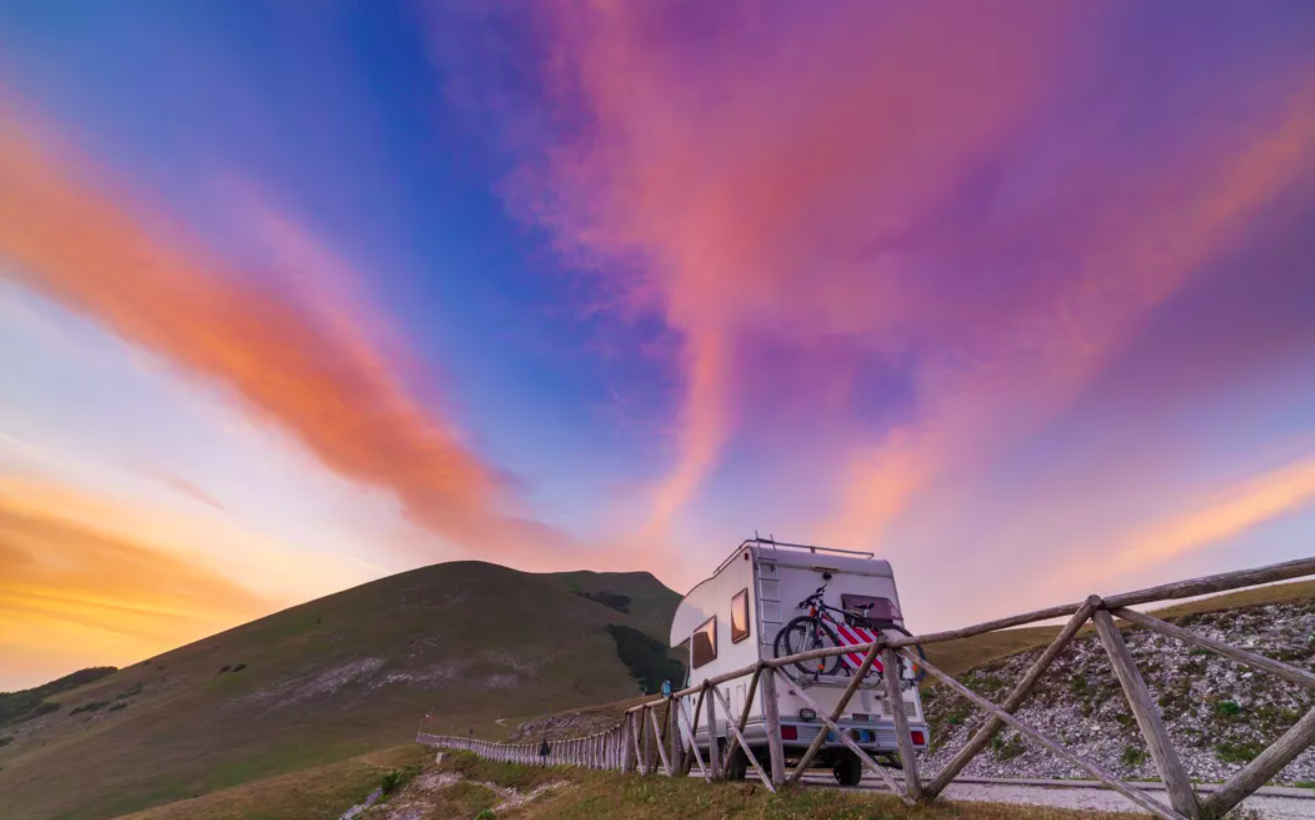
The campervan is the perfect vehicle for supporting widespread tourism. Prefer buying local products from producers, stopping at village trattorias, participating in patron saint festivals. It is the most authentic way to support communities and experience local culture.
Concluding this ideal journey among the campervan routes of upper Italy doesn't simply mean pulling the handbrake but rather sealing in memory a kaleidoscope of unique sensations that only this form of travel can give.
It is the art of having turned the entire landscape into a living room, of having possessed, for a few days, the horizon. The memory will not only be of the Dolomite peaks turning pink at sunset, the Langhe hills that seemed like green waves, or the salty wind on the Costa dei Trabucchi. It will above all be the profound sensation of a freedom regained: the supreme luxury of being able to follow a last-minute inspiration, of stopping because that perched village deserved one more photo, of falling asleep to the rustle of a forest and waking up with a view of a castle.
The campervan journey, in the end, is not a mode of transport. It is a philosophy that reverses the relationship with the destination: the journey itself becomes the destination, and every parking area transforms into the stage for a small daily story.
Credit photos: italia.it

There exists an Italy where the sun is not just a star, but a tireless artist. Where it paints the d...

In Italy, Christmas is not just a religious holiday but also a moment of togetherness, a time to spe...

There exists an Italy made of soft horizons, where time seems to have fallen asleep among the curves...

Visiting Matera means immersing yourself in a unique atmosphere, one that reconciles wonder for a si...

There is a corner of Italy where the rules seem to have been rewritten by nature itself. A place sus...

There exists a corner of Italy where the horizon opens into a vastness so profound it takes your bre...
Rivista online registrata al Tribunale di Napoli n. 43 del 23/03/2022
Direttore: Lorenzo Crea
Editore: Visio Adv di Alessandro Scarfiglieri
Insight italia srl (concessionario esclusivo)
Rivista online registrata al Tribunale di Napoli n. 43 del 23/03/2022
Direttore: Lorenzo Crea
Editore: Visio Adv di Alessandro Scarfiglieri
Insight italia srl (concessionario esclusivo)
