
Autore: Redazione • 01/08/2025 09:07
The Uffizi Gallery certainly needs no lavish introduction. Since 1769, the year it first opened its doors to the public, the world-famous Florentine gallery has not only achieved the global recognition it still enjoys today but has also performed the honorable feat of capturing the gaze of thousands of visitors under 25. Each year, they arrive full of noisy enthusiasm that seems to fall silent before the solemnity of an art that transcends time — an art in which they rediscover a reflection of their own inner world.
According to the latest official reports released by the Uffizi Gallery, in 2021 alone, visitors under the age of 25 numbered 326,185, representing about 19% of the total 1,721,637 entries.
It is essential to understand that referring to the Uffizi merely as a list of great names such as Raphael, Michelangelo, or Botticelli is not only reductive but also misleading — especially in light of those less-known works that often turn out to be the most cherished discoveries for younger visitors.
It is precisely these shadowed masterpieces, the less publicized and less famous ones, that most often surprise young visitors. Many of them — increasingly alienated from modern society — find in sculptures dating back even to the 1st century B.C. meanings that feel stronger, more direct, and profoundly closer to their own sensibilities and vision of life.
A prime example is the Hermaphroditus (Roman art, 1st century B.C.), a magnificent ancient marble that entered the Medici collections during the time of Cardinal Leopoldo de’ Medici (1617–1675), who purchased it in 1669 in Rome from the renowned Ludovisi collection for his brother, Grand Duke Ferdinando II (1610–1670). Originally housed in the Ludovisi villa near Porta Pinciana, the sculpture — for its exceptional artistic and symbolic value — was soon destined for the Uffizi Gallery, where it is now displayed on the top floor of the famous Vasari complex.
The subject depicted in marble is the protagonist of one of the most meaningful myths of the ancient world: that of Hermaphroditus. Among the earliest and most authoritative sources of this myth is Ovid, who recounts the story in Book IV of the Metamorphoses (3–8 A.D.), written shortly before his exile by Emperor Augustus. The son of the gods Hermes and Aphrodite, Hermaphroditus grows up on Mount Ida in Crete but, at fifteen, leaves his home to travel to Caria (modern-day Turkey). There, while bathing in a spring, he is seen by the nymph Salmacis, who tries to seduce him.
In Ovid’s tale, the nymph clings to the young man and prays to the gods never to be parted from him. Her wish is granted: their two bodies merge into one androgynous being. After the transformation, Hermaphroditus asks that the spring be given the power to weaken the virility of anyone who bathes in it.
Hermaphroditus neither fears nor mourns the loss of his virility. He defines himself through the power of choice — the freedom to merge, to blend where union is neither domination nor annihilation of the other. This fusion does not signify the loss of individuality but is instead born from an act of love. Even visually, this union takes the form of an embrace — a gesture of openness toward the other, an act of giving without subduing.
It is easy to see the incredible modernity and openness that this work communicates to younger audiences. The theme of virility — or rather of a fixed, imposed form of masculinity that denies alternative expressions of the male identity — remains one of the most discussed issues in today’s social and cultural debates, especially when such rigid constructs of masculinity play a decisive role in gender-based violence.
Hours: Tuesday to Sunday, 8:15 a.m. – 6:30 p.m. (last entry at 5:30 p.m.)
Admission: €25 ; free for visitors under 18 ; €2 for EU citizens under 24
For more information, visit the official website.

Chiusa (Klausen): a South Tyrol village to explore Chiusa, one of the South Tyrolean municipalities ...

Michele Cea Prize 2026: opportunity for emerging artists The Michele Cea Foundation ETS has launched...

This Is Not an Exhibition About Landscape — Giuseppe Costa & Carlo Alberto Rastelli On view in M...
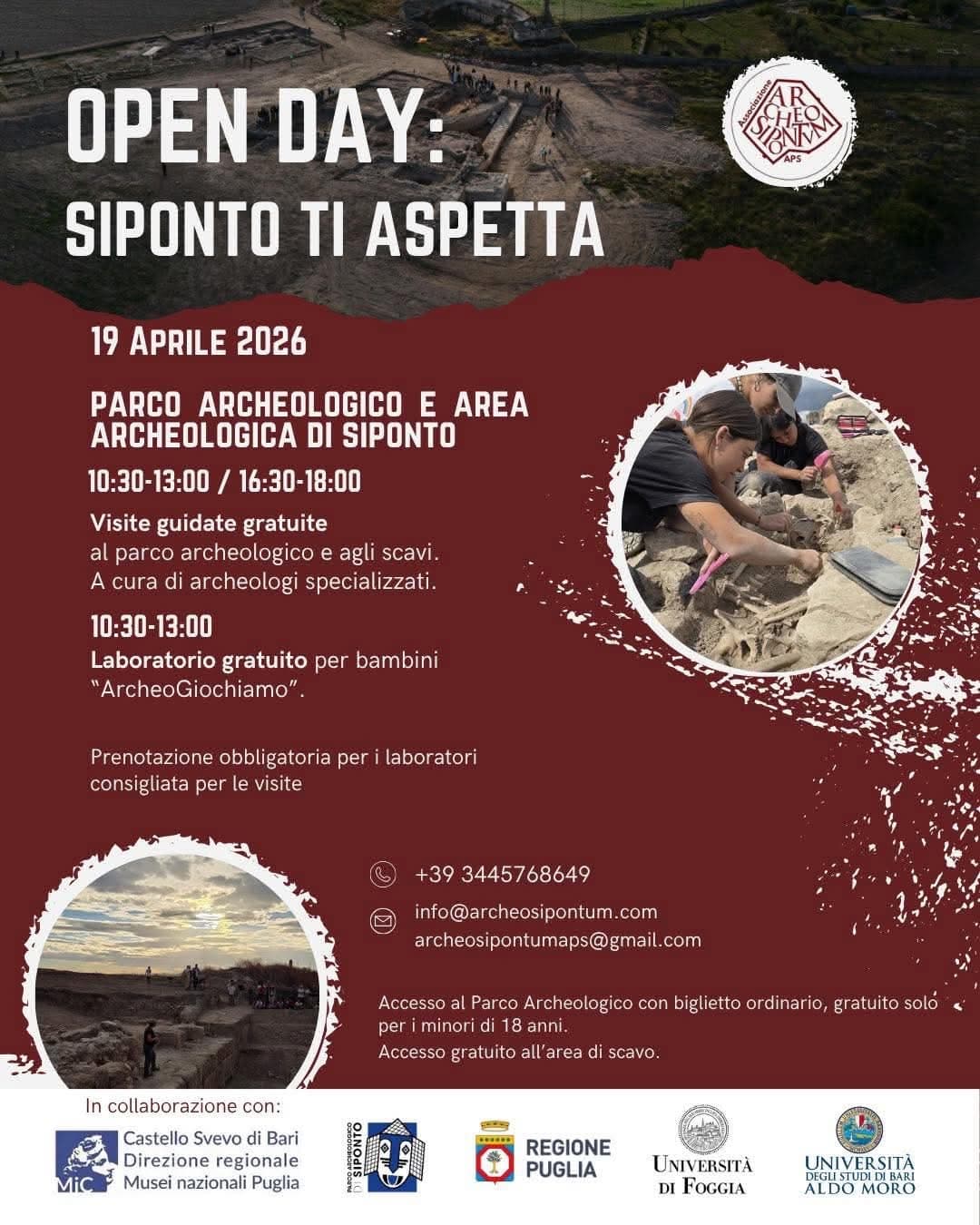
Open Day at Siponto Archaeological ParkOn April 19 the archaeological site of Siponto hosts a day de...

"Women for Women": an event at Palazzo Petrucci On 14 April 2026 at 19:00, Palazzo Petrucci in Naple...

Demolitions begin at Tirone: a first step toward regeneration Work has started to remove makeshift d...
Rivista online registrata al Tribunale di Napoli n. 43 del 23/03/2022
Direttore: Lorenzo Crea
Editore: Visio Adv di Alessandro Scarfiglieri
Insight italia srl (concessionario esclusivo)
Rivista online registrata al Tribunale di Napoli n. 43 del 23/03/2022
Direttore: Lorenzo Crea
Editore: Visio Adv di Alessandro Scarfiglieri
Insight italia srl (concessionario esclusivo)
