
Autore: Irene Pariota • 19/01/2026 18:40
The fashion world loses one of its longest-reigning sovereigns. Valentino Garavani has died at 93, in his home in Rome. The news was announced by the Valentino Garavani Foundation together with Giancarlo Giammetti, his life partner and the quiet architect of an empire that without him would have had neither structure nor longevity. The body will lie in state at Palazzo Mignanelli, with the funeral held at the Basilica of Santa Maria degli Angeli e dei Martiri. Rome bids farewell to an emperor. Italian fashion loses one of its last true cardinal points.
A system before a designer
Valentino was never just a creative. He was a closed, rigorous, obsessive system. A worldview built on control, discipline, and the elimination of the superfluous. Born in Voghera in 1932, he quickly understood that to rise he had to leave. In Paris he learned the harsh grammar of haute couture: discipline before inspiration, hierarchy before ego. Jean Dessès, Guy Laroche, Balenciaga—he absorbed everything and returned to Rome with one final conviction. Fashion is not spontaneity: it is organized power.
The meeting that changed everything: Giancarlo Giammetti
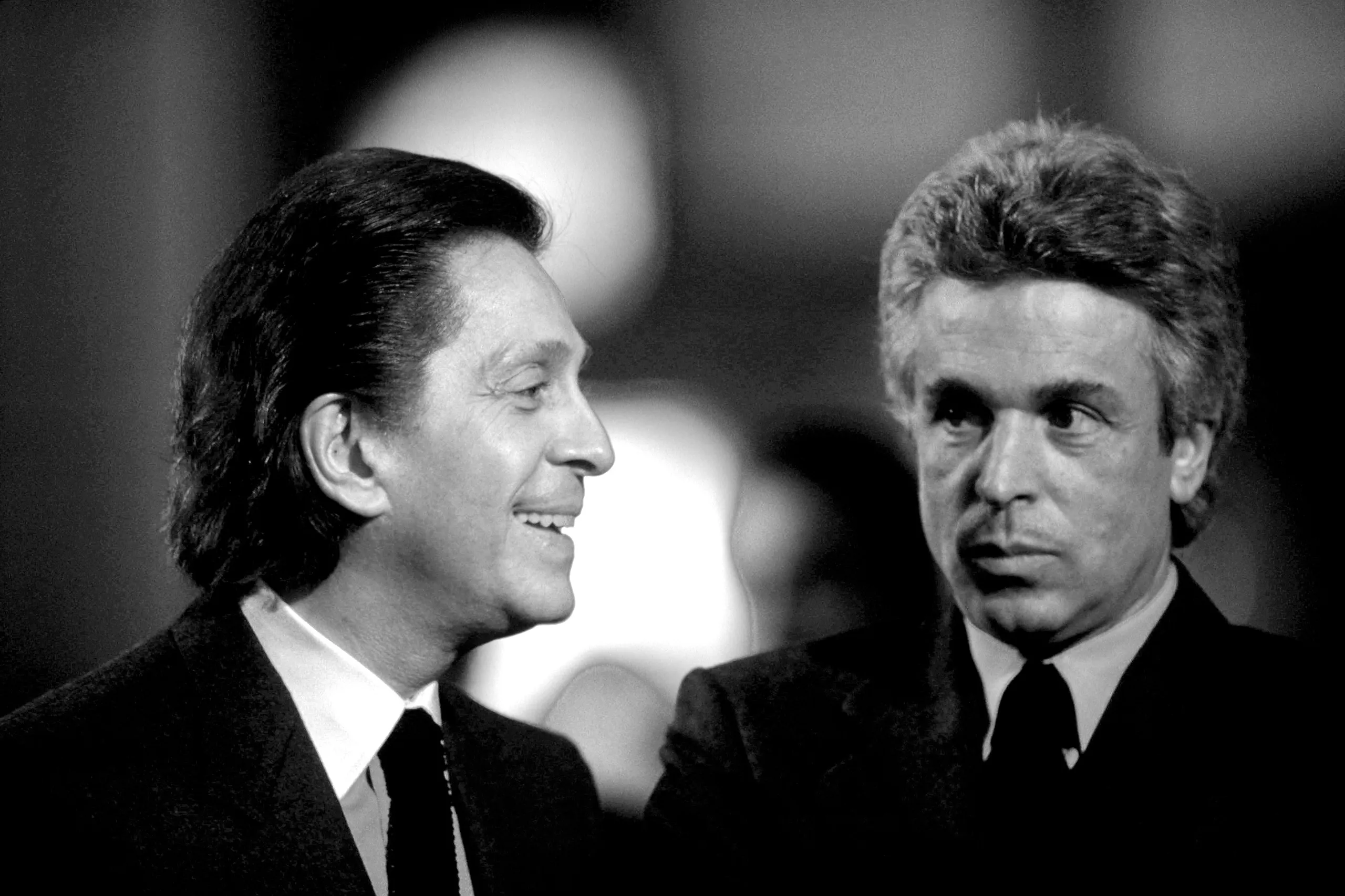
The first atelier on Via Condotti risked failure. Then, in 1960, Giancarlo Giammetti arrived. This was not a romantic fairytale, but a strategic alliance. Valentino created, Giammetti governed. One lived for beauty, the other for numbers, relationships, and the long game. Together they built a perfect machine, with no improvisation and no indulgence. It is one of the most solid and profitable partnerships in fashion history. Diana Vreeland dubbed them “The Boys.” In reality, they were already kings.
From Pitti to Olympus
In 1962, the show at Palazzo Pitti marked his official entry among the greats. But the real turning point came in 1967 with the total white collection. Valentino eliminated color in an era of visual excess, hippie culture, and psychedelia. It was the last slot on the last day, theoretically the worst possible position. It became a triumph. From that moment on, Valentino ceased to be a fashion house and became an institution.
Red as a declaration of power
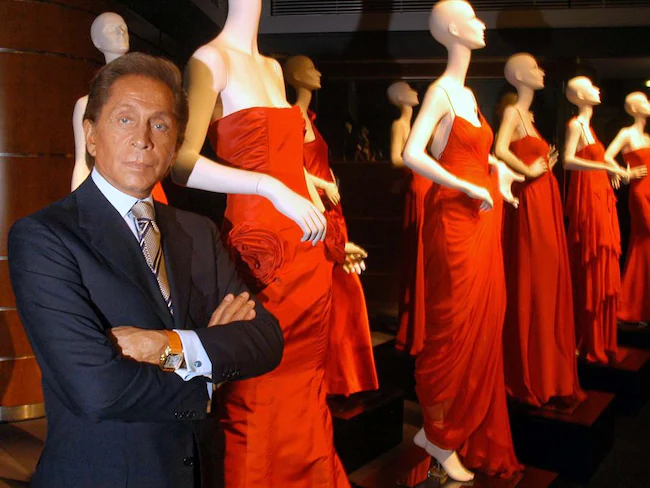
“Valentino red” is the key to understanding his world. It does not shout or beg for attention: it occupies the stage. Valentino believed red suited everyone, that a woman dressed in red could never be wrong. This is where the strength of his clothes lay. They were not meant to decorate, but to fix a public image—recognizable, authoritative. An image that worked. And still does.
Women? Women want to be beautiful
“What do women want? To be beautiful.” Valentino summed up his vision this way. A clear, unwavering line that, from 1959—the year the maison was founded in Rome—to 2007, when he chose to retire, guided every decision he made. Before fashion, runway shows, and red carpets, Valentino wanted to make women beautiful. Full stop. They always understood this, which is why they placed him among the Olympian creators from the very beginning. Jackie Kennedy is the definitive case: Valentino dressed her in mourning and for her marriage to Onassis, two moments that became foundational images of the twentieth century. Liz Taylor, Sophia Loren, Julia Roberts, Cate Blanchett. Eight Oscars won in Valentino gowns. Not coincidences. Valentino understood the body, but above all the symbolic weight of beauty when it becomes public power.
Luxury as a way of life
For Valentino, luxury was a daily practice rather than an aesthetic: castles, palaces, perfect tables, flowers everywhere, pugs as heraldic emblems. No irony, no fake simplicity. He did not blend in, but he was not inaccessible. He knew desire is born from distance. John Fairchild called him and Giammetti “the kings of high living.” No one ever contradicted that definition.
The sale of the brand and the exit from the stage
In 1998 he sold Valentino for 300 million dollars. Before the others, better than the others. He understood that fashion was becoming finance. He remained creative director until 2007, then retired. Not out of fatigue, but out of incompatibility. He did not accept the idea of thinking about the product instead of the dream. He did not believe in the democratization of fashion. And he made no effort to pretend otherwise.
The last emperor on stage
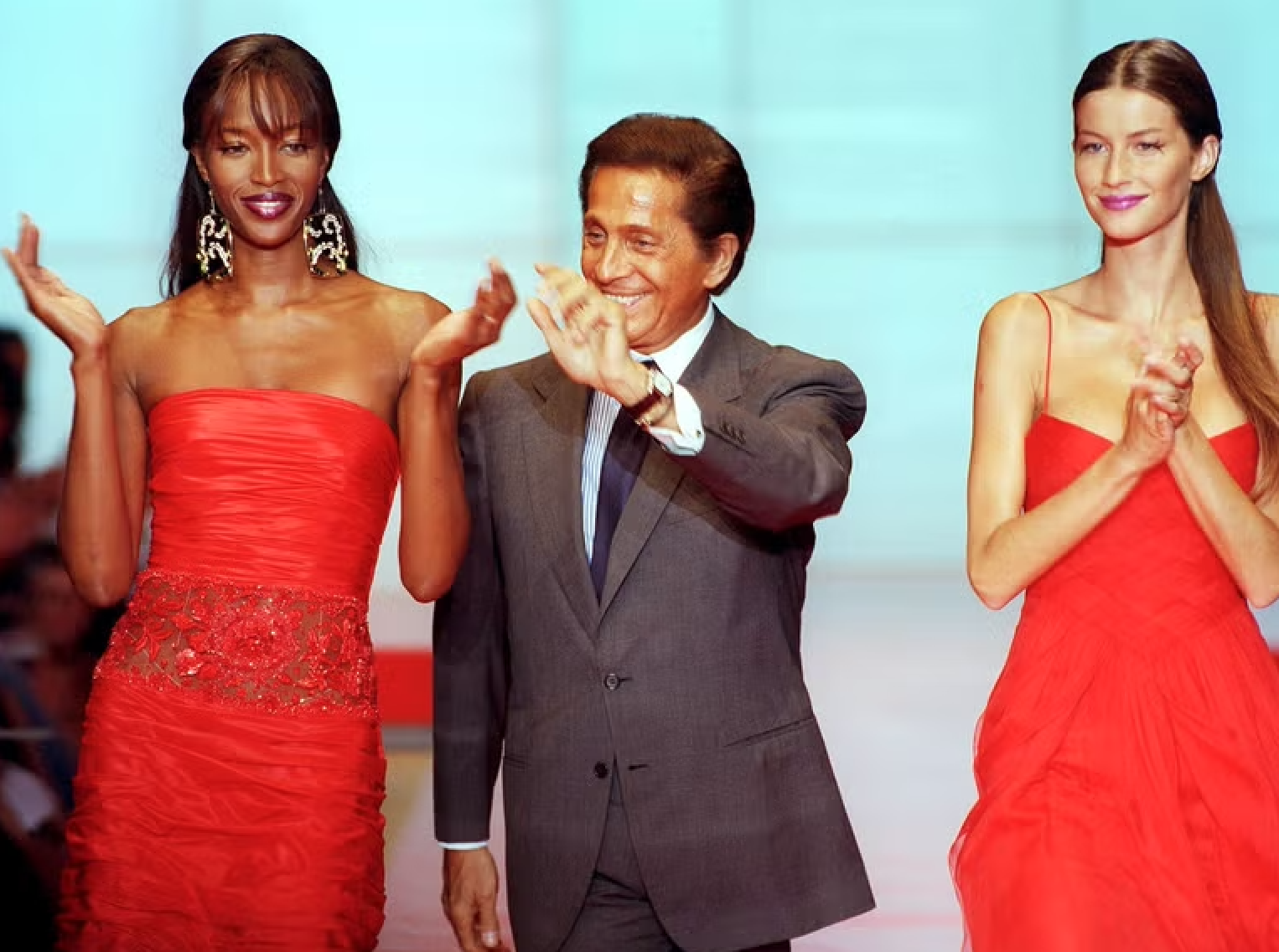
The documentary Valentino – The Last Emperor shows him without filters: authoritarian, vulnerable, nervous, human. Not a comforting icon, but a man defending his world to the very end. The public understood. Standing ovations everywhere. No mockery, only respect.
Valentino Garavani leaves a void in fashion and beyond. He was the last of a very specific species: the couturier as emperor.

È calato il sipario sul palco del Teatro Ariston, dopo la fine della 76ª edizione del Festival della...

From 27 February to 28 June 2026, Palazzo Roverella in Rovigo will host the exhibition Zandomeneghi ...

When the curtain rises on Macbeth, audiences aren’t simply watching an opera, they’re entering a psy...

At Naples’ Teatro Bellini (until Feb. 15, 2026), Come gli uccelli returns with a contemporary drama ...

Dall’annuncio all’inizio della sfida nel cuore dell’AbruzzoÈ il 14 marzo 2025 quando l’allora Minist...

From 12 February to 14 June 2026, Palazzo Barberini in Rome will host the exhibition Bernini and the...
Rivista online registrata al Tribunale di Napoli n. 43 del 23/03/2022
Direttore: Lorenzo Crea
Editore: Visio Adv di Alessandro Scarfiglieri
Insight italia srl (concessionario esclusivo)
Rivista online registrata al Tribunale di Napoli n. 43 del 23/03/2022
Direttore: Lorenzo Crea
Editore: Visio Adv di Alessandro Scarfiglieri
Insight italia srl (concessionario esclusivo)
