
Autore: Michele Spinelli • 04/03/2026 10:12
From 6 to 15 March 2026, Italy returns to the centre of the international sporting world with the XIV Winter Paralympic Games in Milan-Cortina. This is an event that carries with it considerable historical weight: it is the third time our country has hosted a Paralympic event, after the Summer Games in Rome in 1960, the first edition in modern Paralympic history, and the Winter Games in Turin in 2006. This edition, however, introduces an absolute first in the history of the Paralympic Games: for the first time, organisation is entrusted jointly to two cities, Milan and Cortina d'Ampezzo, following the same model already adopted for the Winter Olympics held in February.
The 2026 edition takes on an even deeper symbolic value because it coincides with the 50th anniversary of the first Winter Paralympic Games, held in 1976 in Örnsköldsvik, Sweden. An anniversary that invites us to look back to measure the distance travelled, and forward to imagine the future of a movement that never stops growing.
The Games extend over a large and varied territory, articulated in three main clusters: Milan, Cortina d'Ampezzo and Val di Fiemme (Tesero), involving an area that crosses Lombardy, Veneto and the Autonomous Province of Trento. Each cluster hosts different disciplines, exploiting infrastructure already tested during the Winter Olympic Games in February. In Milan, the Santagiulia Ice Hockey Arena is the venue for Para ice hockey. Cortina d'Ampezzo hosts three disciplines: Paralympic alpine skiing, wheelchair curling and Paralympic snowboarding. Val di Fiemme, with its cross-country stadium in Tesero, instead hosts the Paralympic cross-country skiing and Paralympic biathlon competitions.
The opening ceremony takes place on 6 March at the Arena di Verona, the Roman amphitheatre built in the 1st century AD and recognised as a UNESCO World Heritage Site. The structure has undergone significant interventions to improve its accessibility for people with disabilities, a detail that is not only logistical but deeply symbolic. The closing ceremony, however, will take place on 15 March at the Cortina Curling Olympic Stadium, the same venue that hosted the opening ceremony of the 1956 Winter Olympic Games. Providing the backdrop for the athletes are three Paralympic villages: one in Milan, one in Cortina d'Ampezzo and one in Predazzo.
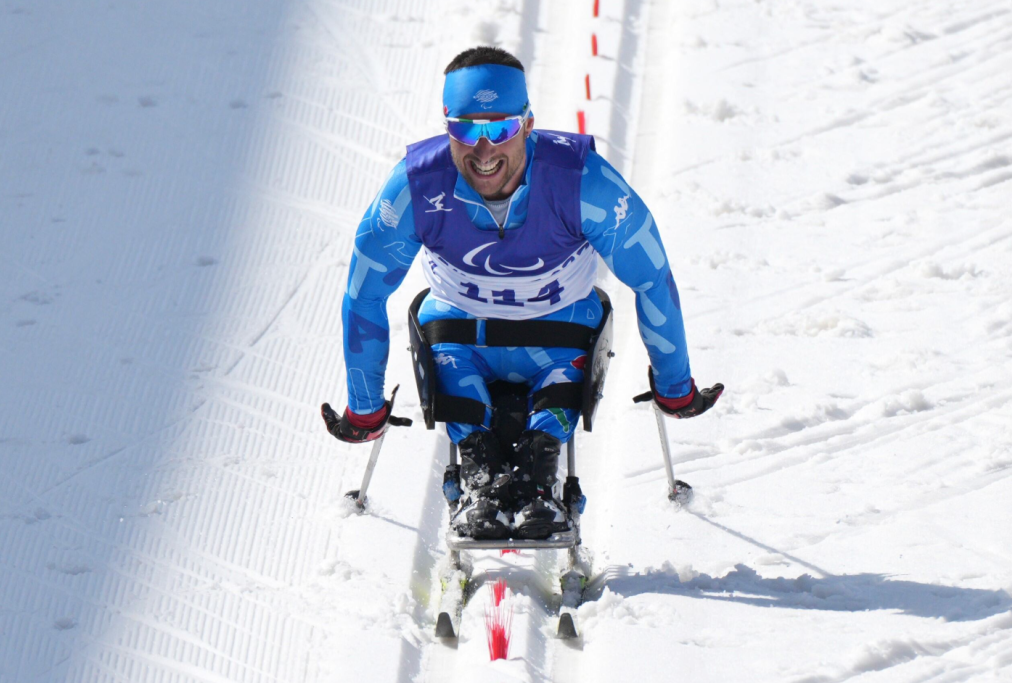
The sporting programme for Milan-Cortina 2026 includes six disciplines: Paralympic alpine skiing, Paralympic biathlon, Paralympic cross-country skiing, Para ice hockey, Paralympic snowboarding and wheelchair curling. In total, 79 sets of medals will be awarded, 39 men's, 35 women's and 5 mixed, a record number for the Winter Paralympic Games. Among the most anticipated new features is the mixed doubles in wheelchair curling, debuting for the very first time at the Paralympic Games. The wheelchair curling tournament will start earlier than the rest of the programme, from 4 March.
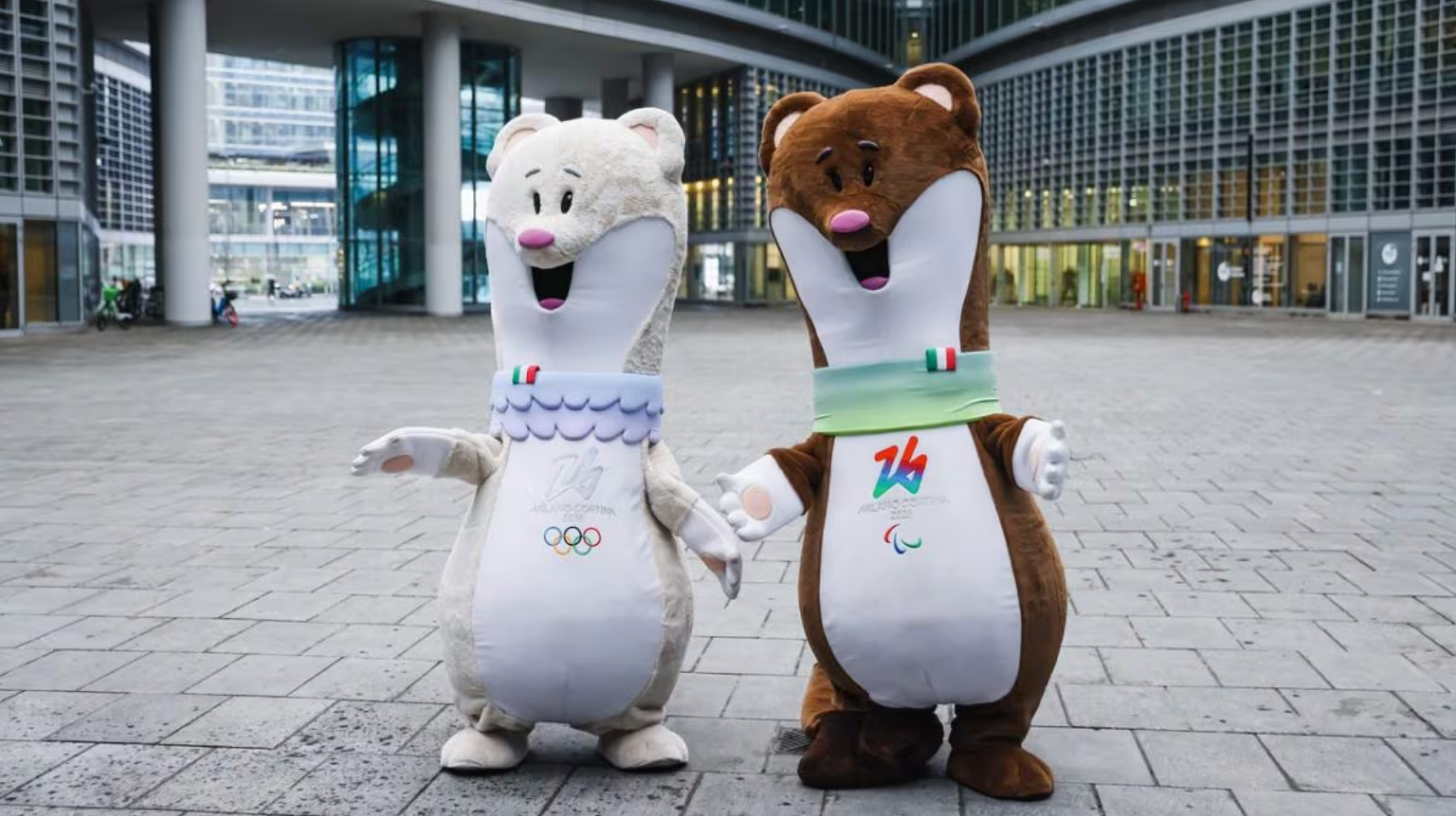
On the ice of the Santagiulia Hockey Arena in Milan, Para ice hockey will see eight national teams competing from 7 to 15 March: Canada, China, Czech Republic, Germany, Italy, Japan, Slovakia and the United States. Italy, as the host country, will take to the ice against the reigning champions Team USA as early as the second day of competition. In Cortina, the Cortina Curling Olympic Stadium will host wheelchair curling, while the Tofane slopes will be the stage for Paralympic alpine skiing races. The mountains of Val di Fiemme, finally, will provide the backdrop for the endurance and precision disciplines of biathlon and cross-country skiing.
Milan-Cortina 2026 is preparing to set a participation record. Up to 665 Paralympic athletes from about 50 National Paralympic Committees are expected, a 20% increase compared to the final number of entrants recorded at Beijing 2022. A growth that tells the story of the global expansion of the Paralympic Movement, capable of reaching new countries and new communities every year. To put these numbers into perspective, it is enough to go back to the inaugural edition of the Winter Paralympic Games: at Örnsköldsvik in 1976, just 198 athletes participated, from 16 countries, with only two sports in the programme, Paralympic alpine skiing and Paralympic cross-country skiing. In fifty years, the number of athletes has more than tripled, the disciplines have become six and the nations represented have increased by more than three times.
Among the stars expected on the Italian snow is the American Oksana Masters, one of the best-known faces on the world Paralympic scene. At her eighth Games appearance, Masters boasts 19 medals won across summer and winter disciplines over the course of an extraordinary career. On the medals table front, the People's Republic of China is expected to be one of the absolute protagonists: at Beijing 2022 they dominated the overall standings, and at Milan-Cortina 2026 they aim to confirm their status as a winter Paralympic powerhouse.
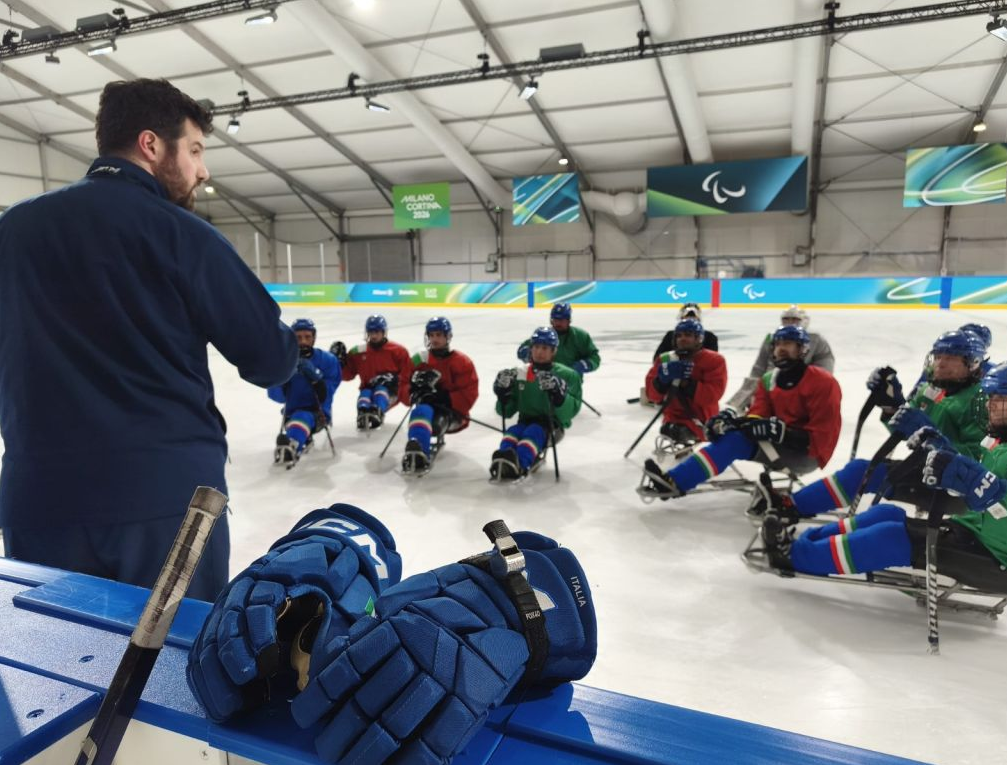
Every edition of the Games has its mascot, and the Paralympic one for Milan-Cortina 2026 bears a simple and meaningful name: Milo. The name directly recalls Milan, the host city, just as the Olympic mascot Tina takes its name from Cortina d'Ampezzo. But it is Milo's story that makes it a particularly powerful symbol. According to the official narrative, Milo was born without a small paw. Instead of letting himself be overwhelmed by the obstacle, he learned to use his tail with dexterity, transforming his diversity into a resource. He lives in the mountains, loves to build, invent and work the wood from his forests. Over time he specialised in creating musical instruments, which Tina will then play.
Milo is lively, curious, always on the move: he runs, jumps, climbs trees and loves to make his friends laugh. The bond with Tina also visually tells the unity between the Olympic and Paralympic Games, two events that in Milan-Cortina 2026 share identity, values and territory. This is no small detail: the choice of a mascot born with a disability and presented not as a figure to be pitied but as a symbol of ingenuity and vitality represents a precise cultural message, aimed at audiences of all ages.
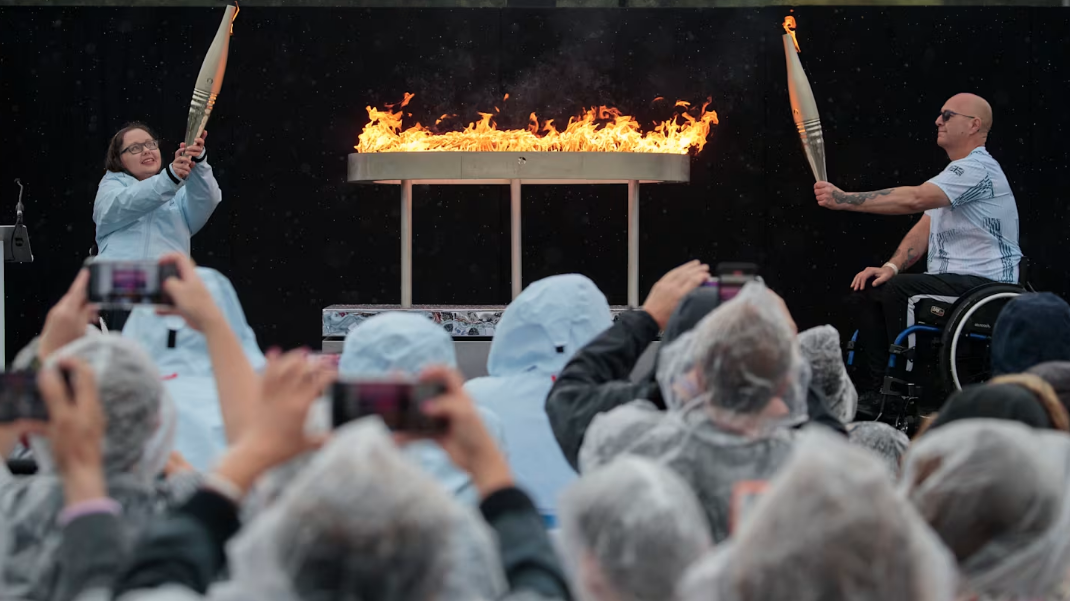
As per tradition, the Paralympic Games are preceded by the evocative journey of the Paralympic Flame. On 24 February 2026, the torch was lit at Stoke Mandeville in the United Kingdom, a place considered the historic cradle of the Paralympic Movement: it was here, in 1948, that the doctor Ludwig Guttmann organised the first sports games for war veterans with spinal injuries, sowing the idea that would become the Paralympic Games. From England, the flame arrived in Italy, stopping in Turin, the first city on the national route and a symbol of Italian Paralympic history: it was Turin, in 2006, that hosted the first Winter Paralympic Games in Italy.
The Flame's route was articulated in 13 stages spread over 11 days, with 501 torchbearers covering over 2,000 kilometres across the peninsula. Five Flame Festivals animated as many cities—Turin, Milan, Bolzano, Trento and Trieste—transforming each stage into a public celebration of Paralympic values. At the same time, the Flame Visits brought the flame to Central and Southern Italy as well, with stops in Rome, Bari, Naples and Bologna. On 3 March, in Cortina d'Ampezzo, the five flames from the Flame Festivals merged into a single Paralympic Flame during the evocative Union Ceremony. After passing through Venice, Padua and numerous locations in Veneto, on 6 March the Flame reached the Arena di Verona, marking the official start of the Games. For the first time in history, a UNESCO site hosted the Paralympic opening ceremony.
The Milan-Cortina 2026 Winter Paralympic Games are not just a major sporting event. They are the culmination of a journey that began in Italy over sixty years ago, when Rome hosted the first edition of the Summer Paralympic Games in 1960, symbolically opening the season of sport for people with disabilities at an international level. Since then, the Paralympic Movement has built its own global identity, equipping itself with a recognisable symbol, the Agitos, from the Latin "agito", composed of three elements in the colours red, blue and green representing mind, body and spirit, and an international governing body, the International Paralympic Committee, founded in 1989 with headquarters in Bonn.
Hosting these Games means for Italy assuming a precise responsibility: that of guaranteeing accessible infrastructure, media visibility for Paralympic athletes, and a lasting sporting legacy. On this front, Milan-Cortina 2026 has made concrete choices: the Arena di Verona has been adapted to ensure accessibility for people with disabilities, the three Paralympic villages were designed with attention to the specific needs of athletes, and the entire organisation operated within the framework of a Foundation, the Fondazione Milano Cortina 2026, which brings together CONI, the Italian Paralympic Committee, the Lombardy and Veneto regions and the autonomous provinces of Trento and Bolzano.
There is also a cultural dimension that goes beyond the field of play. When 665 athletes from fifty nations compete before the Italian public, they bring with them stories of resilience, determination and overcoming limits that speak to everyone, regardless of sporting interest. The Paralympic Games have the unique ability to transform the social perception of disability, shifting the emphasis from limitation to performance, from difficulty to excellence. In this sense, Milan-Cortina 2026 is not only a sporting stage: it is an opportunity for the country to confront values of inclusion and equal opportunity that remain, well beyond the closing ceremony on 15 March, a collective heritage to be cherished.
Credit photos: comitatoparaolimpico.it
Rivista online registrata al Tribunale di Napoli n. 43 del 23/03/2022
Direttore: Lorenzo Crea
Editore: Visio Adv di Alessandro Scarfiglieri
Insight italia srl (concessionario esclusivo)
Rivista online registrata al Tribunale di Napoli n. 43 del 23/03/2022
Direttore: Lorenzo Crea
Editore: Visio Adv di Alessandro Scarfiglieri
Insight italia srl (concessionario esclusivo)
